
Last updated November 15, 2026
 Wrought iron
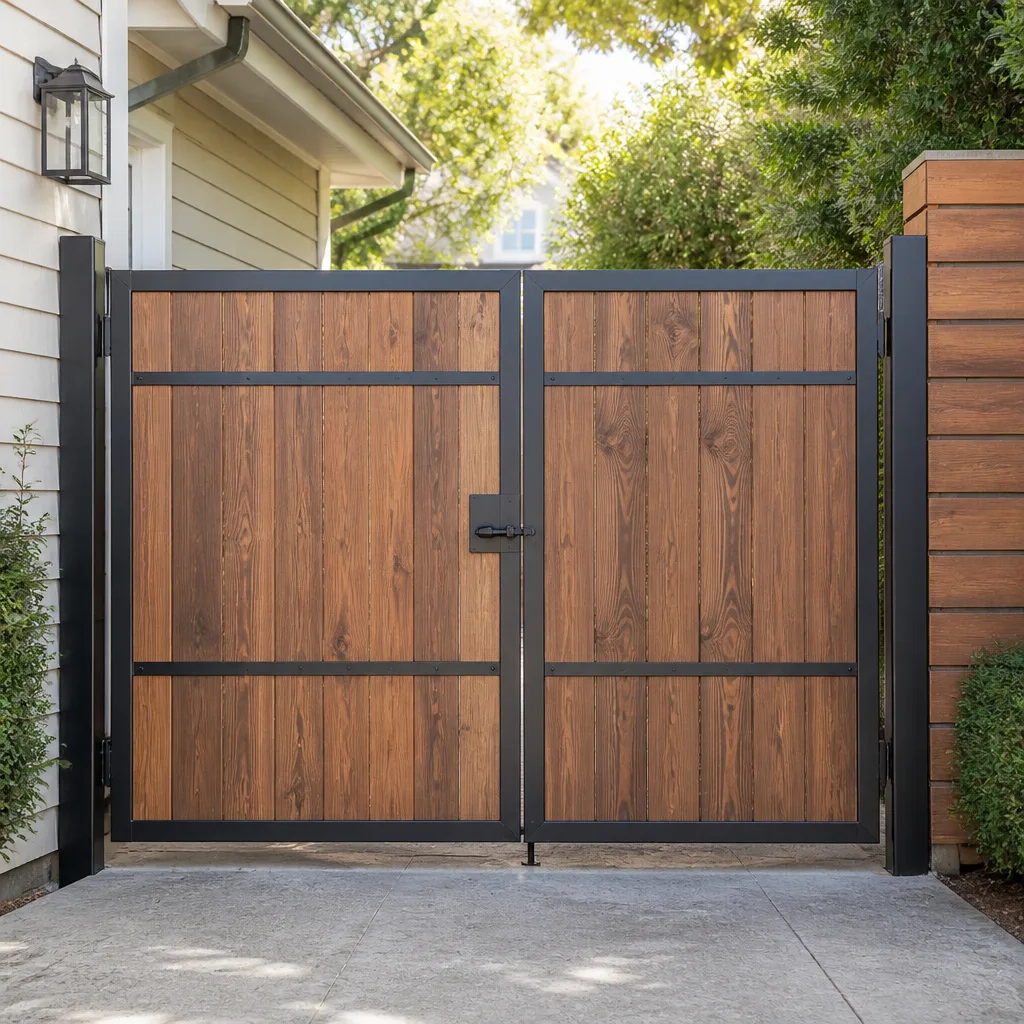 Wood & steel frame
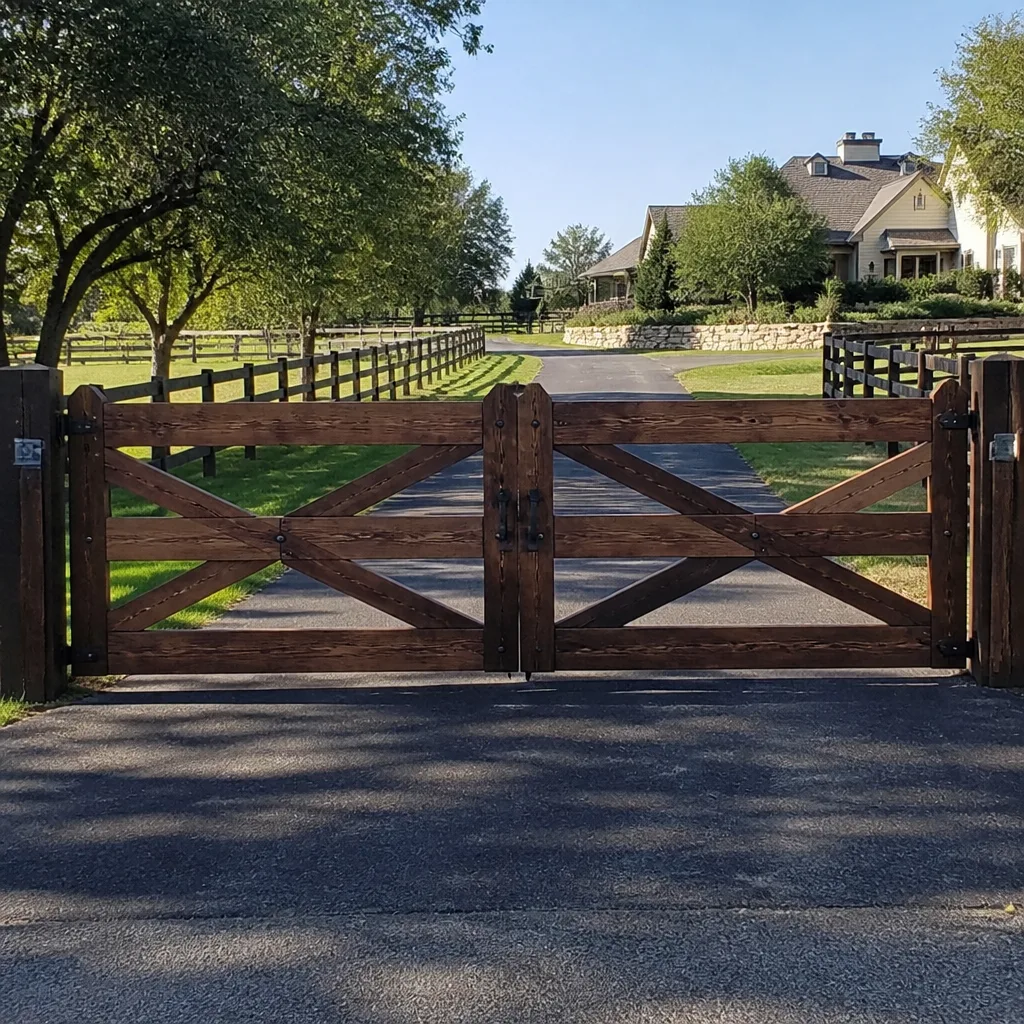 Farm & ranch
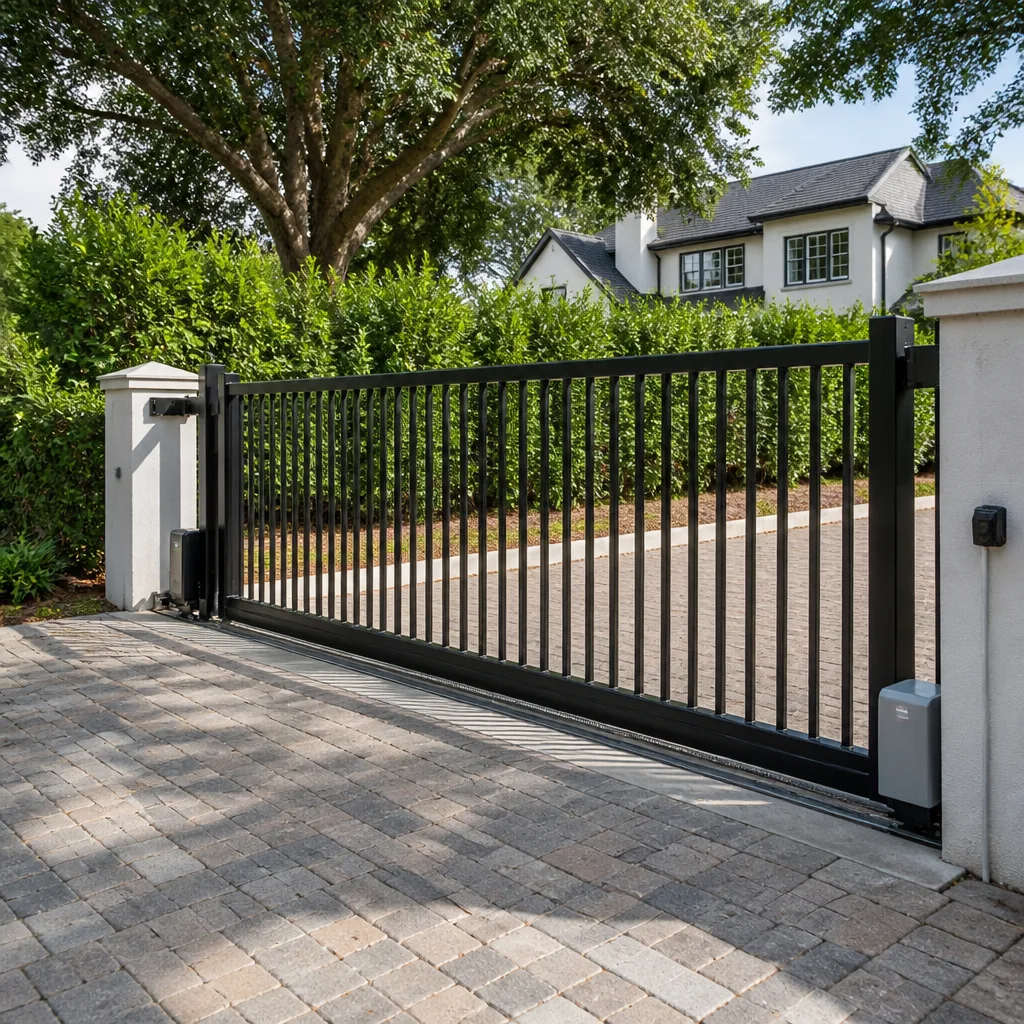 Sliding driveway gates
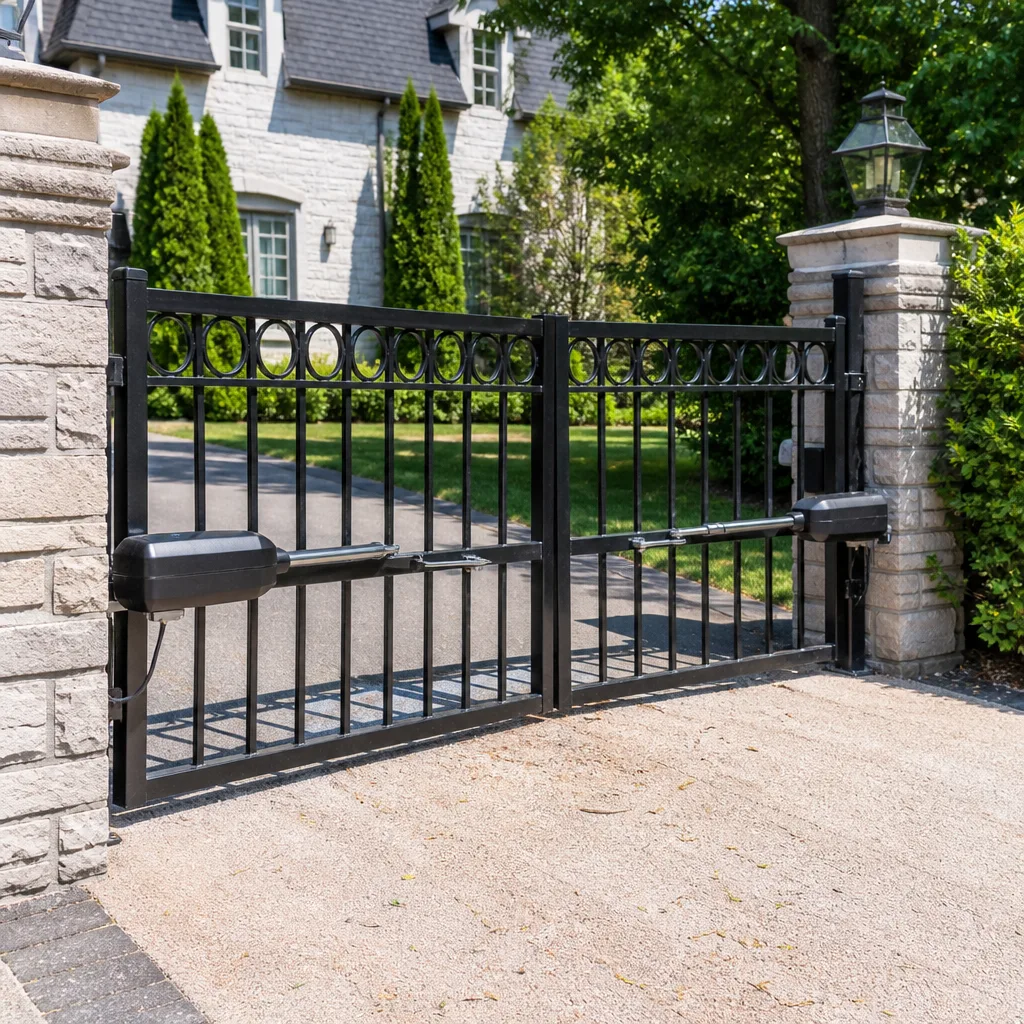 LiftMaster operators
Free on-site gate assessment - hinges, posts, and your LiftMaster or Nice gate operator checked before anything is quoted
The assessment is free and the quote is the invoice.
Get your free estimateGate Repair Warning Signs: A Kent Homeowner’s Reference Guide
A gate that hesitates half a second before it moves isn’t a nuisance. It’s the operator’s internal logic detecting a load resistance it has to overcome, and that resistance is already consuming motor life every time the gate cycles. Most homeowners in Kent read that pause as “just how the gate is now” and wait. By the time the gate stops entirely, a cheap adjustment has usually become an operator replacement. This guide decodes the sounds, the visual tells at the hinge line, and the electrical behavior patterns that predict failure, so you can describe a problem accurately and know when waiting costs more than acting.
Styles & brands we work with
- Wrought iron
- Wood & steel frame
- Farm & ranch
- Sliding driveway gates
- LiftMaster operators
Quick Answer
The main warning signs of a failing gate are unusual sounds (grinding, clicking, humming without movement, intermittent beeping), visible sag or misalignment at the hinge line, slower operation than it used to have, and unexpected reversing. Each of these maps to a specific component problem, and most appear weeks before a gate stops working. Catching them early usually means a repair rather than a full operator replacement.
Table of Contents
- What the sounds your gate makes actually mean
- Reading the hinge line: when sag is a warning and when it isn’t
- Slow operation: cold-weather behavior versus all-season behavior
- Works by hand, struggles on the operator (and the reverse)
- The emergency reverse trigger: a three-part diagnostic sequence
- Intermittent beeping, flashing lights, and error behavior
- How Kent weather and Puget Sound winters affect gate hardware
- Common mistakes to avoid
- When to call a professional
- Frequently asked questions
What the sounds your gate makes actually mean
The auditory warning catalog is the fastest diagnostic tool a homeowner has, because the type of sound narrows the component before anyone opens a panel. Grinding points to metal-on-metal contact, usually at the roller track, hinge pin, or gate chain. Clicking that repeats at the same point in the cycle points to a worn limit switch, a stripped gear tooth, or a relay engaging without the motor turning. Humming with no movement means the motor is receiving power but the load is too high or the capacitor has failed. Intermittent beeping is almost always an operator reporting a fault through its diagnostic code, and the pattern matters.
Grinding
Grinding means something is wearing that shouldn’t be. On a sliding gate, it’s usually a seized roller or a chain that’s jumped its sprocket. On a swing gate, it’s usually the hinge bushings or the operator arm’s pivot. Every cycle of grinding removes material, and material removal turns a $150 bearing replacement into a $600 gate repair.
Clicking
Clicking has two common versions. A single click at the start or end of travel is often the limit switch tripping correctly. Repeated clicking mid-travel, or clicking with no movement at all, usually means a gear or relay problem. On commercial operators like DoorKing and FAAC, a diagnostic LED on the control board often confirms it, and our technicians check that first because it saves hours of trial and error.
Humming without movement
Humming means the motor is energized but the gate isn’t moving. That’s the sound of a stall. Possible causes are a bound gate, a failed start capacitor, or an overloaded operator that’s tripped its thermal protection. Don’t keep cycling the gate hoping it catches. Each hum is motor current turning into heat with no useful work. electric gate repair work in this condition is common, and the diagnosis takes minutes with a meter rather than a guess.
Intermittent beeping
Modern operators beep before and during travel for safety, and they also beep to flag errors. If the beep pattern changed, or the beep now happens when the gate isn’t moving, the operator is telling you something. LiftMaster and Elite units, in particular, use specific beep counts to signal specific faults. Write down what you heard and when; that detail turns a diagnostic visit into a repair visit.
Reading the hinge line: when sag is a warning and when it isn’t
Every swing gate sags a little over time. The question is how much. A gate that hangs square with a 1/8-inch gap at the latch post is doing fine. A gate that’s dropped 1/2 inch or more, or one where the top rail is no longer level, is telling you the hinge has stretched, the post has shifted, or the weld at the hinge plate is starting to crack. In our experience, a 1/2-inch drop usually produces a visible arc at the bottom of the gate, and that arc will start catching on grade within months.
Three measurements worth taking
- Latch gap: measure the gap between the gate’s latch stile and the receiving post at the top and the bottom. If the top gap and bottom gap differ by more than about 3/8 inch, the gate isn’t hanging square.
- Level check: hold a level along the top rail. Any visible bubble deflection means the gate has twisted or the hinge line has moved.
- Hinge wobble: grab the gate at the outer stile and gently lift. Any movement at the hinge means worn bushings or a loose plate.
None of these are dangerous to check. All of them are useful to write down for the technician. A gate that fails one check is a candidate for adjustment; a gate that fails two or three is a candidate for a hinge rebuild or a post reset.
Why sag matters for the operator
A sagging gate increases the load on the operator every single cycle. That extra load travels through the operator arm, into the gearbox, and shows up as heat. An operator that was sized correctly for a level gate becomes undersized for a sagging one. If your gate repair visit reveals sag, the operator diagnosis and the mechanical fix belong together, not separate. That’s why we look at the gate and the operator as one system.
Slow operation: cold-weather behavior versus all-season behavior
There’s a world of difference between a gate that runs slowly on a 35-degree Kent morning and a gate that runs slowly all year. The first is normal: motor oil thickens, gear lubricant stiffens, and batteries in solar or battery-backup operators deliver less current in cold. The second is not normal: slow operation across every season means something has changed in the mechanical or electrical system, and it needs a diagnosis.
A cold-weather variant is normal
Puget Sound winters routinely bring morning temperatures near freezing, and a gate that’s a little slower on those mornings usually returns to normal by mid-day. If the gate speed recovers when the temperature rises, there’s no fault. If it doesn’t, keep reading.
All-season slowness is a symptom
Slow operation when it’s warm points to one of four things: a failing start capacitor, a mechanical drag somewhere in the drive train, a weakened battery or a degraded power supply, or an operator that’s dialed its internal speed down due to repeated stall detection. Each has a specific test. A technician with a clamp meter can identify which in one visit, and the wrong fix (replacing a capacitor when the problem is drag) leaves the gate just as slow.
What “slow” actually looks like to the operator
Gate operators are current-controlled and time-monitored. When the operator sees the current rise above expected, it slows the gate down to protect itself. That means slow operation is often the operator’s own self-defense before a stall. If your gate is slower than it was two years ago and everything else looks fine, the operator is telling you it’s working harder than it used to. That’s the moment to get an on-site estimate, not wait for failure.
Works by hand, struggles on the operator (and the reverse)
A gate that glides smoothly when you disconnect the operator and move it by hand, but struggles under power, has a mechanical problem, not an electrical one. The gate’s dead weight feels light and the operator’s resistance doesn’t. The reverse is also true: a gate that’s stiff by hand but moves fine under power usually has a mechanical drag that the motor is masking, and that motor is burning extra current to do it. Both diagnoses matter, and both are missed by generalists who don’t separate the two tests.
How to test the mechanical side
- Put the operator into manual release, following the manufacturer’s procedure. On most LiftMaster, Elite, and Mighty Mule residential operators, that’s a keyed release or a lever on the side of the housing.
- Move the gate by hand through its full travel. It should move with steady resistance, no stuck points, and no noise.
- Release the gate at three points (quarter open, half open, and near-closed) and let it settle. A swing gate should stay where you leave it, not drift.
- Listen while moving it. Any grind or click is a mechanical fault, and the operator is not the cause.
If the gate moves freely by hand and still struggles on the operator, the fault is inside the operator: capacitor, gearbox, control board, or arm alignment. That’s electrical-side gate repair, and it’s a different visit and often a different part.
Why the reverse diagnosis costs homeowners money
When a gate struggles, the instinct is to blame the operator because that’s the obvious motorized part. Replacing a perfectly good operator when the real problem is a seized roller is the most expensive version of the mistake. We’ve seen it the other way too: a gate that needed a $200 mechanical service was quoted for a $1,800 operator replacement. Our job is to identify which side of the system is actually at fault before any part is ordered.
The emergency reverse trigger: a three-part diagnostic sequence
When a gate reverses mid-travel without hitting anything, that’s the operator’s safety system doing its job. The three common causes are a photocell fault, a pressure sensor (or current-sensing) fault, or a limit switch fault, and there’s a specific sequence that identifies which one without guessing.
Part one: photocell check
- Look at the safety beam indicators on both sides of the gate path. Most residential and commercial operators show a solid LED when the beam is aligned and a flashing or off LED when it isn’t.
- Clean both lenses. Kent’s fall and winter bring wet leaves, spider webs, and condensation, and a dirty lens is the single most common cause of unexpected reverse.
- Walk through the beam while the gate is stationary. If the LED doesn’t change, the beam isn’t seeing a target.
- Check that the posts holding the photocells are plumb. A post that’s shifted a fraction of an inch is enough to lose alignment.
Part two: pressure and current sensing
If the photocells are clean and aligned, the next cause is the operator’s own pressure or current-sensing circuit. This circuit watches how hard the motor is working and reverses the gate when resistance rises past a set threshold. A gate with a dragging roller or a stiff hinge can trip that threshold without ever touching anything. If your gate reverses at the same point in travel every time, that’s a strong indicator of drag at that point, not a sensor fault.
Part three: limit switch and control logic
If the gate reverses at random points and the photocells are healthy, the limit switch or control board is the likely cause. Limit switches tell the operator where the gate is; if they’re worn or misaligned, the operator loses its position reference and can reverse on a false trigger. On commercial systems like DoorKing, an error log on the control board often shows the exact fault code, and reading it saves a return visit.
If all three parts check out and the gate still reverses, the issue is often grounding or a wiring fault that only shows up intermittently. That’s a job for a technician with a meter, not a homeowner with a manual.
Intermittent beeping, flashing lights, and error behavior
Modern gate operators are diagnostic machines. They beep, flash, and refuse to move as a way of telling you what’s wrong, and ignoring those signals turns a small repair into a big one. Every time an operator fault-clears itself and keeps cycling, it’s extending the wear on the part that’s failing.
What the beep patterns usually mean
- Continuous beep before travel: normal safety alert on most newer operators, not a fault.
- Repeated beep with no travel: fault code. Count the beeps and the pauses between groups.
- Single beep at each cycle: often a low battery warning on solar or battery-backup units.
- Beep pattern that changed: something in the operator’s state has changed, and the operator is reporting it. This is the classic “nothing is wrong but something feels wrong” signal.
Flashing LEDs
Flashing LEDs on the control board are the operator’s version of a status light. On LiftMaster and Elite units, a specific flash count maps to a specific fault (photo eye, limit, motor overload, and so on). Note the pattern before calling; a technician who already knows the fault code can bring the right part on the first visit.
The “it fixed itself” trap
An operator that faults, resets, and runs fine for three days is not fixed. It’s reporting a problem that hasn’t yet become permanent. The cost of diagnosing a fault today is almost always lower than the cost of replacing the part it takes down with it later, and it’s dramatically lower than the cost of a commercial gate that’s stuck open on a Friday morning.
How Kent weather and Puget Sound winters affect gate hardware
Kent sits in a climate that’s kind to most things and hard on gate hardware in specific ways. Wet winters, cool springs, and the occasional hard freeze mean hinges, rollers, and control enclosures see more moisture cycles than gate systems in drier parts of the country. That moisture finds the weakest point: a drying hinge bushing, a seal on the operator housing, a photocell lens with a drip path across it.
What to expect seasonally
- Fall: wet leaves pile up along the gate path and trigger photocell faults. Cleaning the lens and the beam path is the single most effective preventive step in Kent.
- Winter: cold mornings slow the operator (normal), and hard freezes can crack a brittle gear or split a rubber seal (not normal). If your gate runs slow for the morning and recovers by afternoon, it’s temperature. If it stays slow, it’s mechanical.
- Spring: freeze-thaw cycles shift post footings slightly. A gate that was aligned in November can be out by March, and that misalignment puts load on the hinge and the operator.
- Summer: dry months are the best time to catch mechanical wear before the wet season tests it. Getting an on-site estimate during summer often avoids a fall emergency call.
Why the ground matters as much as the gate
In Kent and across the surrounding area, gate posts go into soil that moves with the seasons. That’s why a gate that was perfect last year can be steeply out of alignment this year with no operator change at all. Post movement is a mechanical fault, not an operator fault, and it’s often the root cause behind a slow gate, a reversing gate, or a photocell that keeps losing alignment. If your gate is fighting you seasonally, the post footings are worth checking by a specialist. For homeowners across the area, our Kent service page covers how we handle post and alignment work on site.
Common Mistakes to Avoid
- Cycling a stuck gate to “see if it catches.” Every cycle of a stalled operator is heat and current with no useful work. If the gate hums and doesn’t move, stop and call.
- Assuming it’s the operator when it’s the gate. Replacing a healthy operator when the real fault is a seized roller or a shifted post is the most expensive misdiagnosis we see. Test the gate by hand first.
- Ignoring a beep pattern because the gate still runs. The operator is reporting a fault. Writing down the pattern costs nothing and often saves a return visit.
- Cleaning the photocell lens only when the gate fails. In Kent, wet leaves and spider webs foul the beam path routinely. A quick wipe at the change of season prevents most unexpected-reverse calls.
- Adjusting the operator’s force setting to make a stuck gate move. Turning up the force overcomes the symptom, not the cause, and it defeats the safety system. A gate that needs more force has a mechanical fault that needs fixing.
- Waiting for spring to fix a winter alignment problem. A gate that’s out of alignment in January has been out all winter, and every cycle since has been loading the hinge and the operator.
- Letting a sagging gate stay sagging because “it still opens.” A 1/2-inch drop now becomes a catching gate later, and a catching gate becomes a bent operator arm. Sag is a scheduled repair, not a wait-and-see.
When to Call a Professional
Call a professional when the gate hums without moving, reverses without hitting anything, or has to be pushed to complete its cycle. Call when the hinge line has clearly dropped or the gate won’t stay latched, when the operator shows a fault beep pattern it wasn’t showing before, or when the gate has become noticeably slower over the past season. Call before you touch the operator’s force adjustment or the control board, and call before you attempt any electrical work inside a 120-volt or 240-volt gate operator enclosure. Gate operators combine mains power, low-voltage control wiring, and moving parts; an electrical fault in an operator is not a homeowner task.
Gate Repair Kent offers free estimates in Kent. Call (855) 360-7358. We answer 24/7. Fast dispatch from 7am to 7pm, Sunday through Friday. Our technicians have up to 12 years of experience, and we work on the brand already on your property.
Frequently Asked Questions
Release the operator into manual mode and move the gate by hand. If it moves freely but struggles under power, the fault is on the operator side (electrical). If it’s stiff or catches by hand, the fault is mechanical (hinges, rollers, post, track). This test takes two minutes and saves the cost of diagnosing the wrong system. Call (855) 360-7358 if you’d rather have a technician do the check.
Cold-morning slowness that clears as the day warms is normal. Motor lubricant thickens in the cold, and batteries deliver less current, so the gate runs slower until the system reaches operating temperature. Slowness that persists in warm weather, or that gets worse every year, is a warning sign and should be checked.
A beep with no movement is almost always a fault code. The operator is signaling a problem with the photocells, limit switches, motor overload, or battery. Count the beeps and note the pauses between groups; that pattern identifies the fault on most LiftMaster, Elite, and DoorKing units. Call (855) 360-7358 with the pattern and we’ll know what to expect before we arrive.
Yes. A sagging gate puts extra load on the operator every cycle, and the operator compensates by drawing more current and running hotter. Over time, that load wears out the gearbox, the arm, and the motor. Repairing the sag early protects both the gate and the operator, and it’s usually cheaper than waiting. For gate and operator work in one visit, gate repair in Kent is the right call.
Dirty or misaligned photocells are the most common cause in Kent, especially in fall and winter when wet leaves and condensation foul the beam path. If the photocells check out, the pressure or current-sensing circuit and the limit switches are the next suspects. Unexpected reversing is a safety system doing its job; it should never be treated as a nuisance. Call (855) 360-7358 for a free estimate.
Once a year is a reasonable baseline for most residential gates in Kent, and commercial gates on high-cycle routes usually benefit from a check at the change of seasons. Our winter and spring conditions bring moisture, freeze-thaw, and leaf debris that shorten the service interval in specific parts of the system. We price maintenance per job after we look at the gate, with a written estimate before any work starts.
The Bottom Line
Most gate failures give warning. Grinding, humming without movement, a single click that’s become a habit, a hinge line that’s dropped past the threshold, a gate that reverses when nothing is in the way: each of these is a specific diagnosis, not a personality trait of your gate. Catching them early means a repair rather than a replacement, and it means a gate that stays in service all season. In our experience, the homeowners who read their gate’s signals end up paying less and waiting less. If your gate has any of these warnings, call Gate Repair Kent at (855) 360-7358 for a free estimate. We answer 24/7. Fast dispatch from 7am to 7pm, Sunday through Friday. From the motor to the hinge, we work on the brand already on your property, whether it’s electric gate repair or a full Gate Repair Kent diagnosis, backed by technicians with up to 12 years of experience.
Written by the team at Gate Repair Kent.
See the difference
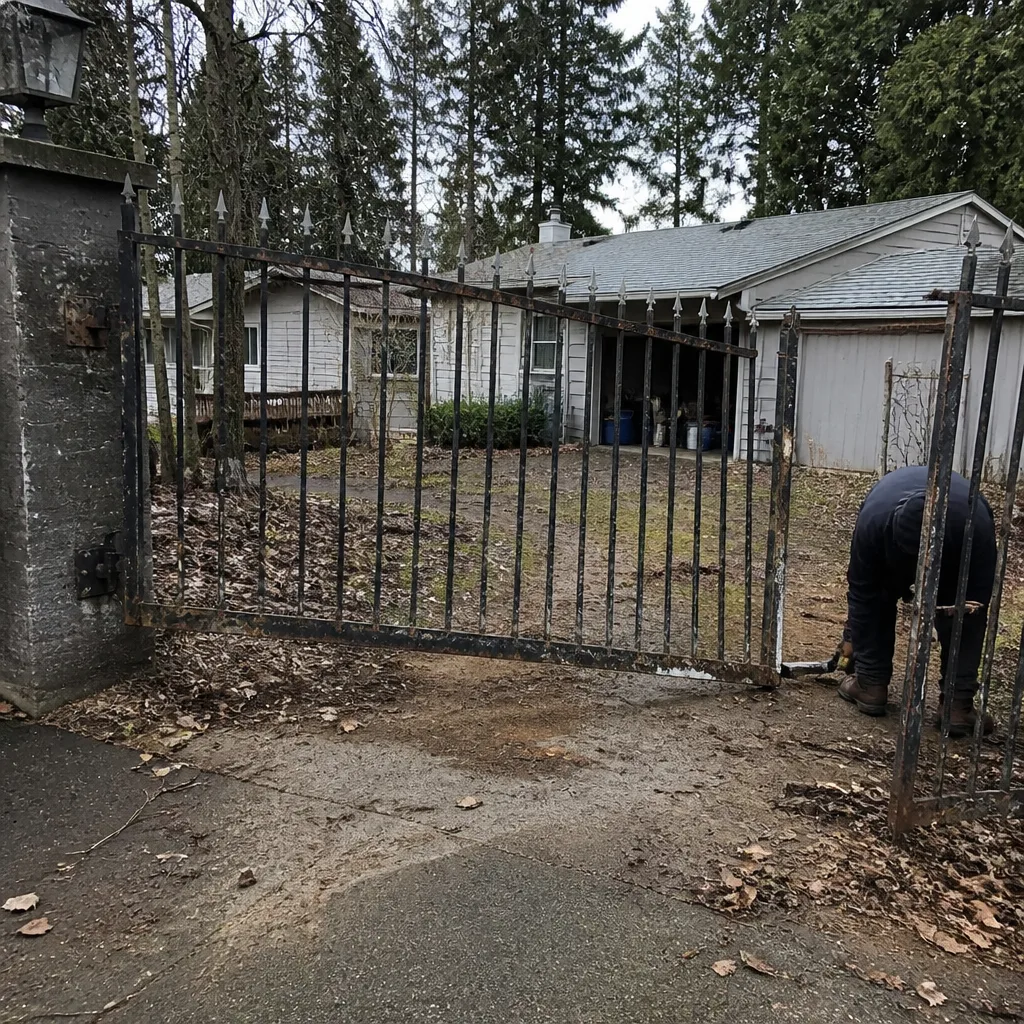 Before
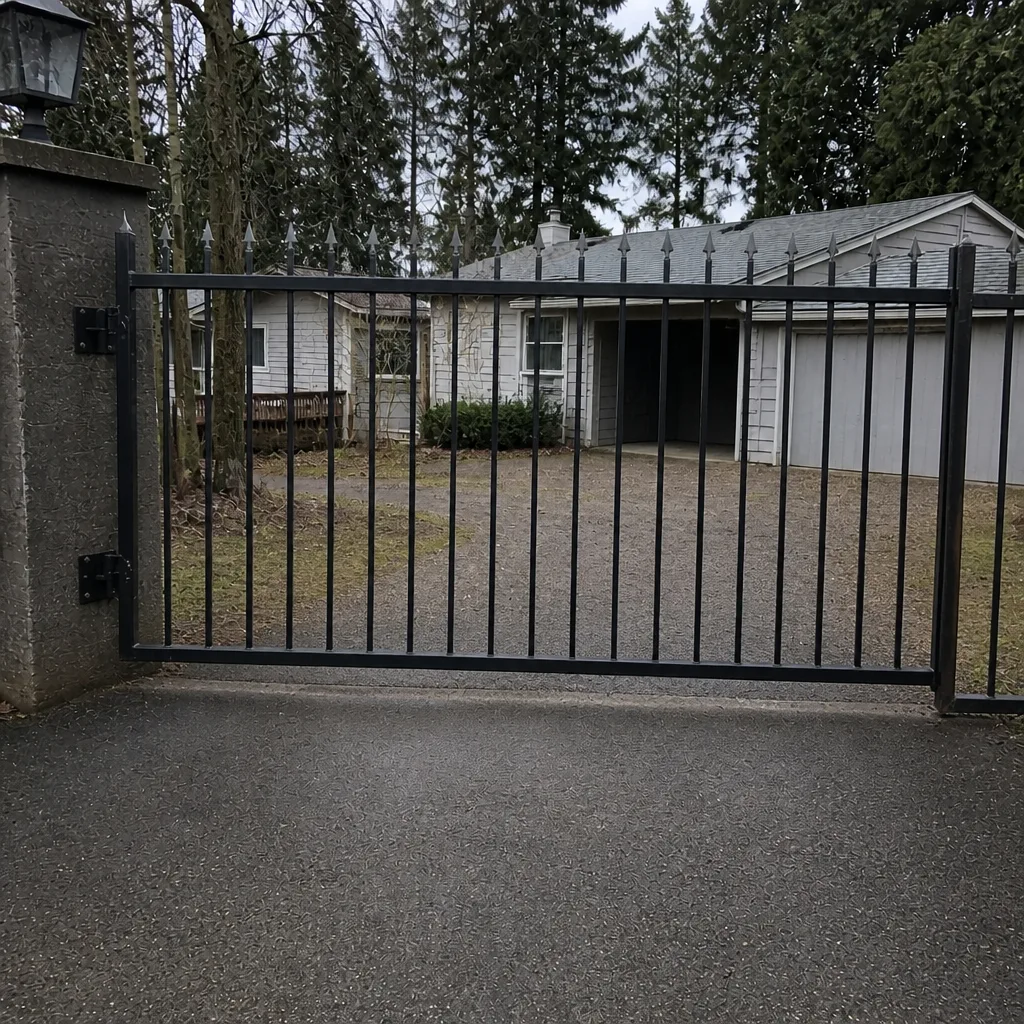 After
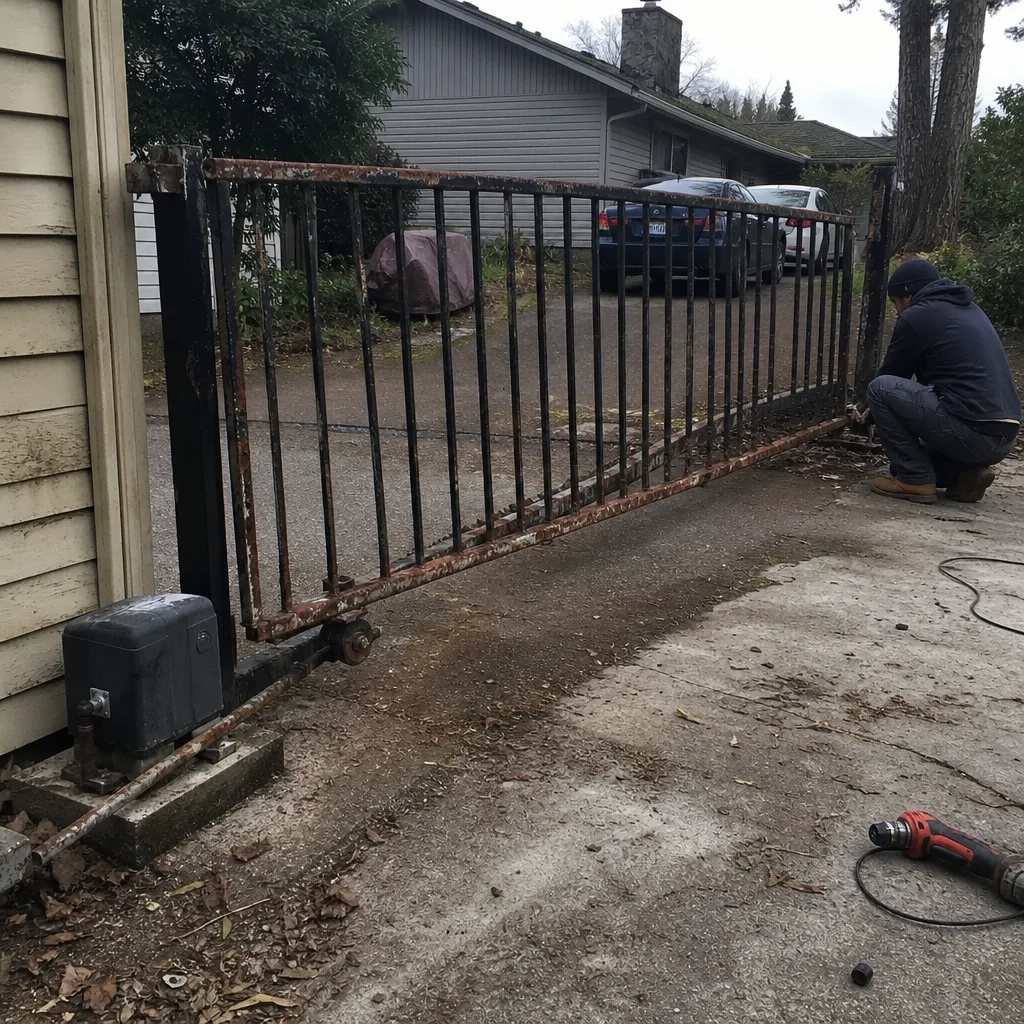 Before
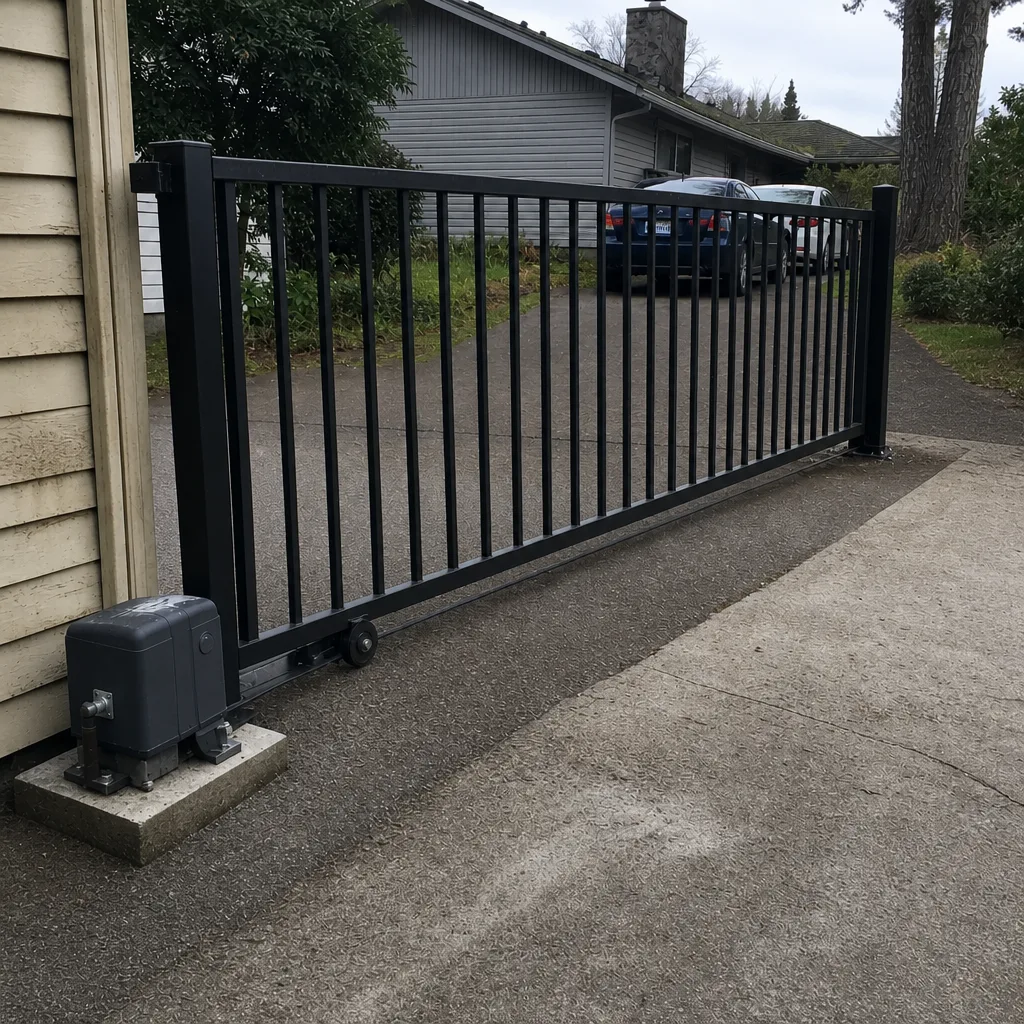 After
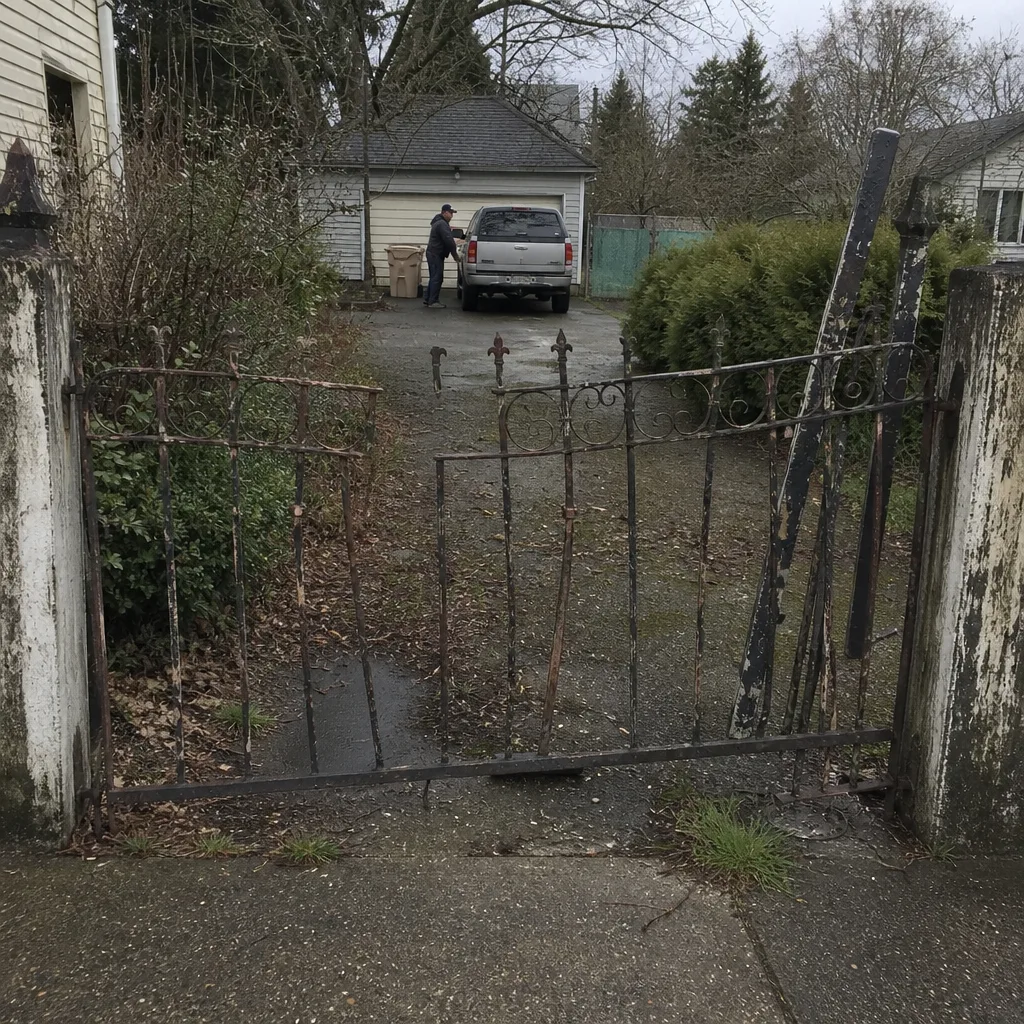 Before
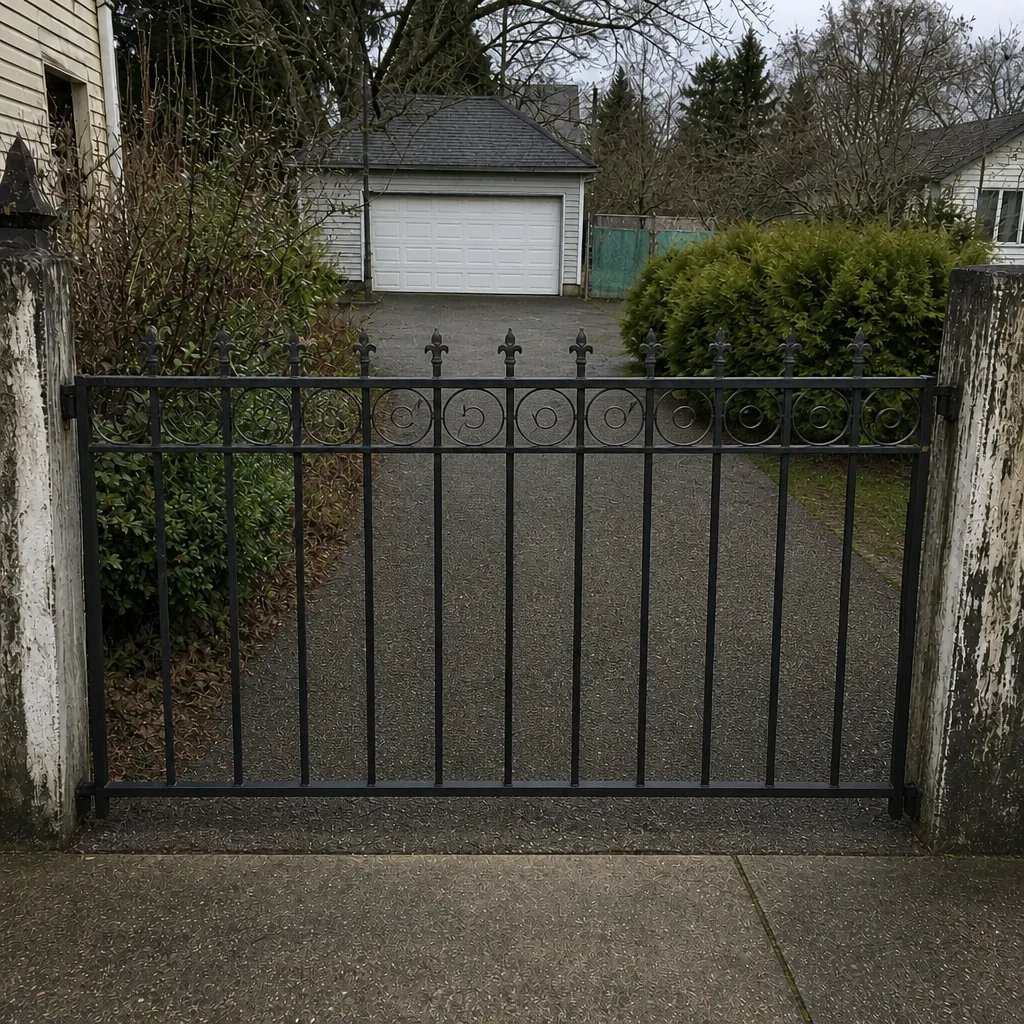 After