
Last updated November 15, 2026
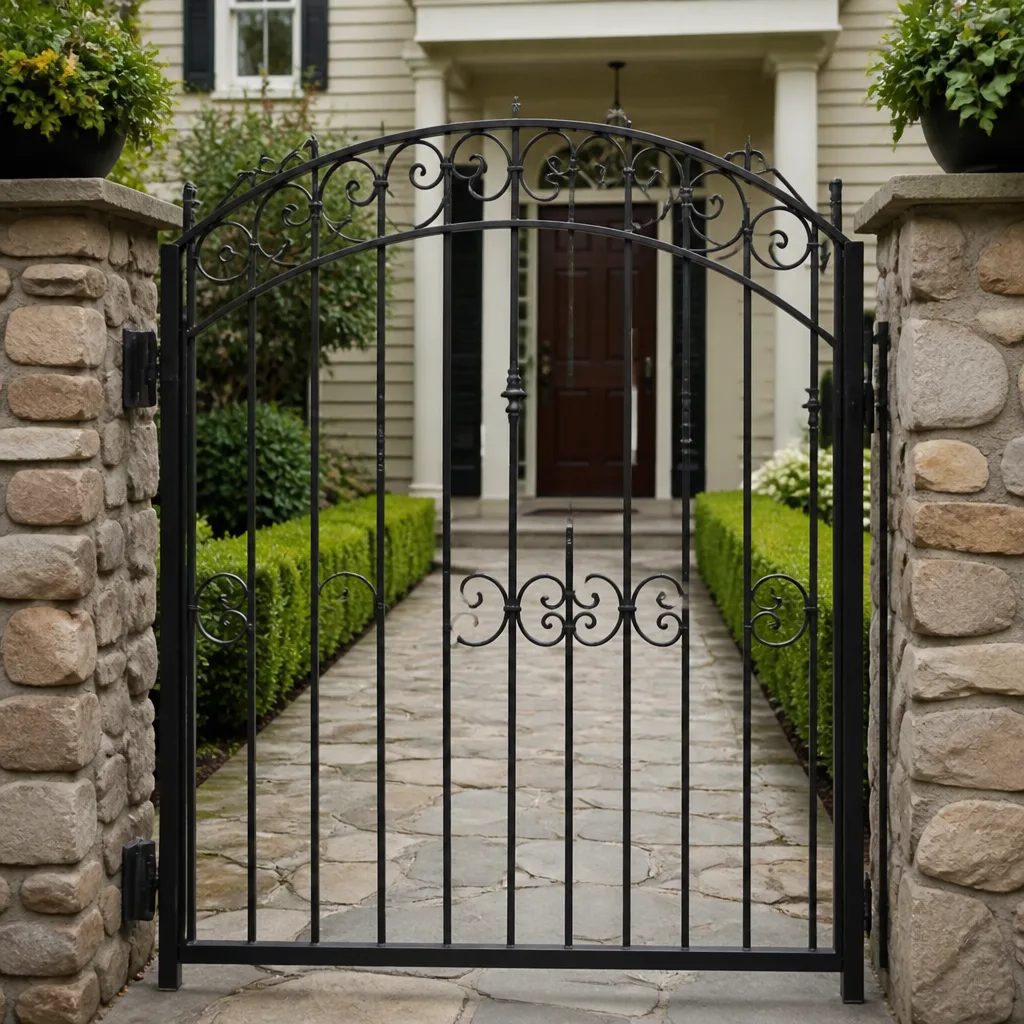 Wrought iron
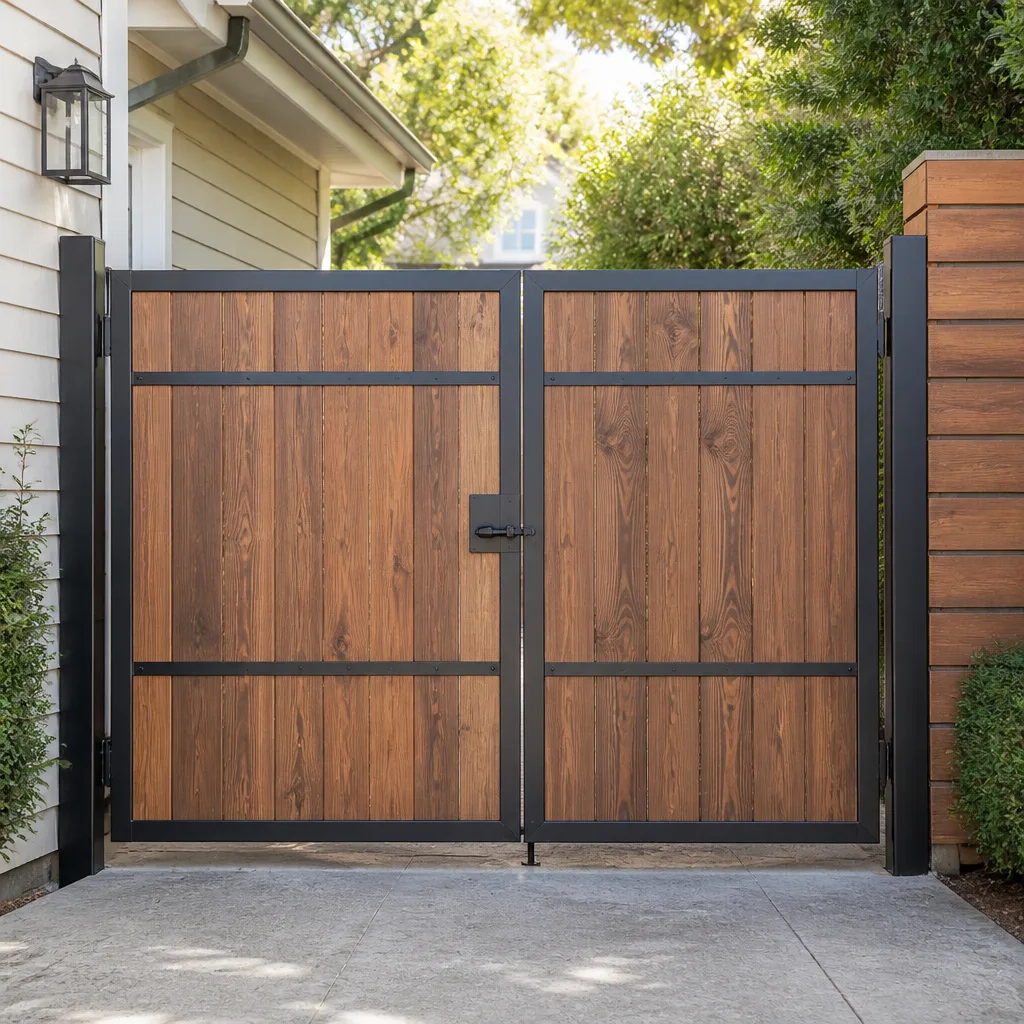 Wood & steel frame
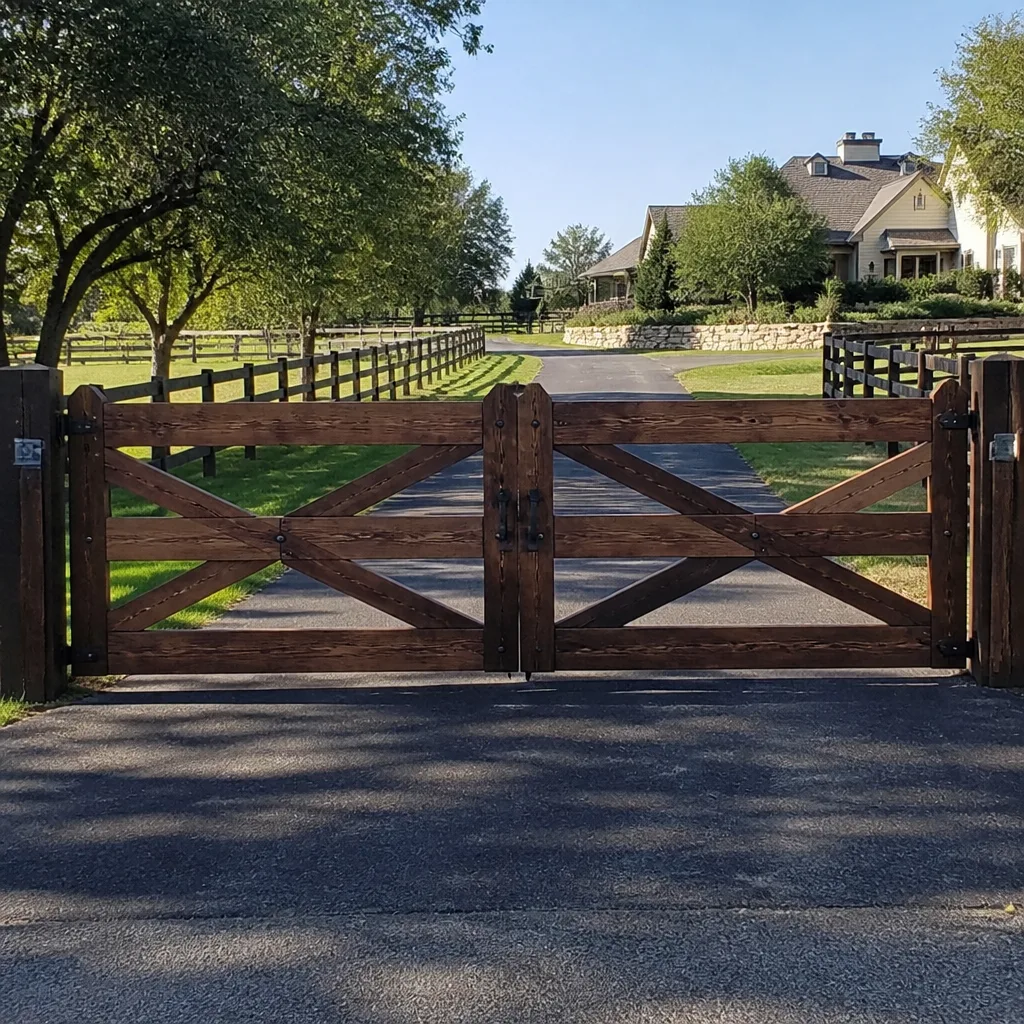 Farm & ranch
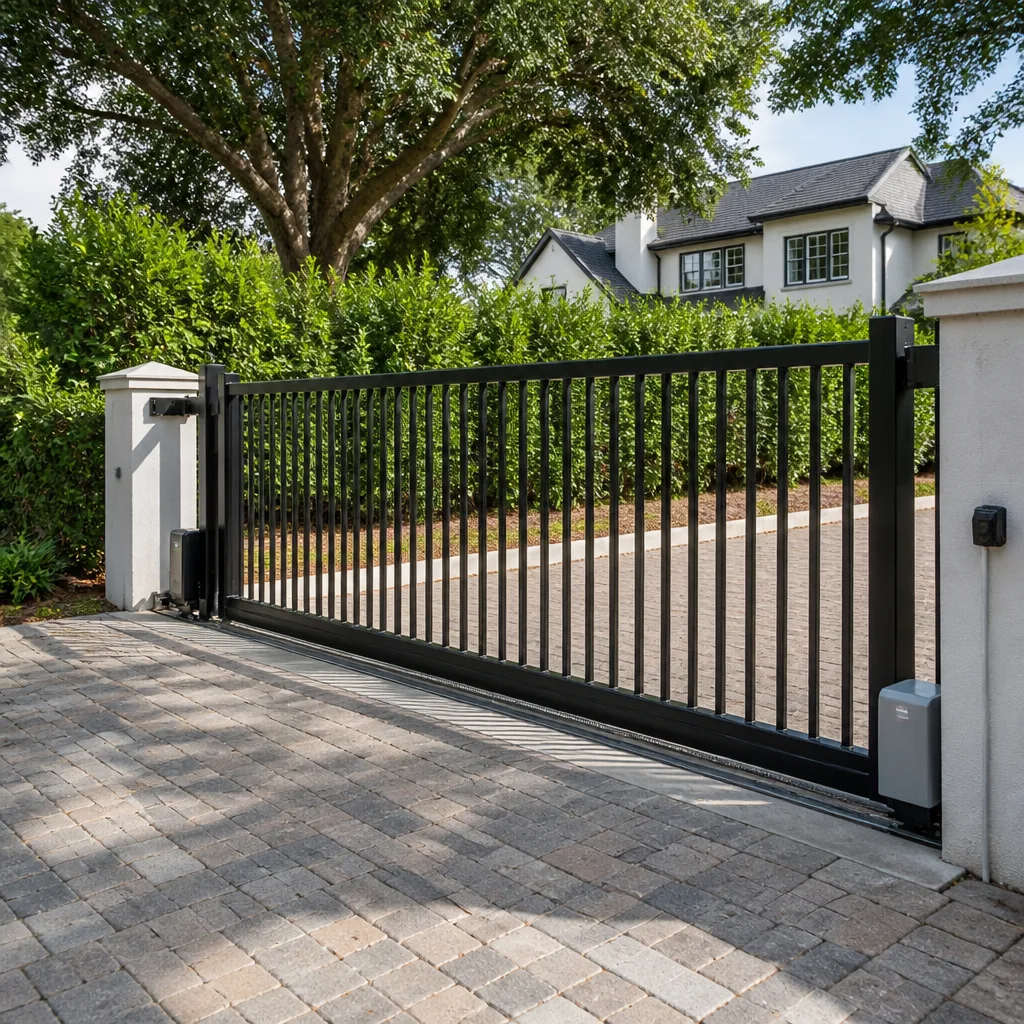 Sliding driveway gates
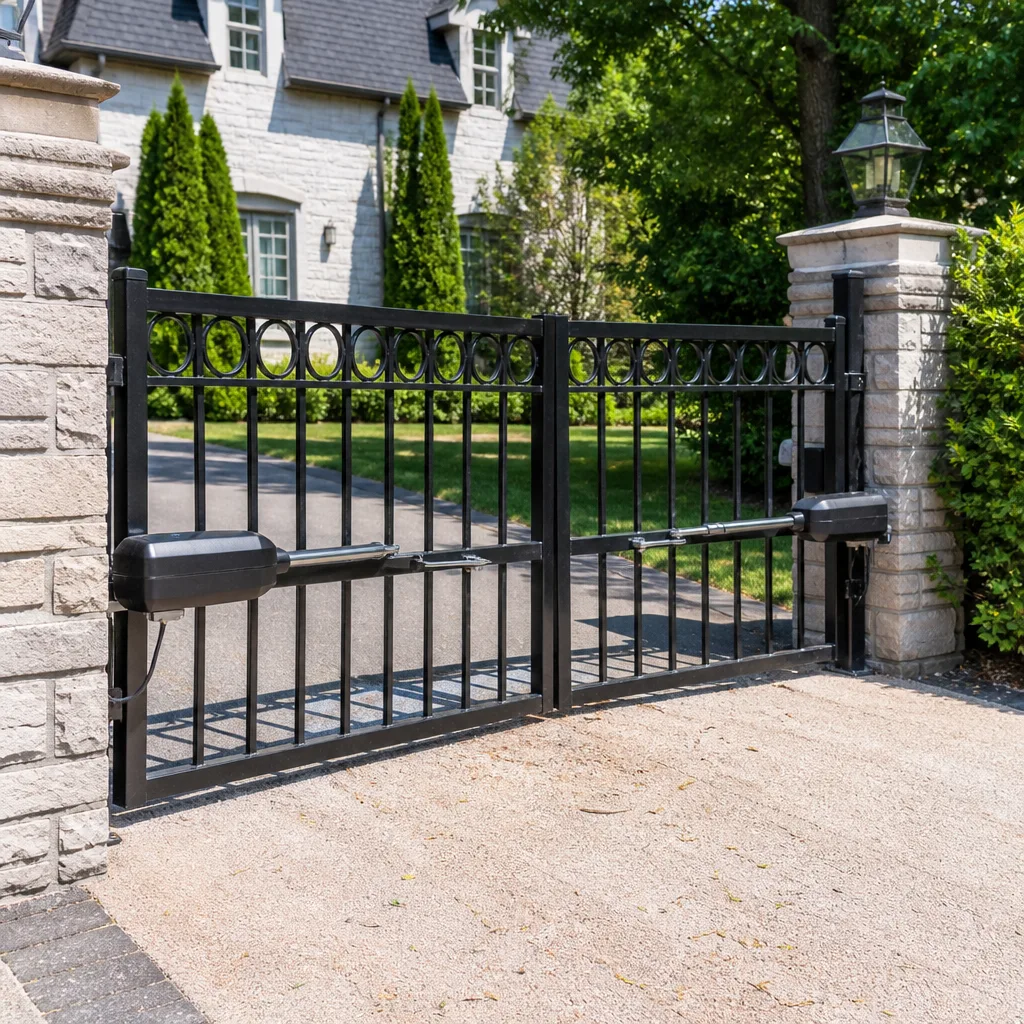 LiftMaster operators
Free on-site gate assessment - hinges, posts, and your LiftMaster or Nice gate operator checked before anything is quoted
The assessment is free and the quote is the invoice.
Get your free estimateGate Repair Troubleshooting in Kent: Common Problems and How to Fix Them
Most gate failures get misdiagnosed because the symptom points at the wrong component. A gate that stops mid-travel looks like a dead motor; often it’s a limit switch that shifted a quarter inch. A gate that reverses on contact looks like a sensor failure; often it’s a leaf binding on a frozen track. Guessing is what turns a small adjustment into a control board replacement. This guide gives you a specialist’s diagnostic framework: six categories that sort nearly every gate problem before anyone touches a wrench. You’ll learn to read the symptom, assign it to a category, run two safe tests, and know exactly what to tell a technician when you call. Kent’s wet winters and freeze-thaw swings add a local wrinkle we’ll cover throughout.
Quick Answer
Gate repair troubleshooting in Kent starts with assigning your symptom to one of six categories: power, signal, mechanical, sensor, operator, or environmental. Power and signal problems usually kill the gate completely, mechanical issues show up as grinding, binding, or sagging, sensor faults cause reversing or partial travel, and operator faults typically display an error code. Two safe homeowner tests (the manual release check and the obstruction test) rule out roughly a third of service calls before a technician arrives. Call (855) 360-7358 for a free estimate once you’ve identified the category – estimates are free and the price is set per job before any work starts.
Styles & brands we work with
- Wrought iron
- Wood & steel frame
- Farm & ranch
- Sliding driveway gates
- LiftMaster operators
Table of Contents
- The Six Diagnostic Categories Every Gate Problem Falls Into
- How Wet Winters and Freeze-Thaw Cycles Mimic Electrical Failure
- Two Safe Tests to Run Before You Call
- What Operator Error Codes Actually Mean
- Gate Won’t Open: Three Completely Different Causes
- Why Your Gate Reverses or Stops Mid-Travel
- Slide Gate vs Swing Gate: Different Troubles, Different Fixes
- Commercial Gate Systems: Higher Failure Points
The Six Diagnostic Categories Every Gate Problem Falls Into
Before you call anyone, sort your problem into one of six buckets. This single step is the difference between a technician who arrives with the right parts and one who arrives to investigate. In our experience, most misdiagnosis happens when a symptom in one category gets treated as a fault in another.
1. Power
The gate does nothing at all – no motor sound, no lights on the operator, no response to the remote. Power faults live at the breaker, the transformer, the low-voltage wiring to the operator, or the control board’s fuse. A tripped breaker is the simplest cause. A chewed or waterlogged wire run between the house and the gate post is the most common one we see in Kent after a wet stretch.
2. Signal
The motor runs but the gate doesn’t respond to commands, or responds only from certain angles. Remotes, keypads, safety loops, and photo-eye pairs all send signals. When one signal gets lost, the gate may refuse to open, refuse to close, or open and then immediately reverse because the safety loop reports an obstruction that isn’t there.
3. Mechanical
You hear the motor working, but the gate grinds, binds, sags, or drags. Rollers, hinges, tracks, and counterbalance systems are all mechanical. So is the chain on a slide gate. Mechanical faults usually get worse with use, so the symptom tends to build over days or weeks rather than appearing suddenly.
4. Sensor
Photo eyes and safety edges tell the operator when something is in the way. A misaligned photo eye, a dirty lens, or a safety edge that’s been bumped will cause the gate to stop, reverse, or refuse to close. On commercial systems, magnetic safety loops buried in the driveway fall into this category too.
5. Operator
The motor, control board, and limit switches live here. Operator faults often display an error code on the control board or a flashing LED pattern. Limit switches out of adjustment, a worn gear, or a failed capacitor belong to this category. These are the faults most often mistaken for something else.
6. Environmental
Rain, frost, mud, snowmelt, debris, and settling ground all cause gate problems that aren’t really electrical or mechanical failures. A gate that binds only in freezing weather is environmental. So is a photo eye that fogs over every morning. Kent’s cycle of wet winters and drying summers produces plenty of these.
How to assign your problem fast
- Does the gate make any sound when you press the remote? No sound points to power or signal. Motor sound points to mechanical, sensor, or operator.
- Does the gate respond to the keypad but not the remote? That’s a signal fault on the remote, not a gate fault.
- Does the gate travel partway and then stop or reverse? That’s limit switch adjustment, sensor, or mechanical binding.
- Does the symptom appear every time, or only in certain weather? Consistent symptoms point to operator or mechanical. Intermittent, weather-linked symptoms point to environmental.
- Are any LEDs flashing on the control board? Board codes point to operator or sensor.
Assigning your symptom to one category doesn’t fix the gate, but it tells you what not to pay for. A homeowner who says “the gate runs but reverses at the halfway point” gets a different first visit than one who says “the gate doesn’t do anything.”
How Wet Winters and Freeze-Thaw Cycles Mimic Electrical Failure
Kent’s climate creates a specific diagnostic trap: mechanical and environmental faults that look exactly like electrical failure. From November through March, the ground goes through repeated freeze-thaw cycles, and gate hardware that moved freely in September starts to bind in January. The operator sees the extra load, draws more current, trips its internal protection, and shuts down. To the homeowner, that reads as a dead motor. To a trained eye, it reads as a mechanical problem that has been masking as an electrical one.
What actually happens
- Ground movement. Freeze-thaw cycles shift gate posts by fractions of an inch. A swing gate that was perfectly plumb in summer starts to drag on its bottom edge once the frost goes in. The motor strains, the control board reads a stall, and the gate stops partway. Homeowners often assume the operator’s motor has failed; usually the fix is a post-adjustment or hinge realignment.
- Water in the wiring. Low-voltage wire runs from the house to the gate post are vulnerable to water intrusion at splice points. A wet splice causes intermittent signal loss – the gate works in dry weather and fails after rain. That pattern is a classic signal fault, not an operator fault.
- Frozen tracks and rollers. Slide gates on exposed tracks collect wet leaves and grit. When the temperature drops, water in the track freezes and binds the gate’s carriage. The motor senses the resistance and stops, or the safety edge trips because the gate can’t move freely.
- Fogged photo eyes. Moisture condensing on the lens of a photo eye causes the gate to think something is in the way, so it refuses to close. This is one of the most common calls we get in Kent from January through March, and one of the easiest to fix.
- Operator enclosure condensation. The metal box that houses a LiftMaster or FAAC control board can collect condensation when temperatures swing. Water droplets on the board short out terminals or trip the board’s own fault detection. That looks like a dead board but is sometimes a moisture problem.
If your gate only fails when it’s wet or cold, assume environmental first. That changes the whole diagnostic path.
Two Safe Tests to Run Before You Call
Two tests you can run safely eliminate roughly a third of service calls. Both are non-invasive and require no tools. Neither test involves opening the operator housing or touching any electrical component – leave that to a trained technician.
Test 1: The manual release check
Every automatic gate has a manual release – usually a keyed handle on the operator, sometimes a lever. The purpose is to let you move the gate by hand during a power failure.
- Put the gate in manual mode using the release, following the owner’s manual for your model. On a LiftMaster swing operator, it’s typically a keyed handle that disengages the arm from the gate. On a FAAC slide operator, it’s a release lever on the motor housing.
- With the gate disengaged, push it slowly through its full range of motion by hand.
- Listen and feel. If the gate moves freely with no binding, grinding, or resistance, the mechanical side is healthy – your problem is in power, signal, sensor, or operator. If the gate drags, binds, or hangs at any point, your problem is mechanical.
This test tells you in ninety seconds whether you’re dealing with a gate problem or a hardware problem. It’s the single most useful diagnostic step a homeowner can take.
Test 2: The obstruction test
This checks whether the safety reverse system is working, and whether the sensor is the reason your gate won’t close.
- Re-engage the gate and put it back in automatic mode.
- With the gate open, press the close command. While the gate is travelling closed, walk into the path of the gate at a safe distance so the photo eye beam is broken.
- The gate should reverse immediately. If it doesn’t, the photo eye or safety edge is out of alignment, dirty, or faulty – that’s a sensor fault. If it does reverse correctly, the sensors are fine, and your problem is elsewhere.
If the gate closes correctly with no obstruction, but randomly reverses on its own, run the test again and watch the photo eye LEDs. Most have a small indicator light that shows whether the beam is being seen. A slow blink or no light means the pair needs realigning or cleaning.
If both tests come back clean and the gate still won’t work, you’re probably looking at a power or operator issue. That’s when electric gate repair becomes the right call rather than further home testing.
What Operator Error Codes Actually Mean
Error codes are the most misinterpreted part of gate troubleshooting. A blinking LED on the control board does not mean what the homeowner assumes. Manufacturers assign specific codes to specific conditions, and most technicians use them as a starting point, not an answer. Here’s how the codes from common operators read to a specialist, and how they misread to a homeowner.
LiftMaster operators
LiftMaster residential gate operators use a diagnostic LED system that blinks a specific number of times to indicate a fault. A certain count points to a limit switch problem, a different count to an obstruction or safety reverse, another to a photo eye fault, and another to a motor or control board issue. The trap: a homeowner sees a blink pattern and assumes the motor is dead because that’s what a Google search suggested. In our experience, a LiftMaster operator blinking an obstruction code is usually reporting a mechanical bind, not a broken motor. The gate has something in the way that the board can see but the homeowner can’t.
FAAC operators
FAAC commercial operators report faults through coded LED sequences on the control board or, on newer models, on the display. A FAAC slide operator showing a current-detection fault is saying it measured more load than expected on the motor. That points to a mechanical bind – a dirty track, a worn roller, a carriage issue – far more often than it points to a failed board. Commercial property managers often read the code and order a board. We read the code and check the track first.
Viking operators
Viking boards blink error indicators in patterns that correspond to limit switch position, obstruction, or reverse sensor faults. The most common misunderstanding with Viking is treating a repeating three-blink pattern as a motor failure when it actually indicates a limit switch or reverse sensor issue. Again, that’s a different repair with a different price.
What the codes don’t tell you
- Which specific component within a system is at fault. An obstruction code can mean the photo eye, a safety edge, a mechanical bind, or a piece of debris.
- Whether the fault is intermittent. A code that appears every time the gate opens is more severe than one that appears once and clears.
- Whether the code is primary or secondary. Many operators log a primary fault first, then report consequences of that fault – the second code doesn’t cause the problem.
The right way to read a code is to combine it with the category you assigned in the first section. A code that points to obstruction plus a manual release test that shows the gate binding means mechanical fix. Same code plus a clean manual release test means the sensor or the board.
Gate Won’t Open: Three Completely Different Causes
“My gate won’t open” is the single most common call we get, and it splits into three completely different repairs. Knowing which one you’re dealing with is what stops you from paying for the wrong one.
Cause 1: The safety loop is reporting a phantom obstruction
On automated systems with inductive safety loops – most common on commercial and HOA gates in Kent – a loop that’s been damaged by ground movement, water intrusion, or a heavy vehicle can register a presence that isn’t there. The operator thinks something is sitting on the driveway, and it refuses to let the gate move.
Signs: the gate doesn’t open at all, no motor sound, no error code, and the control board shows a loop or presence indicator. Manual release moves the gate freely. If you have a loop-operated system and the gate works perfectly in manual mode but never responds to a signal, loop damage is the leading suspect.
Cause 2: A dead battery or a flat remote
This is the most embarrassing cause but one of the most common. The gate operator is fine, the batteries in the remote and in the keypad backup are dead, and the homeowner assumes the whole system has failed.
Signs: the gate responds to the interior wall button or the hardwired keypad but not the handheld remote; the LED on the remote is dim or doesn’t light; a fresh battery in the remote fixes it. On a system with battery backup, a completely dead operator battery means the gate runs on mains power but not during an outage – a different symptom.
Cause 3: A failed motor or control board
The actual motor or board has failed. This is the least common of the three by a wide margin, but the one homeowners assume first.
Signs: the gate makes no sound at all whether you press the remote, the keypad, or the wall button; the board shows no LEDs and the breaker is fine; manual release works but the operator receives no command signals from any input. On some boards, a burned component is visible. On others, a multimeter test of the transformer confirms the failure.
Why the fix is completely different for each
- Loop fault: splice or replace the loop, reset the detector; involves driveway work on commercial systems.
- Dead battery/remote: replace batteries in the remote, keypad, or operator backup.
- Failed motor/board: replace the operator or the control board – the most expensive repair of the three.
Every one of these three presents as “gate won’t open.” One is a $20 battery replacement, one is a detector repair, and one is an operator replacement. That spread is exactly why the category-first approach pays for itself.
Why Your Gate Reverses or Stops Mid-Travel
A gate that reverses in the middle of a cycle, or stops before reaching the fully-open or fully-closed position, is telling you something specific. The operator is not failing – it’s responding to a signal that says “stop.” Three things send that signal, and each has a different fix.
Limit switch drift
Limit switches tell the operator where the gate’s open and closed positions are. Over time, especially with a gate that undergoes hundreds of cycles a week, the switches drift. The gate stops a foot short of fully closed or reverses before it fully opens. Fix: a limit switch adjustment. This is a small repair, but only a technician who knows the specific operator’s limit system can do it correctly. Limiting a LiftMaster to the wrong open position, for example, means the gate is not fully disengaged and can bind against its stop.
Photo eye misalignment or blink
The photo eye pair on either side of the driveway sends an invisible beam across the gate opening. If the beam is broken, the gate reverses. Misalignment happens when a post shifts (common in Kent during wet winter seasons), when a car clips the housing, or when debris covers the lens. Fix: realign or clean the eyes. A damp or fogged lens causes repeated phantom reverses that look like electrical faults.
Safety edge damage
A safety edge is the rubber strip on the leading edge of the gate. If it’s been compressed by a bump, pulled away from its mount, or punctured, it reports a constant obstruction. Fix: realign the edge or replace it. On swing gates, the safety edge is often on the leaf itself; on slide gates it’s typically along the frame.
Mechanical binding
If none of the above are at fault, the gate is binding somewhere in its travel. The operator’s current sensor detects the extra load and stops or reverses the gate as a safety response. This is the fault most often misdiagnosed as an operator problem. The fix is mechanical – track cleaning, roller replacement, hinge adjustment, or post realignment – not a new motor.
The fastest way to tell them apart: put the gate in manual mode and move it through its full travel by hand. If it binds, the fault is mechanical. If it moves freely and the operator still reverses, the fault is in the limit switches, sensors, or board.
Slide Gate vs Swing Gate: Different Troubles, Different Fixes
Slide gates and swing gates have almost nothing in common in terms of failure points, and troubleshooting one like the other wastes time and money. Kent properties have both – sliding gates dominate on commercial and HOA entrances, while swing gates are common on residential driveways and wider setbacks.
Slide gate troubleshooting
- Track debris. The single biggest slide gate problem. Wet leaves, grit, and mud collect in the exposed track. Every slide gate should be visually inspected and the track cleared before any electrical diagnosis.
- Rollers and carriage. The gate rides on rollers or a carriage; worn rollers cause the gate to hang, bind, or sag. They’re consumable parts and fail on a predictable cycle.
- Chain tension (chain-driven systems). Slack or over-tight chain stresses the motor and causes erratic travel.
- Freeze-thaw track binding. Kent’s winter climate regularly freezes water in an exposed track. The gate binds, the motor stalls, and the operator trips its safety cutoff. The fix is often clearing the track, not repairing the operator.
- Operator current limit. A slide operator set to a low current limit will trip too easily on a slightly dirty track. A trained technician can adjust the current setting to the actual load.
Swing gate troubleshooting
- Hinge wear. Hinges wear faster than anything else on a swing gate. A worn hinge makes the gate hang, which makes it bind, which makes the operator strain.
- Post movement. Freeze-thaw ground movement shifts gate posts and puts the gate out of plumb. The leaf then drags on the ground or binds against the stop.
- Operator arm alignment. On an arm-style operator (common on LiftMaster and Elite residential systems), the drive arm has to align with the gate at the correct angle. A post that moved out of alignment throws the geometry off and causes the operator to work harder than it should.
- Limit switch position. On most swing operators, limit switches sit inside the housing and are sensitive to any change in arm geometry. A post shift or arm adjust often requires a limit adjustment afterward.
- Safety reverse edge. The leading edge of a swing gate is where the safety edge lives. That edge takes more abuse than the operator itself.
Slide gate problems are usually track, roller, or current-limit related. Swing gate problems are usually hinge, post, or arm geometry. If you get a technician who treats a slide gate like a swing gate (or vice versa), they’ll spend a lot of time looking in the wrong place.
Commercial Gate Systems: Higher Failure Points
Commercial and HOA gates in Kent fail differently from residential gates, and often more expensively. Property managers who understand their system’s specific failure points can direct repairs faster and avoid unnecessary downtime.
What’s different about commercial gate systems
- Higher duty cycles. A residential gate might cycle 10-20 times a day. A commercial entrance gate cycles 100-500 times a day. Every component wears faster, and the failure patterns show up sooner.
- Heavier gates. Wider leaves, thicker steel, and taller designs put far more load on hinges and operators. The operator is often working at or near its rated limit.
- Access control integration. Commercial gates usually tie into a keypad, intercom, card reader, or telephone entry system. A fault can come from the access control panel, not the gate operator. Diagnosing “gate won’t open” on a DoorKing access system means testing the entry panel first.
- Safety loops and photo eye arrays. Multiple safety loops, loop detectors, and photo eye pairs are common on commercial entrances. A single failed loop detector can lock down an entire gate.
- Environmental exposure. Commercial gates in Kent are often at driveway entrances with full exposure to weather and runoff. The freeze-thaw cycle stresses concrete-mounted loops harder than a residential gate on a sheltered driveway.
Commercial brand familiarity matters
Working on a FAAC or DoorKing commercial system is not the same as working on a Mighty Mule residential operator. The diagnostics differ, the wiring is different, and the access control integration adds a layer a generalist has to learn from scratch. When we service a commercial entry, we work on the brand already on the property rather than trying to reverse-engineer unfamiliar equipment. That cuts diagnosis time and reduces the risk of wrong replacement parts.
Common Mistakes to Avoid
- Replacing the control board before testing the motor. A board swap is one of the most expensive gate repairs. On many gate failures, the board is fine and the fault is mechanical or sensor-related. Test the manual release path and the safety reverse before approving a board replacement.
- Assuming a blinking LED means a failed component. Error codes tell you the category, not the component. A code that says “obstruction” on a LiftMaster often leads back to a track that needs cleaning, not a failed operator.
- Ignoring frost-heave post movement. Kent’s freeze-thaw cycle shifts gate posts every winter. A gate that worked perfectly in October but drags in December is often showing post movement, not operator failure.
- Letting the track fill with wet leaves through the winter. Slide gate tracks that collect debris freeze into solid blocks of ice once temperatures drop. Clearing the track before the cold season is one of the cheapest preventive steps a homeowner can take. A few minutes with a rake and a leaf blower in late autumn saves a call-out in the middle of January.
- Running the gate through repeated cycles while it’s binding. A gate that’s binding strains the motor and the control board every time it cycles. If your gate is grinding or dragging, stop cycling it and treat it as a fault rather than an annoyance.
- Assuming a residential operator works the same as a commercial one. Residential grade and commercial grade gate systems are engineered for very different loads and duty cycles. A DoorKing system and a Mighty Mule system need completely different troubleshooting approaches; treating one like the other wastes time on both.
- Approving a repair without a written estimate. Every reputable gate repair should begin with an agreed price, not a rough guess. Once a scope is written down, the homeowner knows exactly what’s being replaced and why.
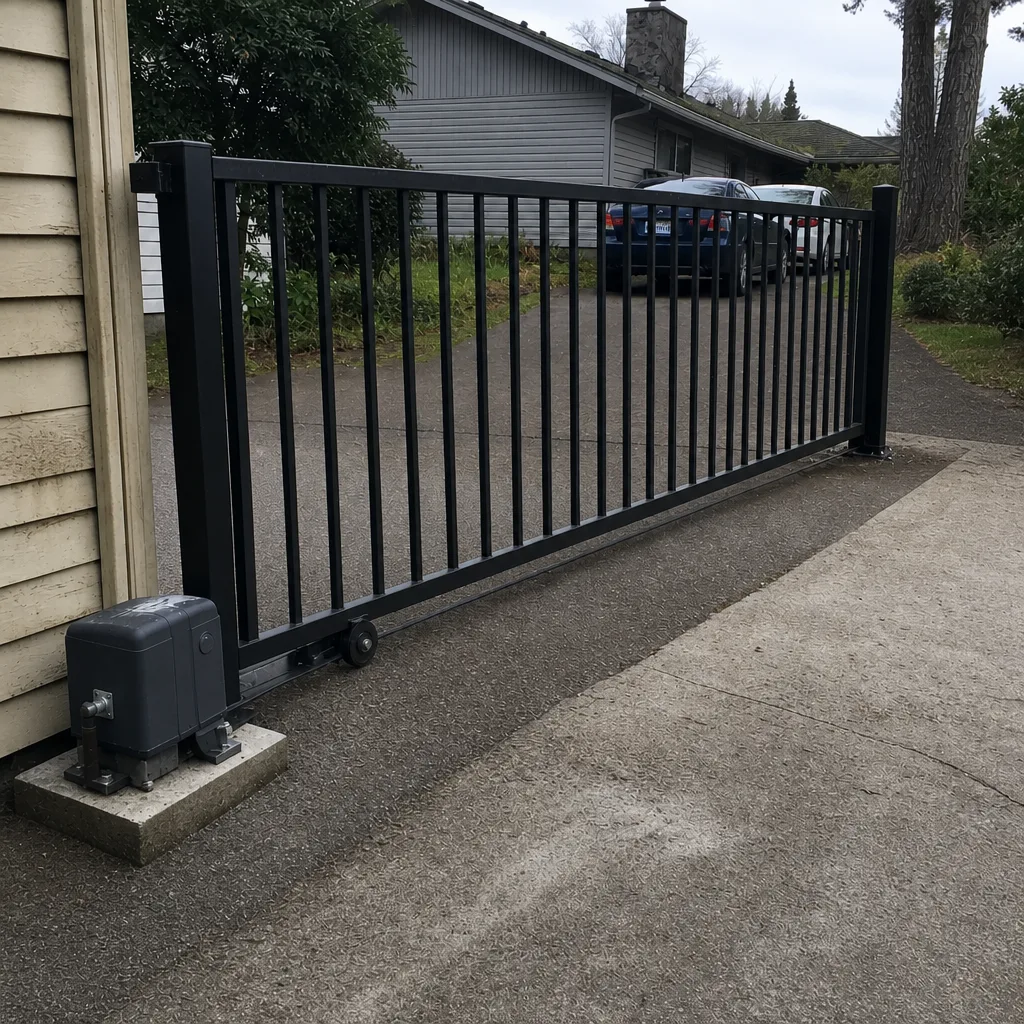
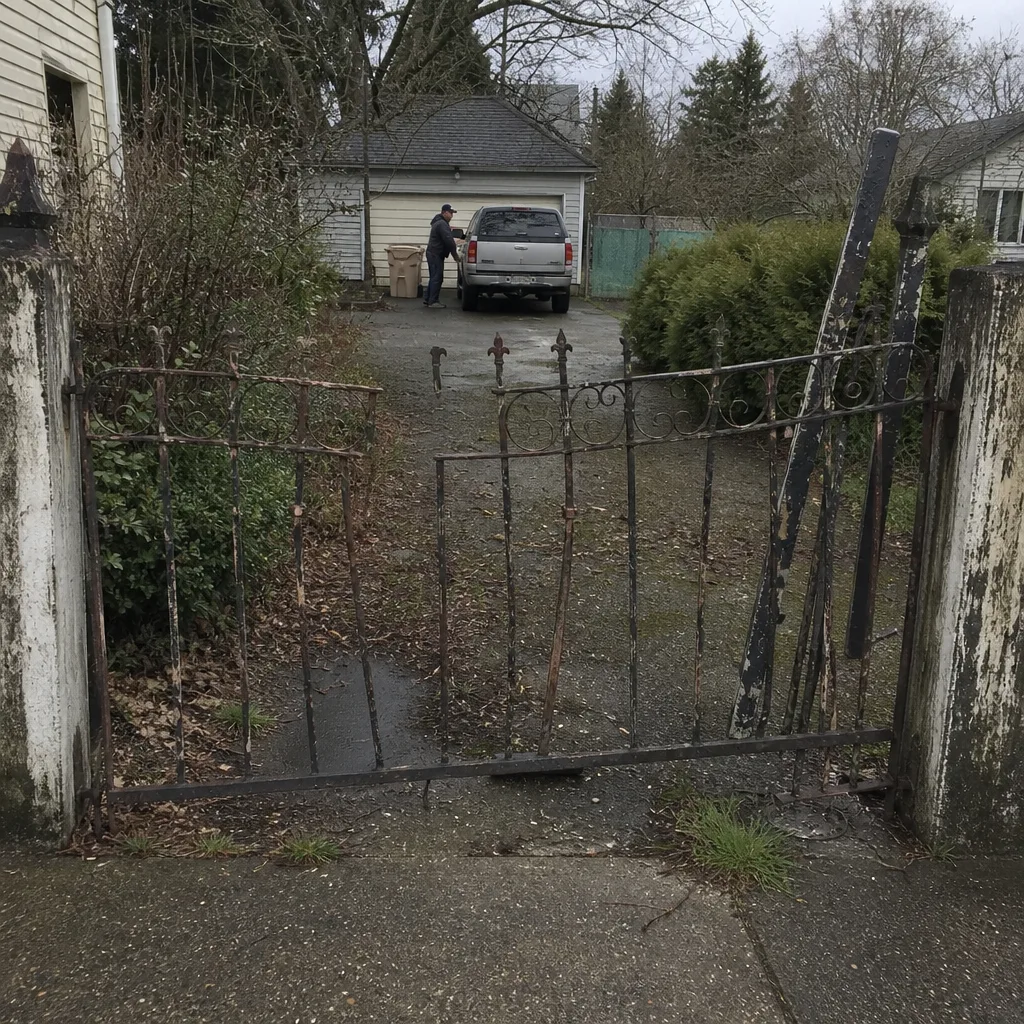
See the difference
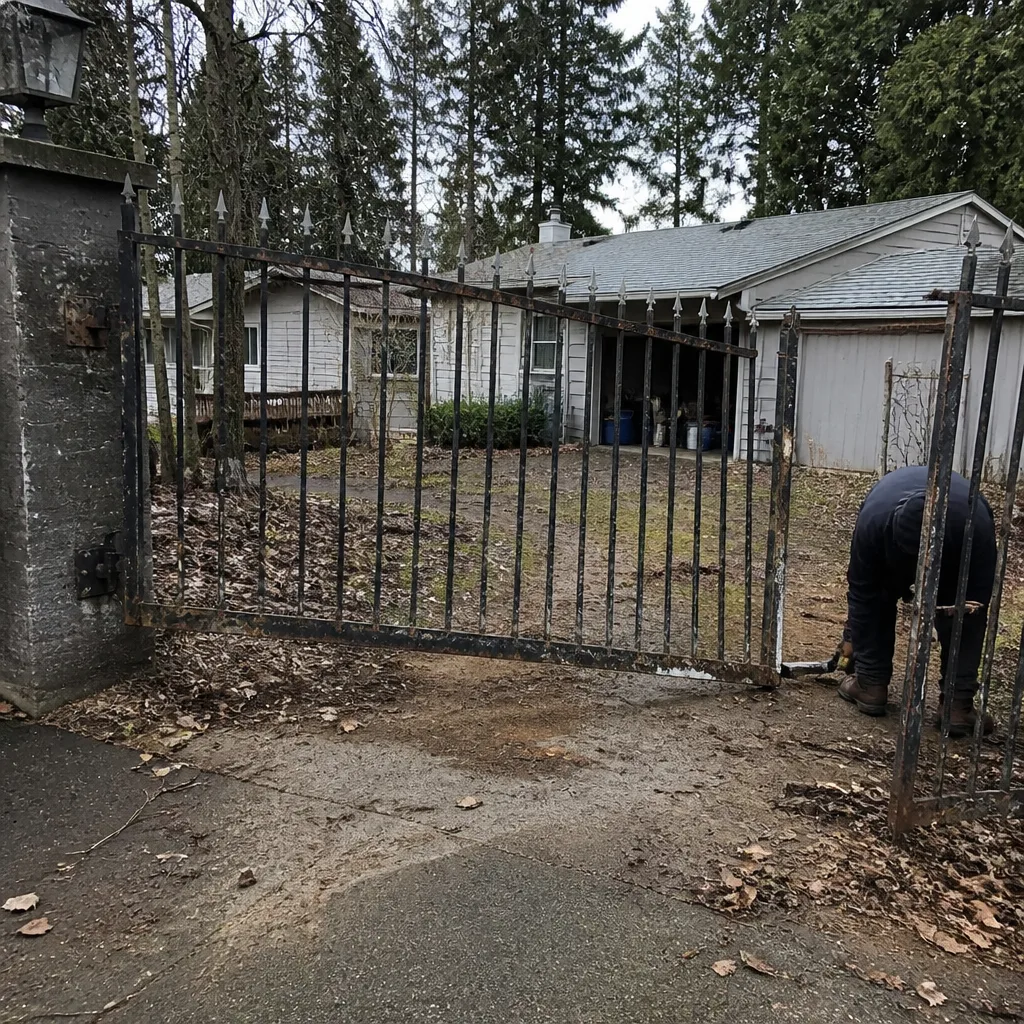 Before
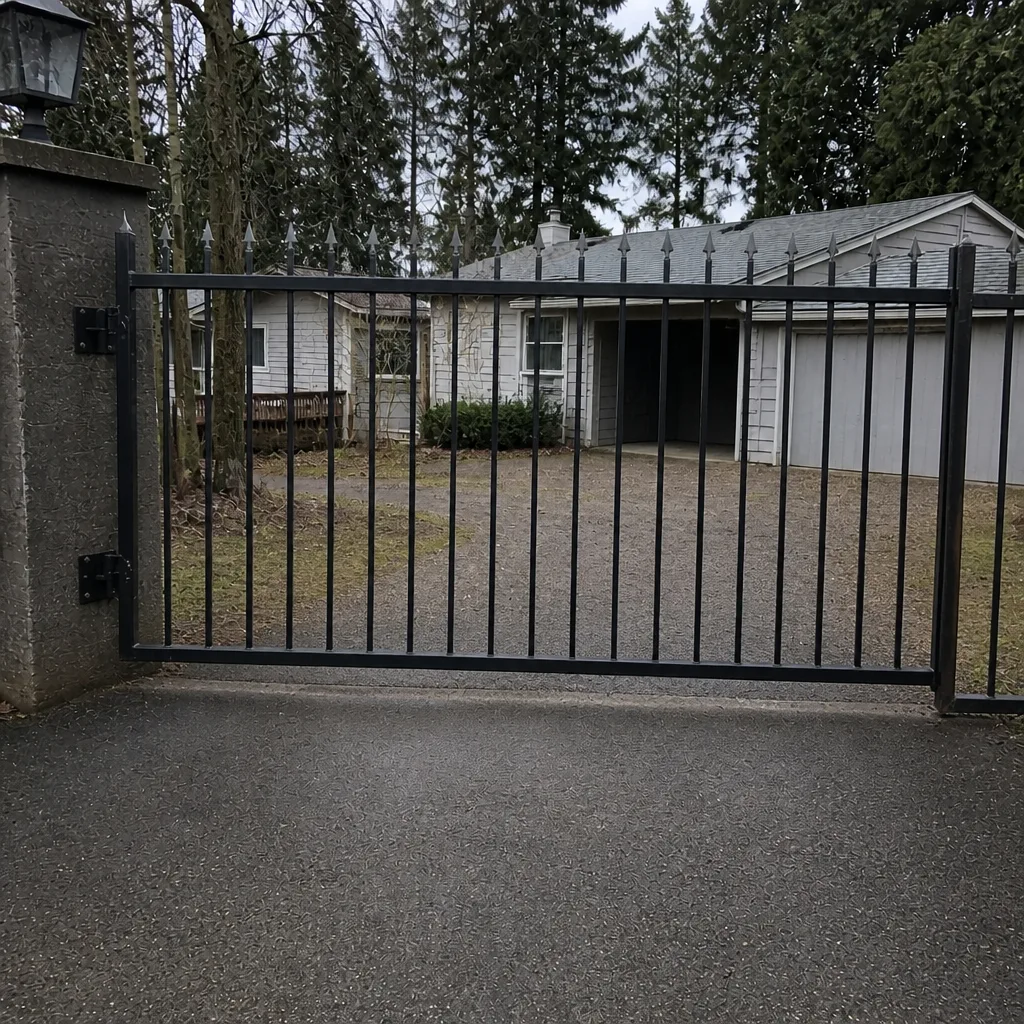 After
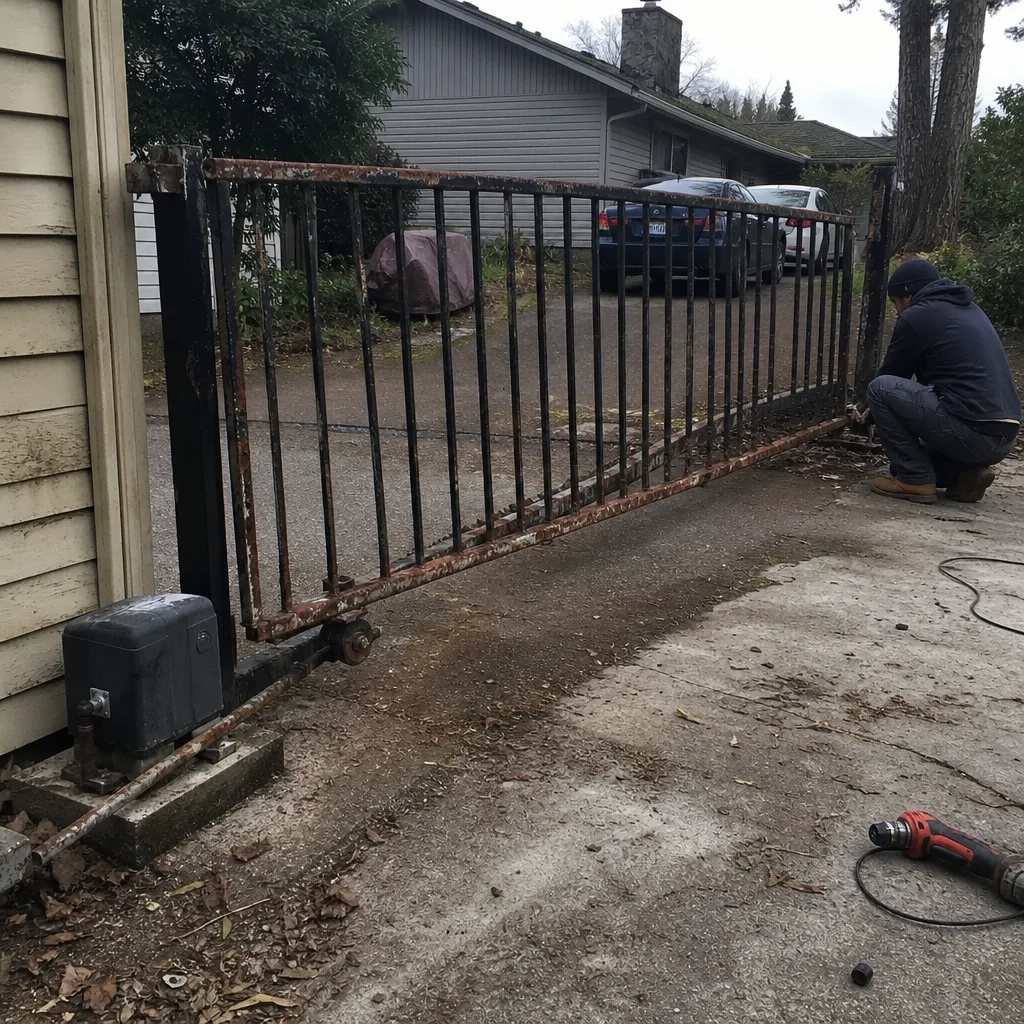 Before
 After
 Before
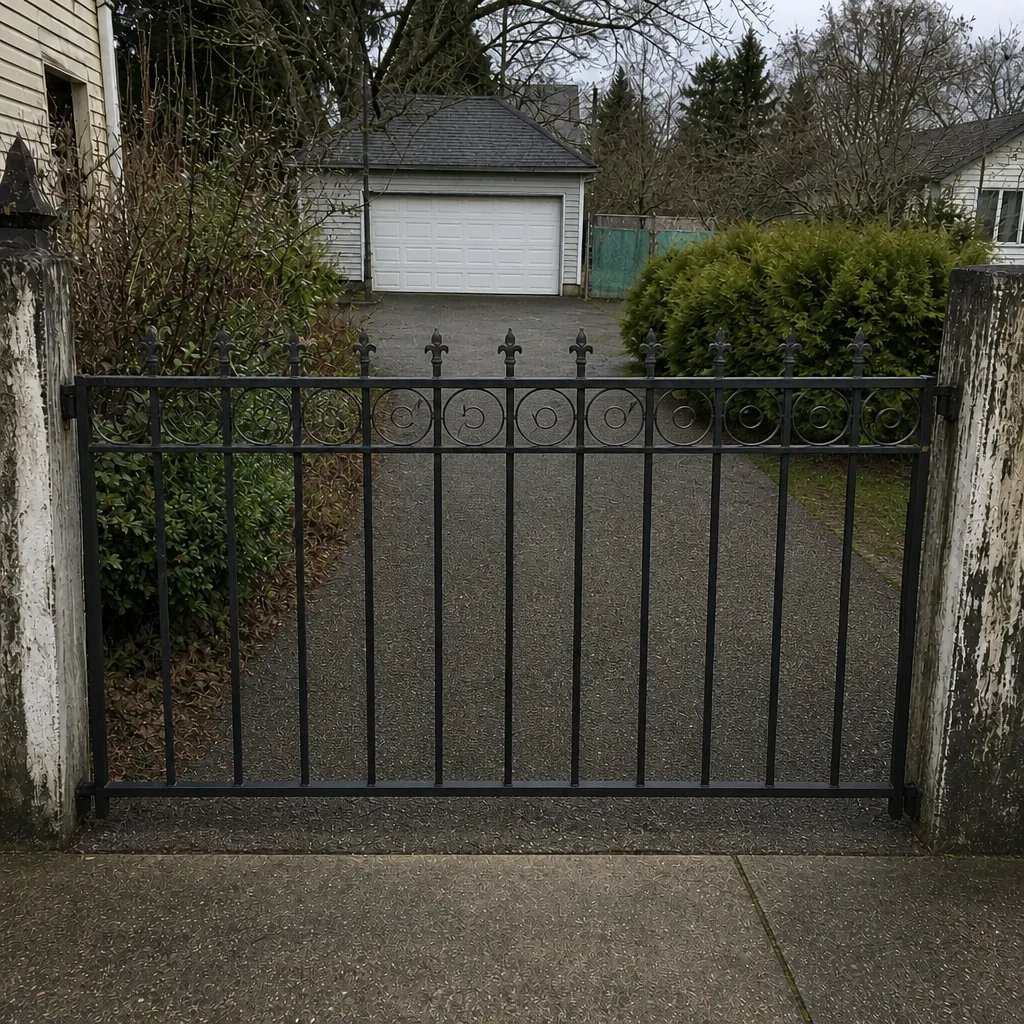 After
When to Call a Professional
Some gate faults are safe to diagnose at home. Some are not. Anything that involves opening the operator housing, the control board, the power supply wiring, or the safety loop wiring should go to a trained technician. If your gate has a high-voltage power run from the main panel, or if a gate is fitted with an access control system that’s tied into a building’s security, that’s technician work. A gate leaf that’s dropped on its hinge, a post that has moved, or a motor that’s been strained past its limits is a mechanical safety issue – a 400-pound gate that binds and stalls mid-travel can pinch, crush, or come off its track.
If both of the tests in this guide came back clean, and the gate still isn’t working, you’ve eliminated enough that a technician’s diagnostic visit is efficient. When your gate won’t respond to any input, or the motor is making sounds it shouldn’t, the fastest route is to stop testing and get a specialist on-site.
For gate repair in Kent, Gate Repair Kent offers free estimates. Call (855) 360-7358. We answer 24/7. Fast dispatch from 7am to 7pm, Sunday through Friday. Our technicians have up to 12 years of experience, and we work on the brand already on your property – LiftMaster, FAAC, BFT, Linear, Viking, Ghost Controls, DoorKing, Elite, or Mighty Mule – not around it.
Frequently Asked Questions
Gate repair in Kent is priced per job, so a limit switch adjustment and a control board replacement have very different costs. The right way to compare is on the written estimate: the price is quoted and agreed before any work starts, so you know the number before a technician begins. Call (855) 360-7358 for an exact quote – estimates are free.
Partially. We can rule out a dead remote battery, a tripped breaker, or a phantom safety loop fault in a couple of minutes by asking the questions this guide covers. That saves you a diagnostic visit for the easy causes. For anything that needs testing inside the operator housing or at the photo eyes, a technician has to be on-site. Call (855) 360-7358 and we’ll walk the categories with you.
A gate that only fails in wet weather is almost always showing an environmental fault – water in a low-voltage splice, a fogged photo eye, or a wet control board enclosure – rather than a mechanical failure. Kent’s wet winters make this one of the most common patterns we see. The good news is that the fix is usually a re-seal, a lens clean, or a splice repair, not a motor replacement. Call (855) 360-7358 to have it checked.
The number of blinks on a gate operator’s LED indicates a fault category, not a specific failed component. A LiftMaster or Viking or FAAC operator’s blink code tells a technician where to look; it does not tell a homeowner what to replace. A code that looks like an operator failure can often trace back to a mechanical bind or a dirty photo eye. Call (855) 360-7358 with the model number and blink count for a fast answer – estimates are free.
It depends on the failure category and the operator’s condition. Most limits, sensors, and mechanical faults are straightforward repairs. A failed motor or control board on a system past its service life is often a replacement call. The right answer comes from a written estimate, not a rule of thumb. Call (855) 360-7358 for a free on-site assessment before deciding.
Probably. We work on LiftMaster, FAAC, BFT, Linear, Viking, Ghost Controls, DoorKing, Elite, and Mighty Mule, including both residential-grade and commercial-grade systems. If your operator is one of those brands, we’re familiar with it before we arrive. Call (855) 360-7358 with your model number and we’ll confirm.
The Bottom Line
Gate repair troubleshooting gets a lot easier once you stop guessing and start categorizing. Assign your symptom to one of the six categories – power, signal, mechanical, sensor, operator, or environmental – and the diagnostic path stops branching. Run the manual release test and the obstruction test before you call; they eliminate roughly a third of service calls. Read error codes as category hints, not component verdicts. In Kent, remember that the wet winters and freeze-thaw cycles regularly produce mechanical symptoms that look electrical, so treat a weather-linked failure as environmental until proven otherwise. Call (855) 360-7358 for a free estimate on any gate repair, or visit our Gate Repair Kent hub to see the full range of gate and operator brands we service.
For specialist gate work that treats the motor and the hinge with the same attention, call (855) 360-7358. We answer 24/7. Fast dispatch from 7am to 7pm, Sunday through Friday. Estimates are free, and the price is set before any work starts. If you’re outside Kent, see our Kent page for the surrounding service area, and for automated system diagnosis specifically, our electric gate repair page covers what to expect.
Written by the team at Gate Repair Kent.