
Last updated November 15, 2026
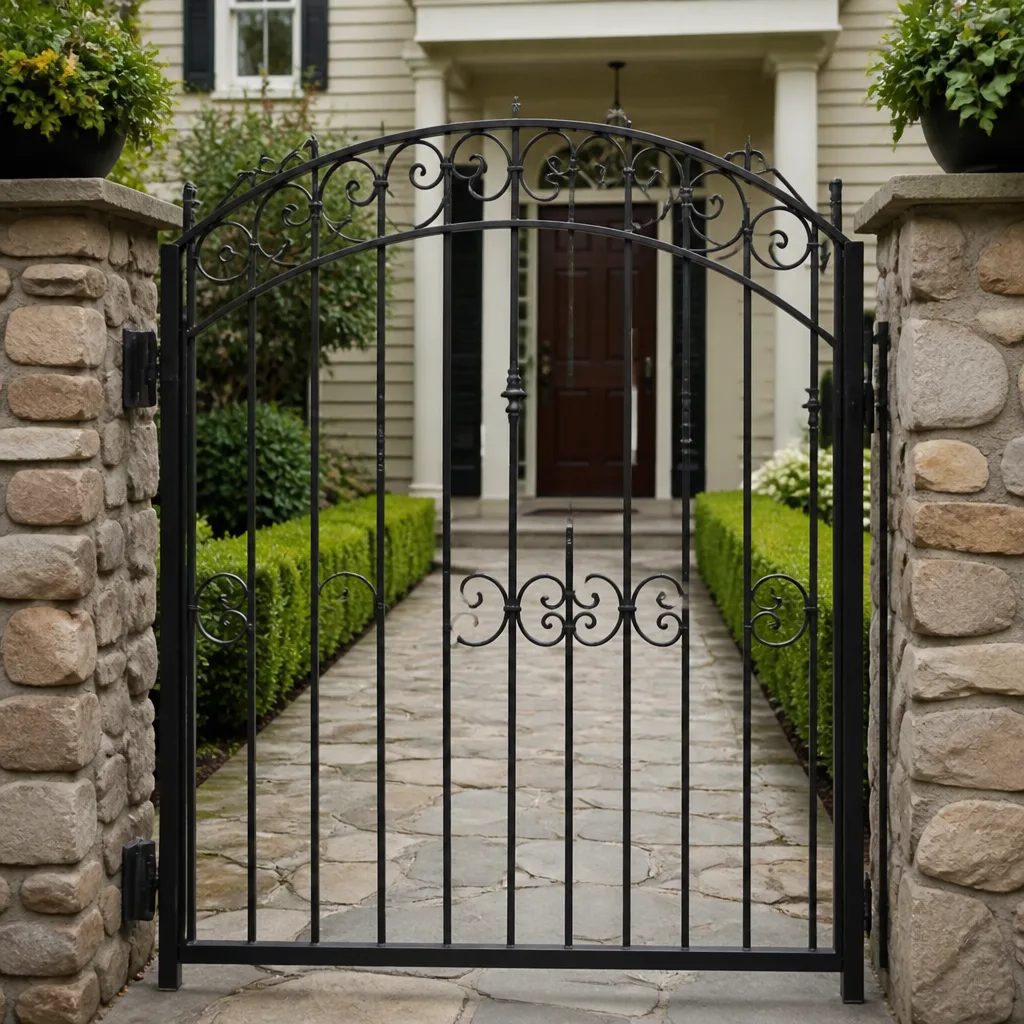 Wrought iron
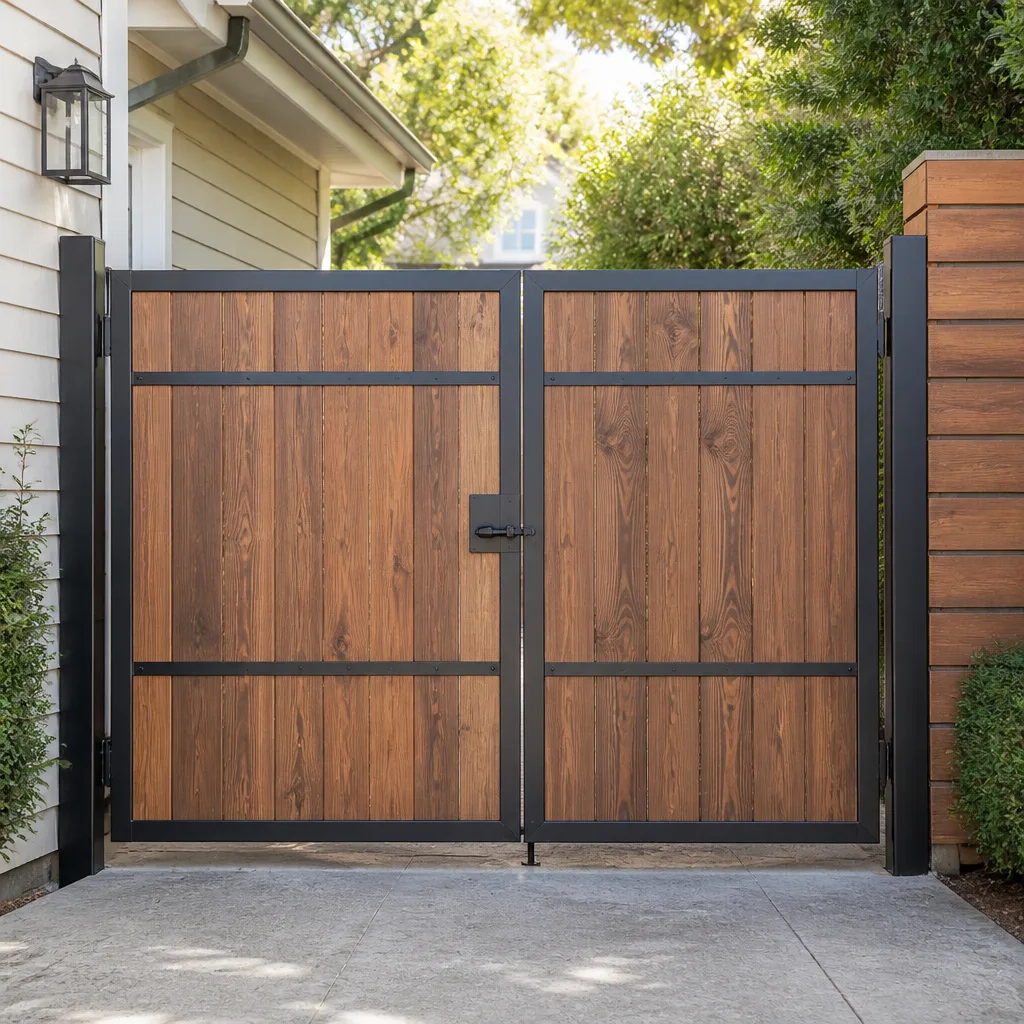 Wood & steel frame
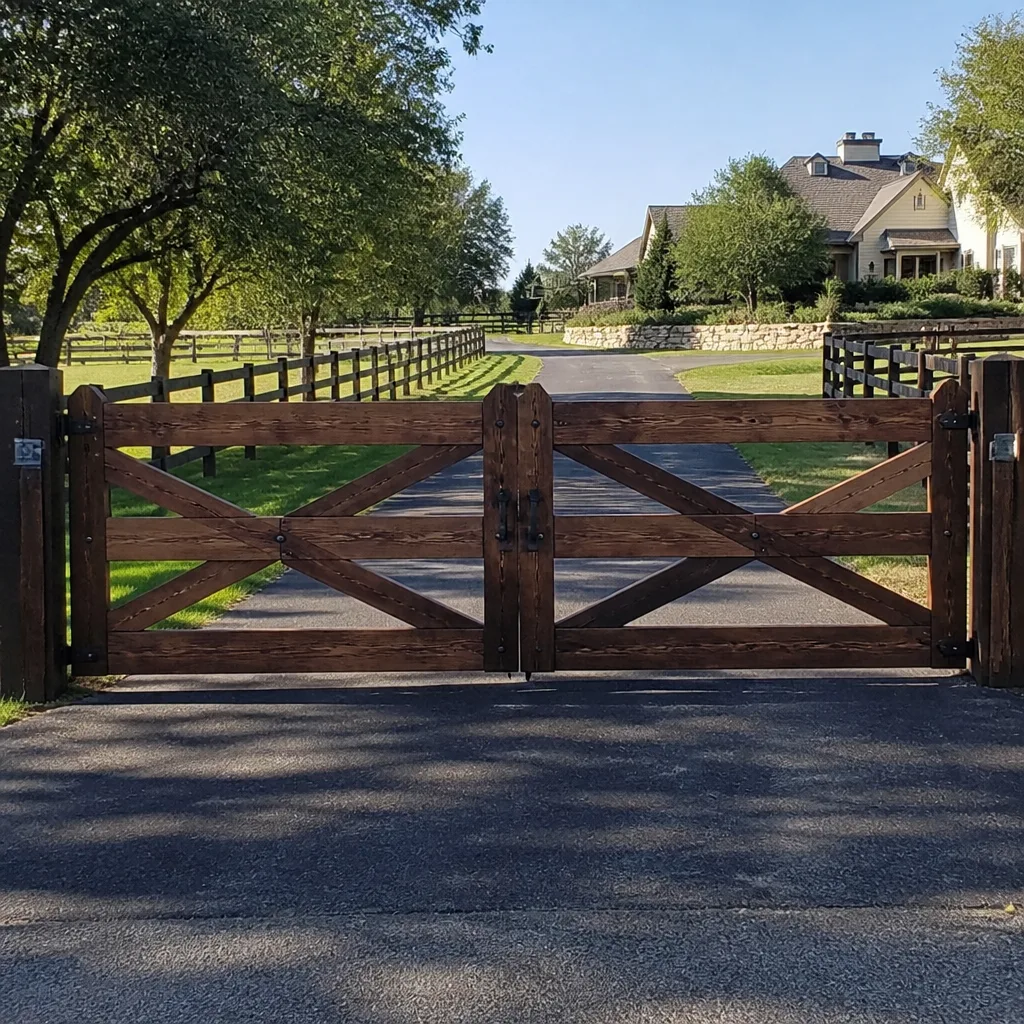 Farm & ranch
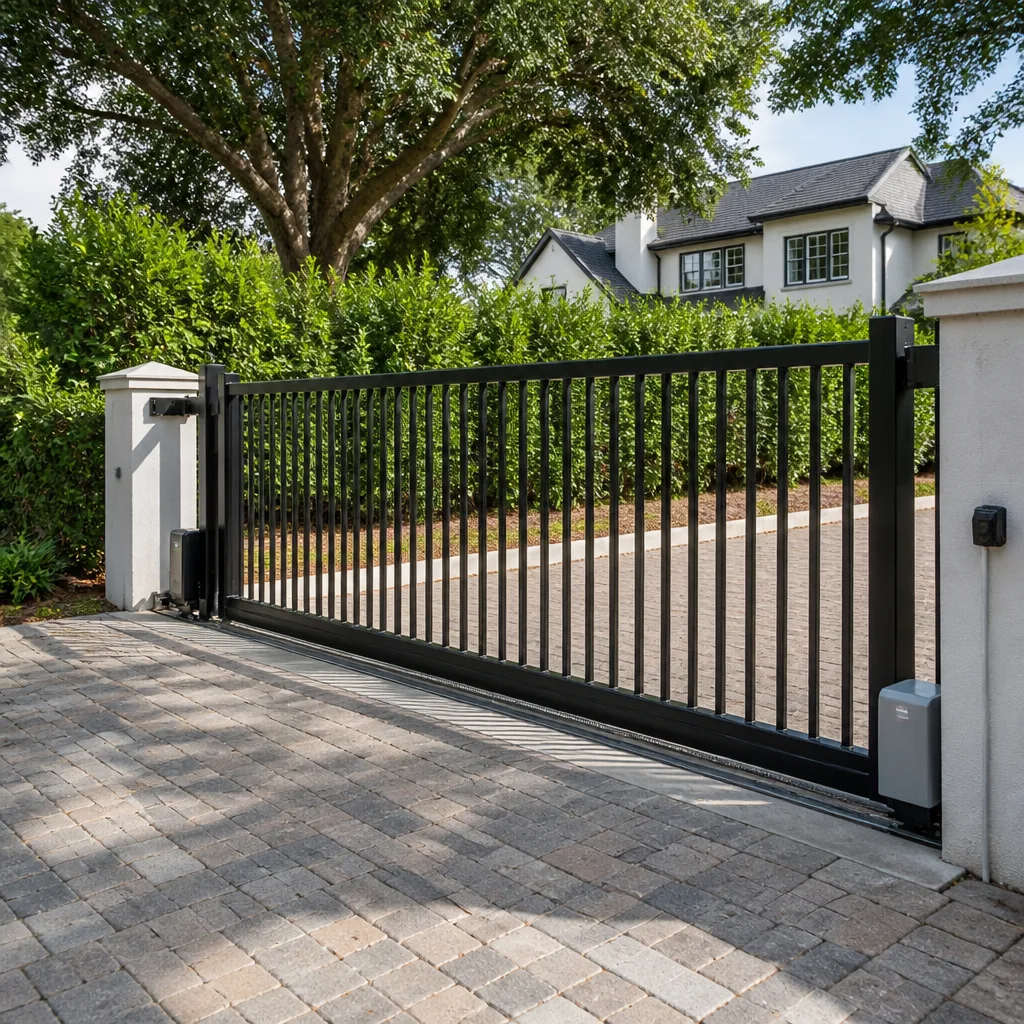 Sliding driveway gates
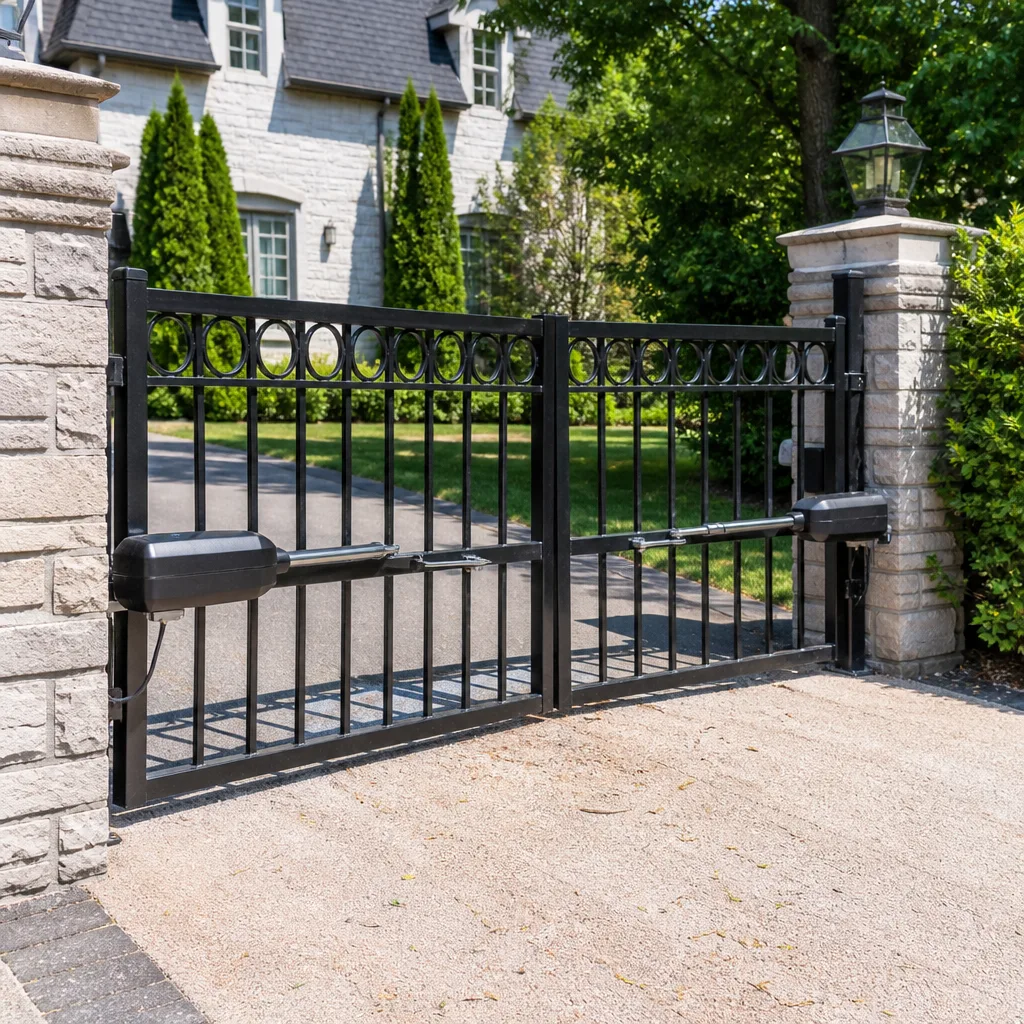 LiftMaster operators
Free on-site gate assessment - hinges, posts, and your LiftMaster or Nice gate operator checked before anything is quoted
The assessment is free and the quote is the invoice.
Get your free estimateGate Repair Permits, Codes & Inspections in Kent, WA: What You Need to Know
Replacing a gate operator in Kent can require an electrical permit under WAC 296-46B even when the system runs on low voltage. That one detail catches most homeowners off guard, and more than a few contractors, right up until an inspector flags the work. The confusion deepens because Kent’s permitting landscape is split: some parcels answer to the City of Kent, others to unincorporated King County, and the requirement for your repair or replacement depends on which side of that line your property sits.
This guide walks you through parcel lookup, the actual scope thresholds that trigger a permit, UL 325 entrapment protection and how inspectors check it, how HOA covenants stack on top of municipal code, and the paperwork you should walk away with when the job is done.
Quick Answer
In Kent, WA, most gate repair that keeps the existing operator, posts and wiring in place needs no permit. New gate installation, a full operator swap that involves new electrical work, and any change to the gate’s structure or footing usually do. Whether you pull that permit from the City of Kent or King County depends on your parcel’s jurisdiction, and automated operators must meet UL 325 entrapment protection regardless of which one applies.
Styles & brands we work with
- Wrought iron
- Wood & steel frame
- Farm & ranch
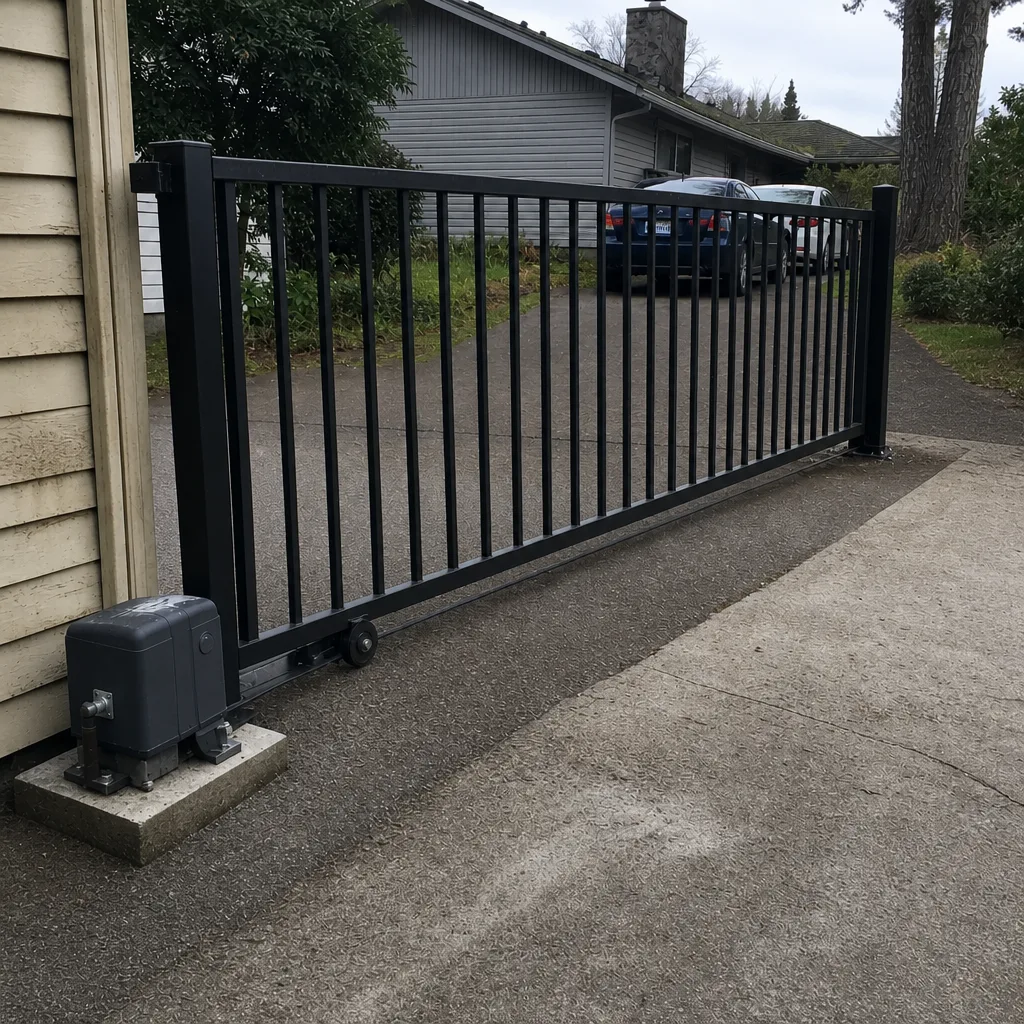
- Sliding driveway gates
- LiftMaster operators
Table of Contents
- Which Jurisdiction Covers Your Kent Property?
- How to Run a Parcel Lookup in Kent, Step by Step
- When Gate Work Triggers a Permit (and Which Kind)
- UL 325 Entrapment Protection and How Inspectors Verify It
- How HOA Covenants Layer on Top of Municipal Code
- The Documentation You Should Get at Job Completion
- What Happens on Inspection Day
- Common Mistakes to Avoid
Which Jurisdiction Covers Your Kent Property?
Kent is not a single permitting authority across every parcel within its mailing address. Parts of the area fall inside city limits and are permitted by the City of Kent, while other parcels sit in unincorporated King County and go through King County’s permitting system instead. Two neighbors on the same road can be dealing with different offices, different forms and different inspection schedules.
This matters because a gate project that’s legal under one jurisdiction’s process can trigger a stop-work order under the other’s. If you pull a city permit for a parcel that’s actually county jurisdiction, the work is unpermitted no matter how good the installation is. Getting this wrong mid-installation freezes your project right when the gate is half up and the old one is already gone.
How do you know? Three signals usually settle it:
- Your property tax statement lists the taxing district and often identifies the jurisdiction.
- King County’s parcel viewer shows the parcel’s jurisdiction and whether it sits inside a city boundary.
- Your recorded plat or short plat names the jurisdiction that approved the subdivision.
When those three don’t agree, call the jurisdiction directly. It’s a two-minute phone call that saves weeks. This is also where an experienced gate specialist earns their keep: a contractor who works across Kent regularly already knows which office handles which parcel, and can tell you before you commit to a design that requires a structural review.
One more wrinkle: HOA-controlled communities in Kent sometimes sit inside city limits but have their own architectural review board with stricter standards than the city’s. We’ll get to that below, but keep it in mind as you read on.
How to Run a Parcel Lookup in Kent, Step by Step
Here’s the exact process for determining your gate project’s permitting jurisdiction. It takes about ten minutes and saves you from a very expensive detour.
- Find your parcel number. It’s on your property tax statement, your deed, or your title report. If you don’t have any of those, search your address on King County’s parcel viewer by street address.
- Open the King County Parcel Viewer. Enter the parcel number. The record page shows the legal description, the taxing district, and whether the parcel is inside a city boundary.
- Check the jurisdiction field. If the parcel shows the City of Kent as the jurisdiction, you’re in city permitting. If it shows unincorporated King County, you’re in county permitting.
- Confirm with the city or county directly if the record is ambiguous or if your parcel sits near a boundary line. Call the City of Kent permit center or King County’s permitting office with your parcel number ready.
- Ask about overlays. Some parcels fall inside critical areas, shoreline designations, or a city-designated zone with additional review. The parcel record page usually flags these.
- Record what you find. Write down the jurisdiction, the office name, and any overlay note. That record goes into the file your contractor should keep for the project.
Once you know your jurisdiction, ask that office two questions: what scope of gate work requires a permit, and what inspection milestones are required. The answers vary by jurisdiction and by project type, and they’re free to ask.
When Gate Work Triggers a Permit (and Which Kind)
Not every gate repair or replacement needs a permit. The threshold turns on scope, not cost. Here’s how we think about it in the field, and it holds up against both city and county requirements in the Gate Repair Kent service area.
Work that usually needs no permit
- Repairing a gate operator to get an automated gate working again, where the existing wiring and mounting stay put
- Replacing a gate board, hinge, roller, or sensor with a like-for-like part
- Adjusting a gate’s travel limits or re-programming a remote
- Replacing a gate operator with a same-model unit on the existing circuit, when the jurisdiction allows a like-for-like swap without new electrical work
Work that typically needs a permit
- Electrical permit: new wiring, a new dedicated circuit, a new disconnect, or any change to the electrical service feeding the operator. This applies even at low voltage under WAC 296-46B, which is the detail most homeowners don’t expect. Whether a specific swap counts as “new electrical work” depends on the scope, so ask the permitting office with the project details in hand.
- Mechanical or structural permit: new posts, new footings, a change to the gate’s structural support, or a replacement gate that places load on the existing posts in a new way.
- Both: a full replacement of a new automated gate system on new posts almost always pulls both. Plan for it. A project that starts without those permits gets stopped until they’re issued, and by then the old gate is already gone.
One more factor: commercial gate installations in Kent sometimes require plans-review review before a permit issues, especially when the gate controls access to a shared driveway, parking lot or loading area. Residential installations are usually simpler. If you manage a commercial property, ask the permitting office whether your project needs plan review before you order the operator.
UL 325 Entrapment Protection and How Inspectors Verify It
UL 325 is the safety standard that governs automated gate operators. It requires entrapment protection in the form of sensors, edges, or a combination, so that a gate reverses or stops when a person or vehicle is in its path. In practice, that means your automated gate must have working primary entrapment protection before an inspector signs off.
The protections UL 325 requires depend on the operator’s type and how the gate moves. Here’s the practical picture:
- Photo eyes (also called non-contact sensors) break the beam and reverse the gate. These are the most common primary protection on residential slide and swing gates.
- Contact edges sense pressure when the gate meets an obstruction and trigger a stop or reversal. These are more common on commercial installations and on gates where the path of travel is unpredictable.
- Audible and visual warnings are required on many commercial operators, and an inspector will test them.
- Secondary means of protection may also be required depending on the operator’s type and the site.
Inspectors verify UL 325 compliance by testing the gate in motion, walking into the sensor path, and checking that the gate reverses or stops as it should. They’ll also look at the operator’s UL 325 label and the instruction manual’s required protection details. If your existing gate lost its photo eyes to damage and a repair got them working again, you’re fine. If a replacement operator was installed without its required sensors, you’re not.
This is one reason we ask which brand we’re working on before we send a technician out. LiftMaster, FAAC, BFT and a dozen others handle UL 325 compliance differently. We work on the brand already on your property, so the sensor setup matches the operator and the inspector’s expectations. For the electrical side, our electric gate repair technicians deal with this daily.
How HOA Covenants Layer on Top of Municipal Code
If your property is in a Kent HOA, the HOA’s architectural covenants apply alongside, not instead of, city or county code. You need to satisfy both. The covenant review usually happens first, because the HOA has to approve the design before you submit for a permit.
Where the two conflict, the stricter requirement controls. The city might allow a taller gate than your HOA’s covenant does, or the county might have no opinion on a color while your HOA specifies one. In a conflict, you meet the more restrictive standard, not the permissive one.
Common HOA covenants that affect gate work in Kent:
- Maximum gate height and style
- Approved materials and finishes
- Visibility requirements (how much of the gate has to be see-through)
- Automation requirements (some HOAs require automated gates on shared access points)
- Setback from property lines and from the street
- Approval of any lighting or signage tied to the access control system
The practical order of operations: HOA architectural review first, then permit application with the HOA approval attached. If you skip the HOA step, the city or county may still issue the permit, but the HOA can require you to modify the gate afterward, and that’s usually more expensive than modifying the design before it’s built. For HOA managers in Kent, this is worth writing into your board’s standard process so it doesn’t get skipped.
The Documentation You Should Get at Job Completion
The paperwork that comes with your gate job matters twice: once for the permit file and inspection, and again when you sell the property. Buyers and their agents ask for it, and so do inspectors. Here’s what a gate contractor should hand you before they leave.
- The signed permit and the final inspection record from whichever jurisdiction issued it. If the job needed an electrical permit, you should have the electrical inspection record too.
- The operator’s UL 325 label and instruction manual for the specific model installed. The manual is what the next owner, or the next technician, needs to know what protections are required.
- A written description of the entrapment protection installed (photo eyes, contact edges, warnings) and a note on where each is mounted.
- The electrical scope documentation if new wiring or a new circuit was run. This helps the next electrician and any future inspection.
- As-built drawings or photos of the gate, posts and operator mounting. Not every project needs these, but any new installation should generate them.
- A written warranty on the workmanship, separate from the manufacturer’s warranty on the operator. Read it before you pay the final invoice.
- HOA approval documentation, if applicable, so the file is complete when the property changes hands.
Assemble the whole package in one folder. When you go to sell, that folder is the difference between a smooth disclosure process and a scramble for records at the last minute.
What Happens on Inspection Day
An inspection is a code review, not a quality review. The inspector is checking that the work matches the permitted scope and meets the standards the permit calls out. Here’s the sequence we walk our customers through, so they know what to expect.
- The inspector arrives with the permit and the approved plans. They’ll verify the site address, the jurisdiction, and the scope of work against what was permitted.
- For electrical scope, they’ll check the wiring, the disconnect, the grounding, and the labels. They may test for continuity and for the presence of required barriers or covers.
- They’ll test the UL 325 entrapment protection. Photo eyes, contact edges and audible warnings all get exercised in the order the operator’s manual specifies.
- For structural scope, they’ll look at the posts, footings and gate attachment. Depth and material at footing are checked against what the permit drawings show.
- They’ll complete the inspection record and either sign off or write up items to correct. Correction items are normal on any project with structural or electrical scope.
- Final sign-off closes the permit and generates the record you keep with the gate documentation.
Two things get flagged most often in Kent: an operator installed without its required entrapment protection, and new wiring done without an electrical permit. Both are fixable, but both extend the project timeline. Getting the permit scope right at the start is the cleanest way to avoid it.
Common Mistakes to Avoid
- Assuming the mailing address determines the jurisdiction. A Kent mailing address covers both city and unincorporated county parcels. Check the parcel, not the address.
- Skipping the electrical permit on a low-voltage operator. WAC 296-46B applies here. A low-voltage operator that changes the service or wiring still needs what the permit office says it needs, so ask before you install.
- Ordering the new operator before checking the parcel jurisdiction. The wrong jurisdiction on the permit means a stop-work order mid-installation, when the old gate is already gone. Check the parcel first, then order the equipment.
- Installing a new operator without matching entrapment protection. A replacement that skips photo eyes or contact edges fails UL 325 review and inspection. The new unit has to meet the manufacturer’s entrapment protection requirements, not just the old unit’s.
- Getting HOA approval after the permit is issued. HOA review should come first. If the HOA requires a modification afterward, you pay for it twice.
- Not keeping a complete permit file. The permit, final inspection record, UL 325 manual, and any HOA approval should live in one folder. When you sell the property, buyers and their agents will ask for them.
- Hiring a generalist for a scope the permit office views as electrical or structural. A contractor who doesn’t regularly pull gate permits in Kent misses scope details that cost you time and money. We’ve seen it on projects we’ve been called in to finish. A gate repair specialist knows the scope before the permit is filed.
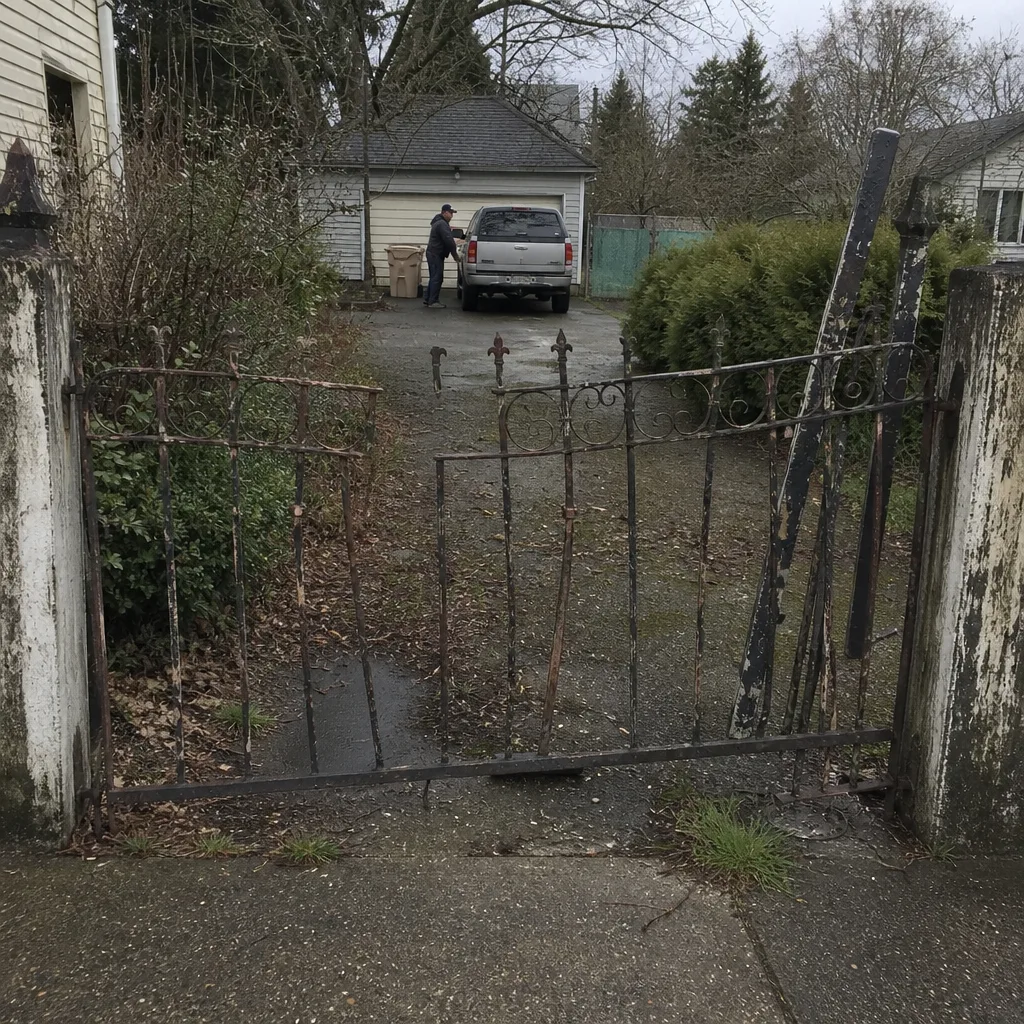
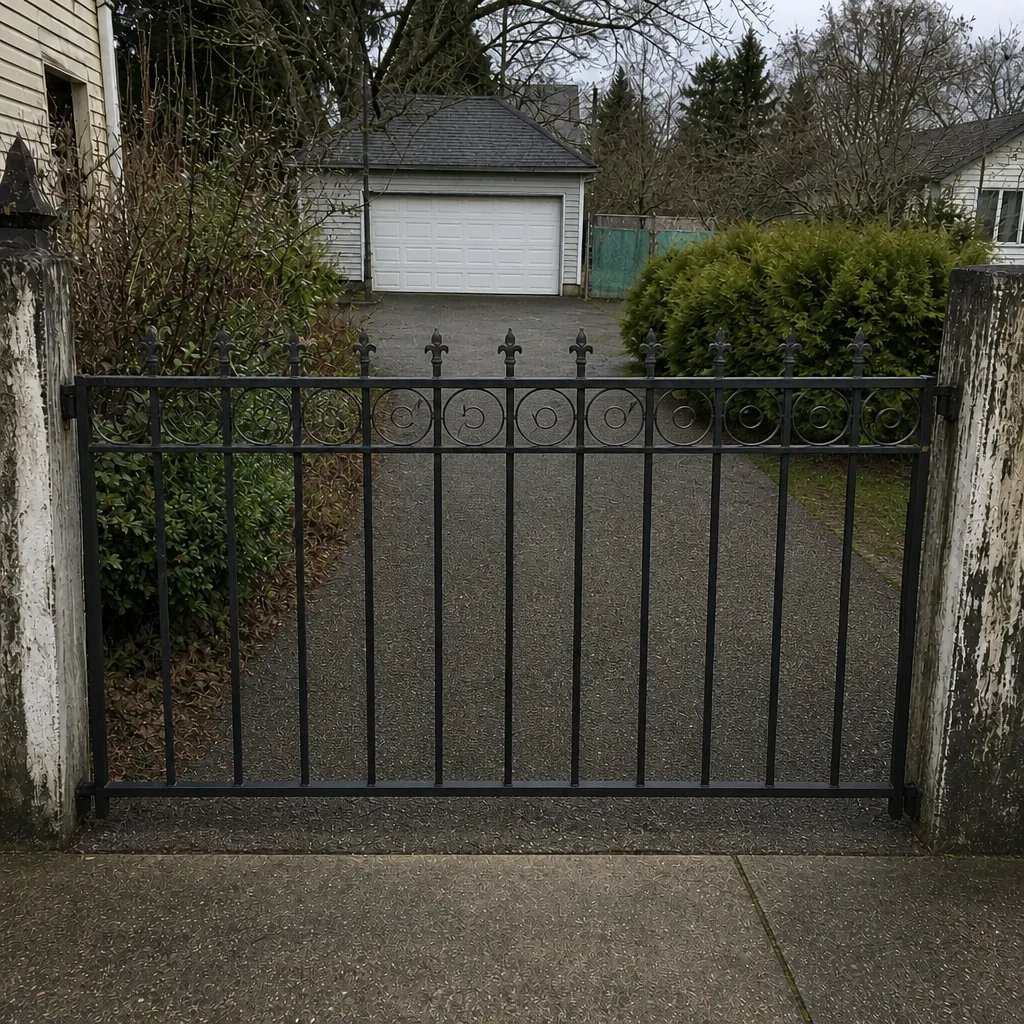
See the difference
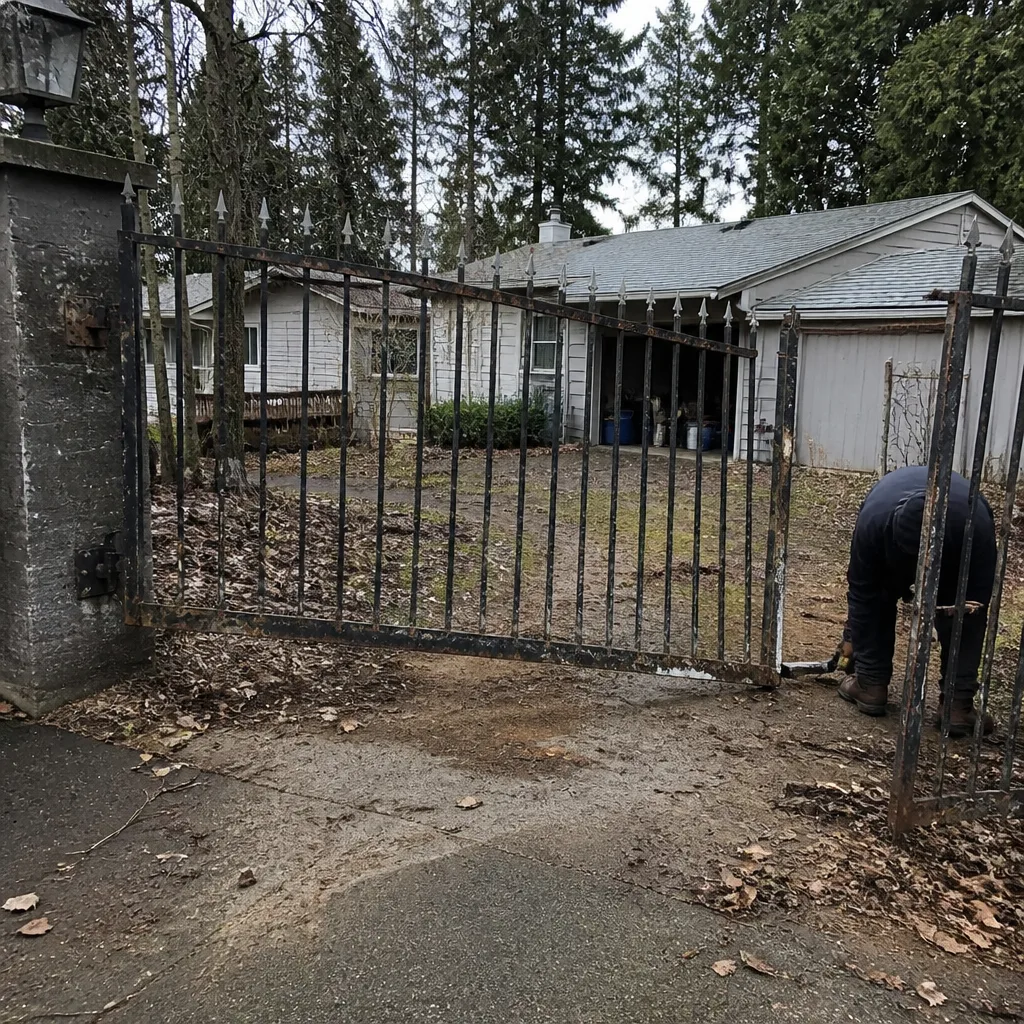 Before
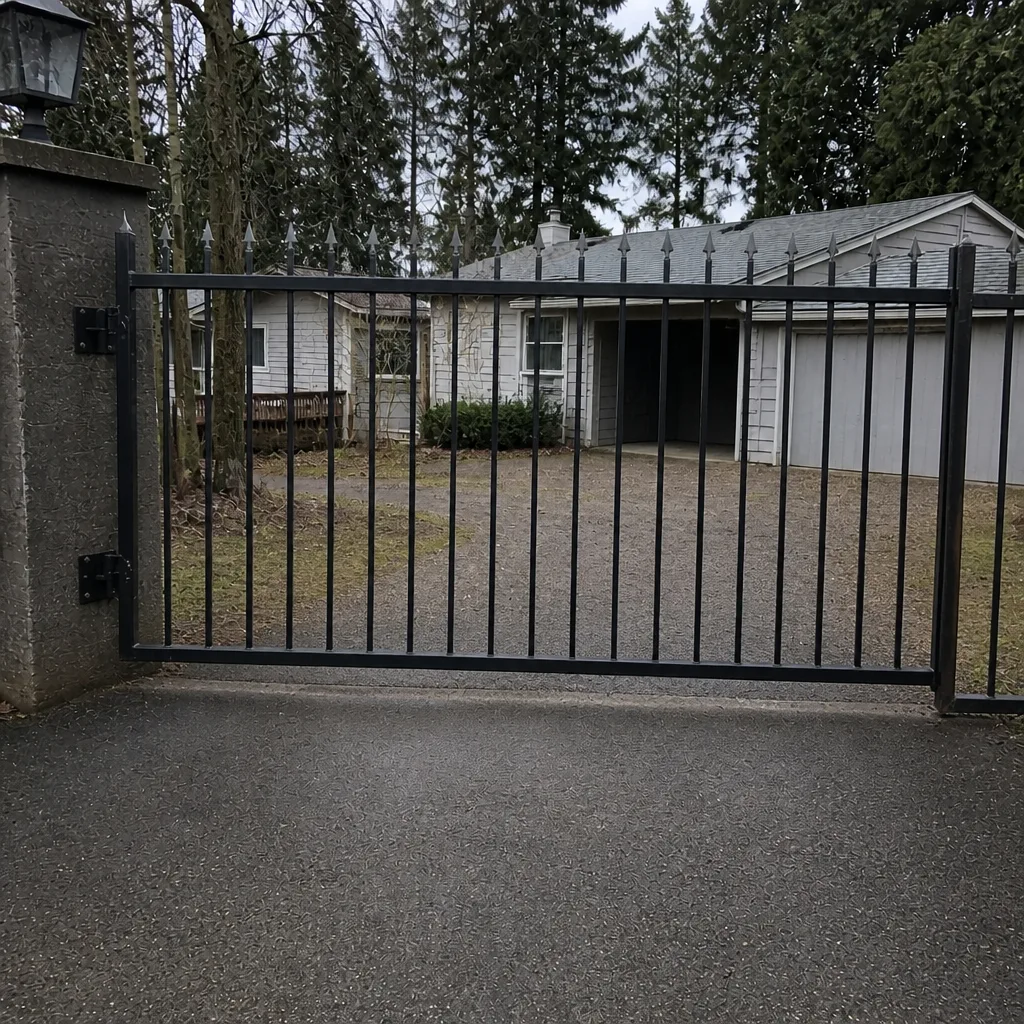 After
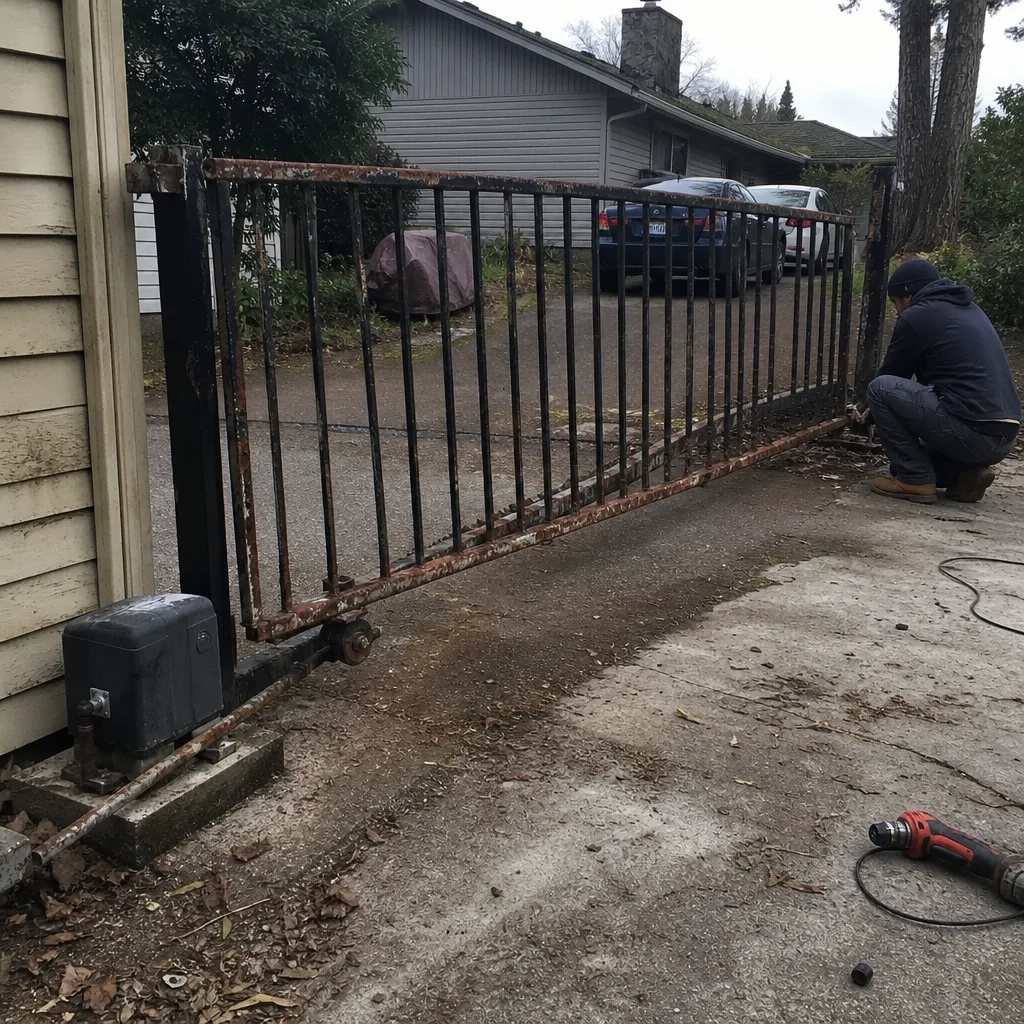 Before
 After
 Before
 After
When to Call a Professional
Some situations call for a trained technician, not a weekend project. You need a professional if your gate’s electrical service is being modified or extended, if your posts or footings are being replaced, if a new automated operator is being installed on an existing gate, or if your current gate is failing UL 325 entrapment protection in ways a repair can’t fix. You also need one if you’re a commercial property owner or HOA manager in Kent and your access control system ties into shared driveways or parking areas, because those installations usually need plans review and coordination with the property’s electrical service.
Gate Repair Kent offers free estimates in Kent. Call (855) 360-7358 for a free estimate. We work with LiftMaster, FAAC, BFT, Mighty Mule and other major operator brands, and our technicians have up to 12 years of experience.
Frequently Asked Questions
In most cases, repairing an existing gate (hinges, boards, sensors, operator programming) without changing the electrical service, posts, or structural support does not require a permit. Whether yours counts as a repair or as new construction depends on the scope and on your parcel’s jurisdiction. Call (855) 360-7358 for a free estimate and we’ll help you figure out which side of that line your project falls on.
It often is, especially when the replacement involves new wiring, a new circuit, or a new operator where the UL 325 entrapment protection needs to be re-verified. Whether the specific swap needs a permit depends on the scope and on the jurisdiction (City of Kent vs. King County), and the electrical side may require a permit under WAC 296-46B even at low voltage. Call (855) 360-7358 for a free estimate and we’ll walk through the scope with you.
Look up your parcel number on the King County Parcel Viewer: the record page shows the jurisdiction. If the record is ambiguous or the parcel sits near a boundary line, call the City of Kent permit center or King County’s permitting office with the parcel number ready. Call (855) 360-7358 if you want help reading the record before you order equipment.
UL 325 requires entrapment protection on automated gate operators, typically photo eyes, contact edges, warning lights or a combination, so the gate reverses or stops when something is in its path. The exact requirement depends on the operator type and the gate’s movement. Inspectors verify compliance by testing the gate in motion and checking the operator’s UL 325 label and manual. Call (855) 360-7358 for a free estimate on entrapment protection repair or upgrade.
No, the HOA doesn’t override the city or county code; both apply, and the stricter requirement controls where they conflict. In practice, you get HOA architectural approval first, then file the permit with that approval attached. Call (855) 360-7358 for a free estimate and we’ll help you sequence the approvals before the project starts.
You should receive the signed permit, the final inspection record, the operator’s UL 325 manual and label, a written description of the entrapment protection installed, any electrical scope documentation, and HOA approval documents if applicable. Keep all of it in one folder for the permit file and for future resale disclosure. Call (855) 360-7358 for a free estimate and we’ll walk you through what to expect at job completion.
The Bottom Line
Kent’s permitting landscape is split between the City of Kent and unincorporated King County, and the permit requirement for your gate project depends on which jurisdiction your parcel falls into, not on your mailing address. Most repairs need no permit. New installations, full operator swaps with new electrical work, and any change to the gate’s structure usually do. Automated operators must meet UL 325 entrapment protection regardless of jurisdiction, and low-voltage electrical work can still trigger a permit under WAC 296-46B. Get the parcel jurisdiction right, sequence HOA approval before the permit application, and keep the full documentation package in one file. That checklist keeps your project moving and your paperwork clean.
If you’re unsure what your Kent gate project needs, or you’d rather have someone who works these permits daily handle the details, we’re a phone call away. Call (855) 360-7358 for a free estimate. We answer 24/7. Fast dispatch from 7am to 7pm, Sunday through Friday. We work on the brand already on your property, residential or commercial, automated or manual, from the motor to the hinge.
Written by the team at Gate Repair Kent.