
Last updated November 15, 2026
 Wrought iron
 Wood & steel frame
 Farm & ranch
 Sliding driveway gates
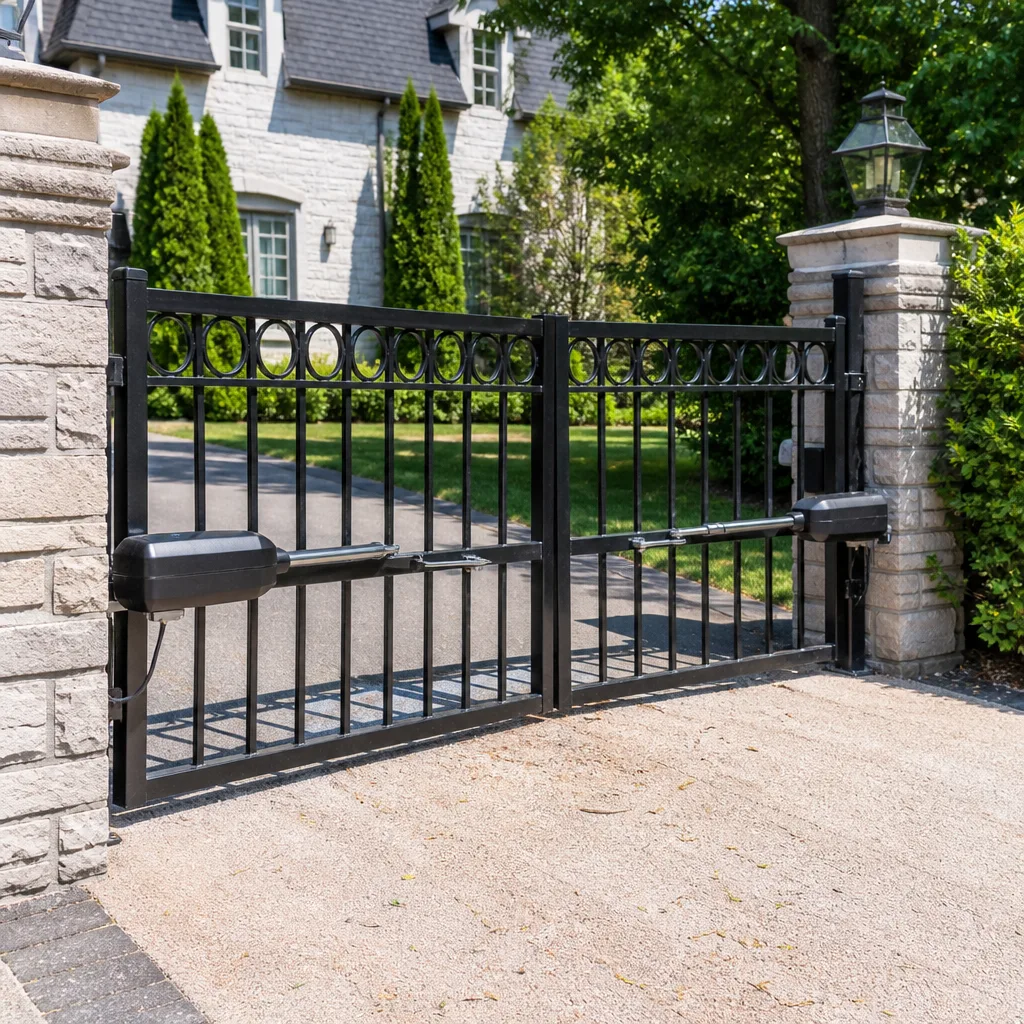 LiftMaster operators
Free on-site gate assessment - hinges, posts, and your LiftMaster or Nice gate operator checked before anything is quoted
The assessment is free and the quote is the invoice.
Get your free estimateGate Repair Maintenance Schedule: What to Do and When
A gate that opens 40 times a day ages four times faster than one that opens 10 times, yet most maintenance guides treat every gate the same. That’s the flaw in nearly every schedule you’ll find online. A calendar-based checklist tells you to lubricate “monthly” whether you share a driveway with one household or manage a commercial lot with constant traffic. The result is over-serviced gates in quiet residential settings and neglected hardware on busy ones. What actually determines when a gate needs attention is its cycle count, its operator type, and how Kent’s seasonal weather stresses the moving parts. This guide gives you a maintenance framework built around how your gate really ages, so you can stop guessing and start scheduling. Call (855) 360-7358. We answer 24/7. Fast dispatch from 7am to 7pm, Sunday through Friday. Our technicians have up to 12 years of experience.
Quick Answer
Build your gate maintenance schedule around annual cycle count rather than the calendar: low-use residential gates need hardware checks and lubrication about every six months, while high-cycle gates on shared or commercial driveways need checks every 90 days or sooner. In Kent, add pre-winter hydraulic and fluid inspections, post-storm sensor alignment after wind events, and freeze-thaw hinge checks at the seasonal transitions. Lubrication points, product types, and who performs each task matter as much as the timing.
Styles & brands we work with
- Wrought iron
- Wood & steel frame
- Farm & ranch
- Sliding driveway gates
- LiftMaster operators
Table of Contents
- Why Cycle Count Matters More Than the Calendar
- Kent’s Seasonal Stress Points for Gates
- The Exact Lubrication Points and Correct Products
- Maintenance Tasks That Affect Your Warranty
- The Full Checklist: 30-Day, 90-Day, and Annual Tasks
- Matching Your Schedule to Your Operator Type
- Preparing Your Gate Before Kent’s Cold Season
Why Cycle Count Matters More Than the Calendar
A gate cycle is one full open-and-close sequence. If you count how many times your gate cycles on a typical day and multiply by the days it operates, you get an annual cycle count that tells you far more about maintenance needs than elapsed months. A single-family driveway that cycles 10 times a day runs about 3,650 cycles a year. A shared driveway or a small commercial entrance cycling 40 times a day runs closer to 14,600. The moving parts on the second gate wear roughly four times as fast.
We work on the brand already on your property, and that matters here because manufacturers rate their operators differently. Some residential operators are built for lighter duty and will show hardware wear sooner at high cycle counts. Commercial-grade systems are engineered for heavier duty but need their own service intervals to stay reliable. If you don’t know your operator’s rating, our electric gate repair technicians can assess it during a service visit.
To calculate your own cycle count, work through these steps:
- Count the opens on a normal weekday. Multiply by weekdays per week.
- Add any additional opens on the days your property sees more traffic, such as deliveries or scheduled access.
- Multiply by the number of weeks your gate operates.
- Express the result as cycles per year, then compare it against your operator’s rated duty cycle.
Once you have that number, the rest of your schedule falls into place. A gate running double the expected cycles should move its inspection intervals earlier, whichever name brand sits on it.
Kent’s Seasonal Stress Points for Gates
Kent’s climate puts specific demands on gate hardware that a generic national checklist ignores. The rainy season, frost and freeze-thaw cycles, and the wind that comes with winter storms each target different components. In our experience, the gates that fail earliest in King County are the ones that got no attention between October and March.
Here’s what each season stresses and what to watch for:
- Early winter: The shift to cold, wet weather is when hydraulic fluid in operators like FAAC and BFT units deserves a look. Cold thickens fluid and can slow operation or strain the motor. Before the coldest stretch, have the fluid level and condition checked.
- Freeze-thaw periods: When water freezes overnight and thaws during the day, hinge pins, bearing points, and brackets on swing gates take the load. Inspect every hinge for play, rust bloom, and stiffness after each cold snap.
- Post-storm: Wind events are notorious for shifting slide gate alignment and knocking safety sensors out of position. After a major storm, run the gate and check that it reverses on contact and that the safety edges register before anything in the way.
- Wet season: Constant damp is hard on track surfaces on slide gates, where debris and leaf litter collect and turn into a gritty paste that accelerates roller wear.
These are the tasks where local knowledge saves money. A technician who knows how Kent’s winters land will check the specific parts that give out here, not a generic list. When you need Kent gate work, we can walk you through what your system needs for the season ahead.
The Exact Lubrication Points and Correct Products
Using the wrong lubricant is worse than skipping the job. A thin product like WD-40 on a roller or hinge strips away the heavier grease underneath and leaves bare metal, which then wears faster and collects grit. Over-oiling a track does the same thing: it attracts dirt that turns into an abrasive paste. The right product at the right point keeps the gate smooth; the wrong one speeds its decline.
The lubrication points and correct products break down by gate type:
- Swing gate hinges and pivot points: A lithium grease or a dedicated gate hinge lubricant. These are heavy-contact, slow-moving points that need a product that stays put under load.
- Slide gate track: Clean the track first, then apply a dry or silicone-based lubricant sparingly. Keep it to the rollers and their bearing surfaces rather than flooding the rail.
- Slide gate rollers: A grease suited to sealed or shielded bearings. If the rollers are sealed, they may need replacement rather than lubrication.
- Latch and striker hardware: A light grease where metal slides against metal, wiped clean and reapplied rather than layered on.
- Operator gear and drive components: Follow the manufacturer’s specification for your operator model. This is not a homeowner task on most systems.
One more rule: lubing everything is not the goal. Over-lubrication is a common cause of premature wear on slide gates because it traps grit in places that would otherwise stay clean. The skill is knowing which points need product and which need to stay dry, which is why consistent lubrication belongs on a schedule with a trained eye behind it.
Maintenance Tasks That Affect Your Warranty
Most operator warranties spell out what the owner is responsible for and what voids coverage. The detail that gets property owners into trouble is that some maintenance work has to be done correctly and on time, or the manufacturer can decline a claim on a part that failed because of neglected service. Skipping lubrication entirely, or over-lubricating a point the manual says to keep dry, can both be cited against you.
The tasks to keep strict records of include:
- Lubrication on hardware and operator components the manual specifies. Use the product the manufacturer recommends and log the date.
- Battery replacement on any battery-backed operator or accessory. A swollen or dead backup battery can damage the control board, and neglecting it may not be covered.
- Safety sensor and reversal testing. If a sensor was never tested and a malfunction causes damage later, expect the warranty question to come up.
- Fluid checks on hydraulic operators, including units from brands like Ghost Controls and Linear. Keep a record of when fluid was inspected and topped off.
- Service performed by a qualified technician on the operator internals or the power side of the system. Attempting those yourself can void coverage on the whole unit.
Our technicians are familiar with the requirements across the major operator brands, so a service visit can keep your record in order. We’re independent and experienced with the brand on your property rather than tied to one manufacturer, which means we work from the manual your system came with.
The Full Checklist: 30-Day, 90-Day, and Annual Tasks
This is the schedule itself, broken into intervals and labeled by who should handle each task. Use it as your working document. The “owner” tasks are safe to do yourself; the “technician” tasks should go to someone qualified, either because they involve the operator’s internals or because a mistake there causes real damage.
Every 30 Days (Owner)
- Run the gate and watch the full travel. Note any hesitation, sticking, or unusual noise.
- Clear debris, leaves, and grit from the slide track or the swing arc.
- Test the safety sensors by placing an object in the path; the gate should reverse before contact.
- Check the emergency release or manual override operates freely.
- Look for new rust, looseness, or missing fasteners on hinges and brackets.
Every 90 Days (Owner or Technician)
- Lubricate the appropriate hardware points with the correct product (owner-safe on swing hinges and slide rollers).
- Check hinge pins and brackets for play; tighten fasteners where accessible.
- Inspect the operator’s exterior for moisture ingress, cracks, or insect intrusion.
- Have the operator’s internal gear and drive components inspected on high-cycle installations (technician).
- Review any recent post-storm alignment issues and re-test the safety edges.
Annually or by Cycle Count (Technician)
- Full operator service, including gear inspection and lubrication to the manufacturer’s spec.
- Hydraulic fluid check and top-off on hydraulic operators.
- Battery and backup-power inspection or replacement.
- Safety sensor and reversal system calibration.
- Structural check: post stability, bracket integrity, and any sag on the gate frame.
- Wiring and power-side inspection by a qualified technician.
High-cycle gates should compress these intervals: the 90-day tasks become monthly, and the annual service may need to be split into two visits. A gate running a commercial duty schedule cannot wait a full year between technician service and stay reliable.
Matching Your Schedule to Your Operator Type
Operator design changes what your schedule should look like. A swing operator and a slide operator wear differently, and a residential system from brands like Ghost Controls or Mighty Mule has different service needs than commercial-grade equipment from BFT or DoorKing. Treating them all the same is where generic schedules fall short.
Here’s how the main types differ:
Swing operators carry load through hinges and pivot points, so those become the wear points. The arm linkage, the pivot, and the hinge get more attention. Freeze-thaw cycles in Kent hit these harder because the gate resists the operator more in cold weather.
Slide operators run on a track and rollers, where grit and debris are the enemies. The track needs cleaning more often than a swing gate’s arc, and the rollers and their bearings are the parts most likely to need service. A slide gate on a property near trees or with debris blowing across the entrance will need track cleaning more frequently.
Hydraulic versus electromechanical operators differ in their service needs: hydraulic units from FAAC and BFT need fluid checks, while electromechanical units put more emphasis on gear and brake inspection. Both need the same attention to the power and control side.
If you don’t know which type or brand you have, a service visit can identify it. Our gate repair technicians handle both residential and commercial systems, so the schedule they build matches what’s actually installed. That’s the advantage of a specialist rather than a generalist who has to guess.
Preparing Your Gate Before Kent’s Cold Season
Late autumn is the right time to get a gate ready for what’s coming. Kent’s cold season brings rain, frost, and wind, and the work you do before it arrives determines how many problems you avoid during it. This preparation is what separates a gate that comes through winter smoothly from one that needs an emergency repair in January.
Work through these steps before the first hard freeze:
- Have the operator’s hydraulic fluid checked on FAAC, BFT, and other hydraulic units, and top off as needed.
- Lubricate all hinge points, pivots, and roller bearings with the correct product, and clean the track.
- Inspect hinges for play and freeze-thaw damage from the previous season; replace any that are worn.
- Test every safety sensor and reversal function, and realign any that are loose.
- Check the operator’s battery or backup power, and replace if weak.
- Clear runoff paths around posts and the operator so standing water doesn’t freeze against them.
- Have the wiring and power side inspected if it hasn’t been checked in the past year.
Gates used for real security, whether on a residential property or a commercial lot, can’t afford a mid-winter failure at the worst moment. When you need Gate Repair Kent work before the season turns, we can get your gate ready and give you a schedule for the months ahead.
Common Mistakes to Avoid
- Lubricating everything with the same product. A thin spray that seems to work on one point can strip the grease off another and leave bare metal. Match the product to the point, and keep dry points dry.
- Ignoring cycle count and sticking to a calendar. A busy commercial gate and a quiet driveway gate don’t age at the same rate. Scheduling both on the same six-month cycle means one gets over-serviced and the other under-serviced.
- Skipping post-storm checks. Wind events shift slide gate alignment and move safety sensors more often than owners realize. A few minutes of checking after a storm avoids a bigger repair.
- Lubricating the track too heavily. Flooding a slide track with grease traps grit and turns it into an abrasive paste. Clean first, then apply sparingly.
- Doing operator internals yourself. Opening the operator or touching the power side can void your warranty and risks injury. Leave those tasks to a qualified technician.
- Forgetting the freeze-thaw hinge inspection. Hinges take the load when a swing gate stiffens in cold weather. Check them after cold snaps, not just once a season.
- Neglecting the battery and backup power. A dead battery behind the control board can fail the unit at the moment it’s needed most. Put it on the annual list.
See the difference
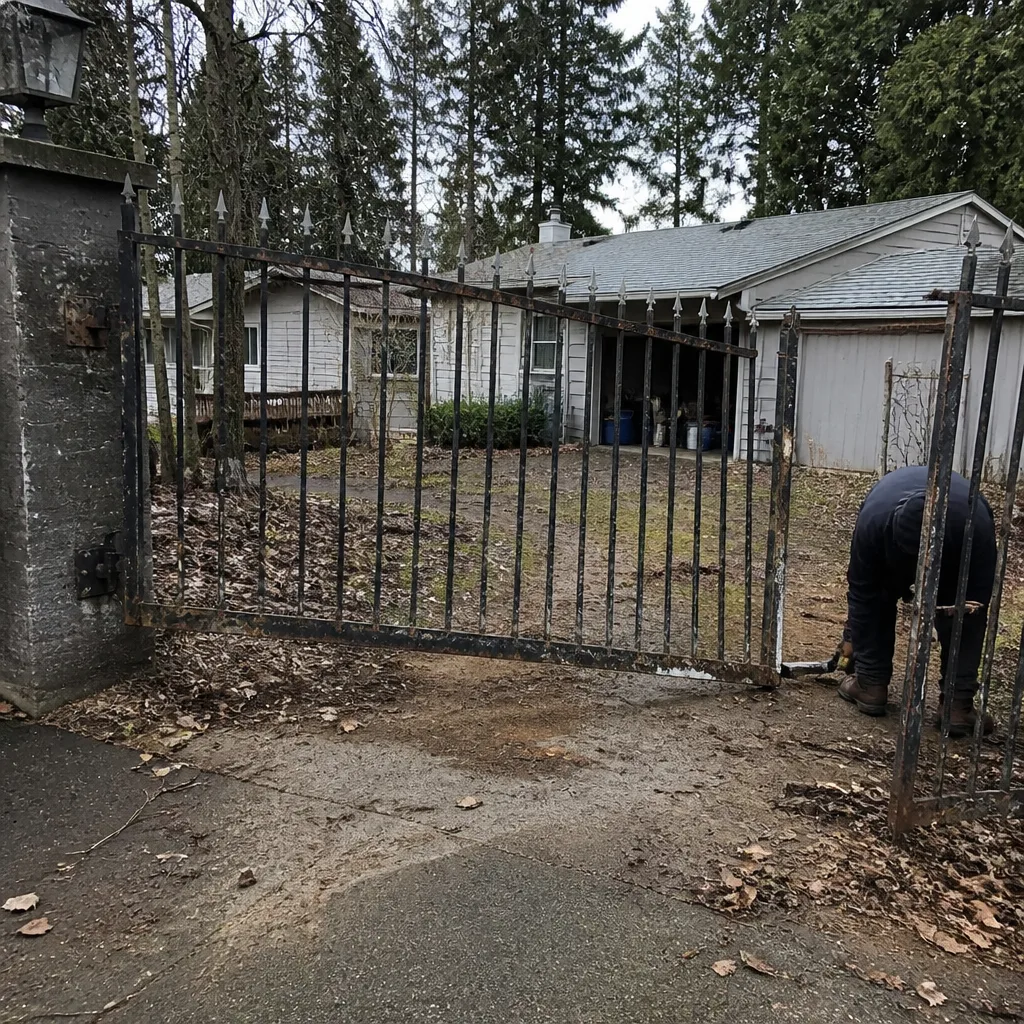 Before
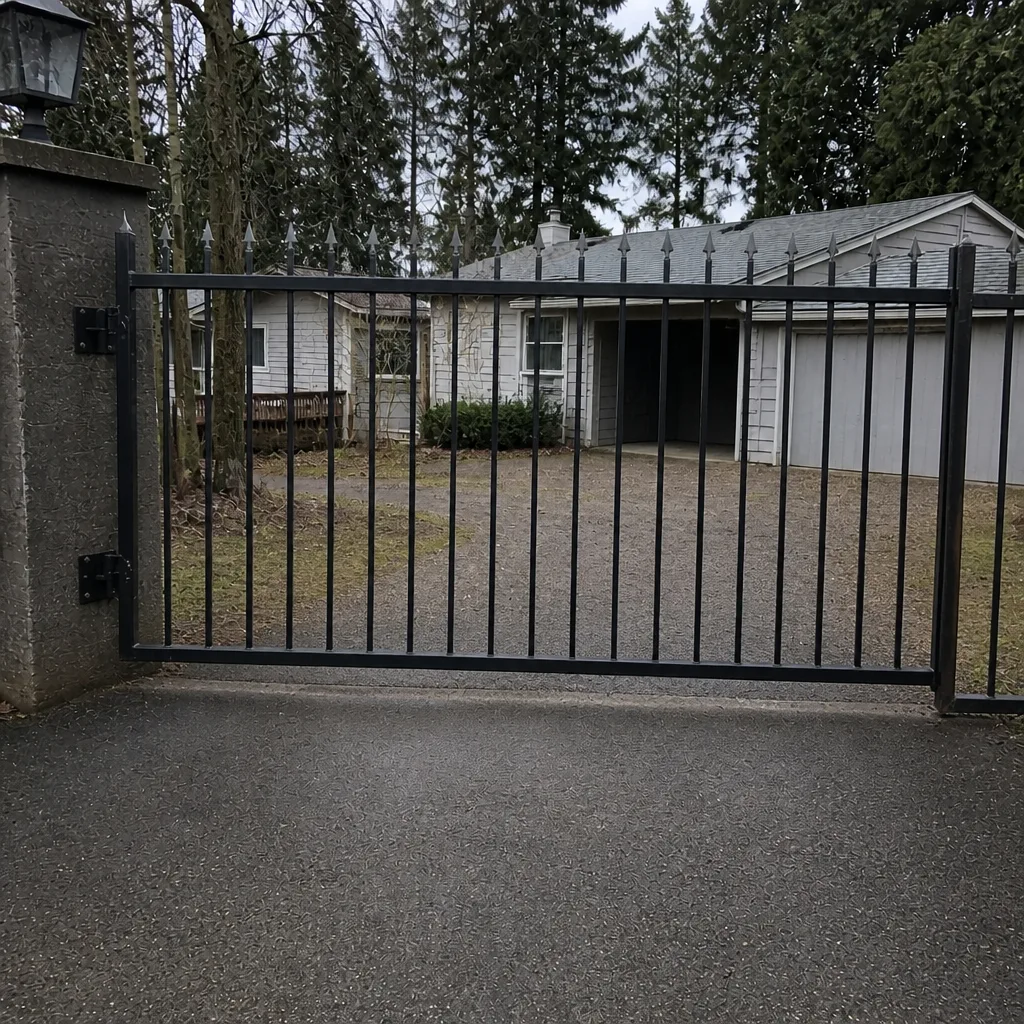 After
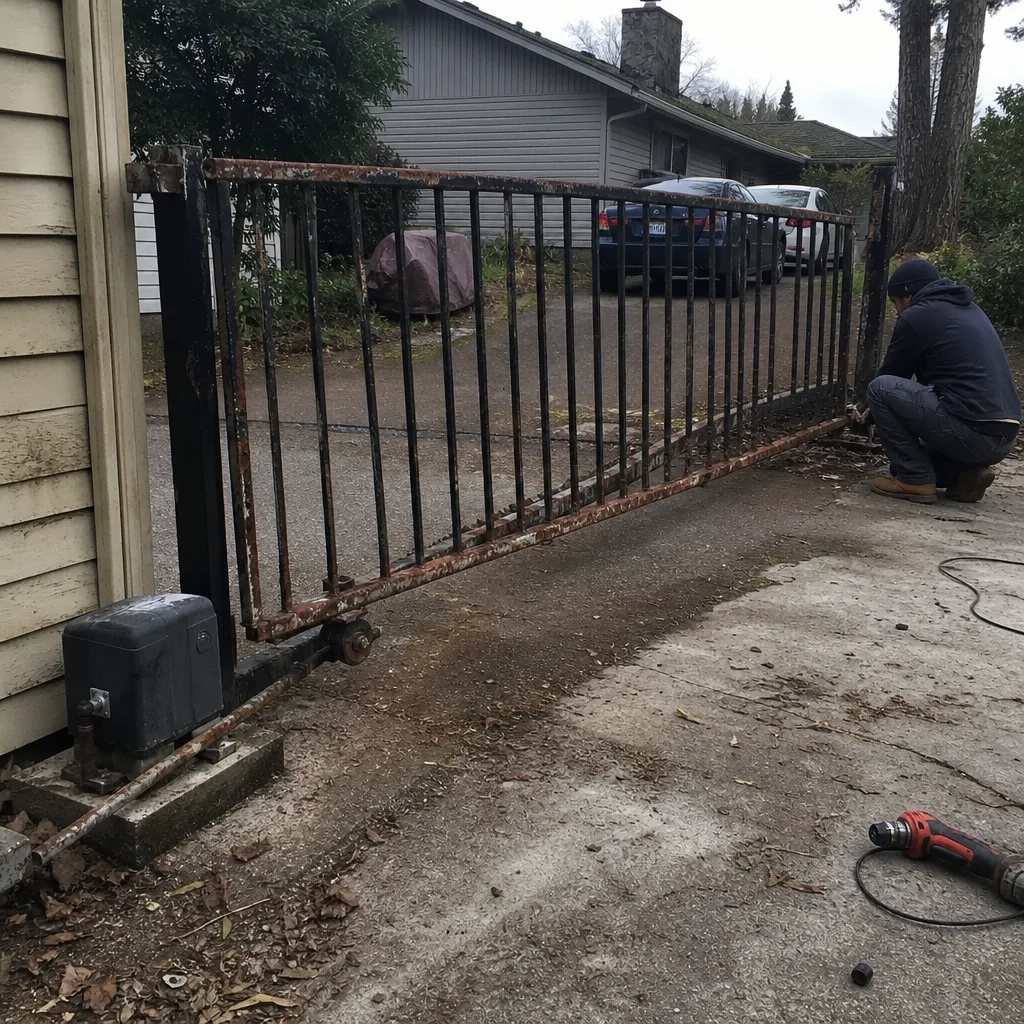 Before
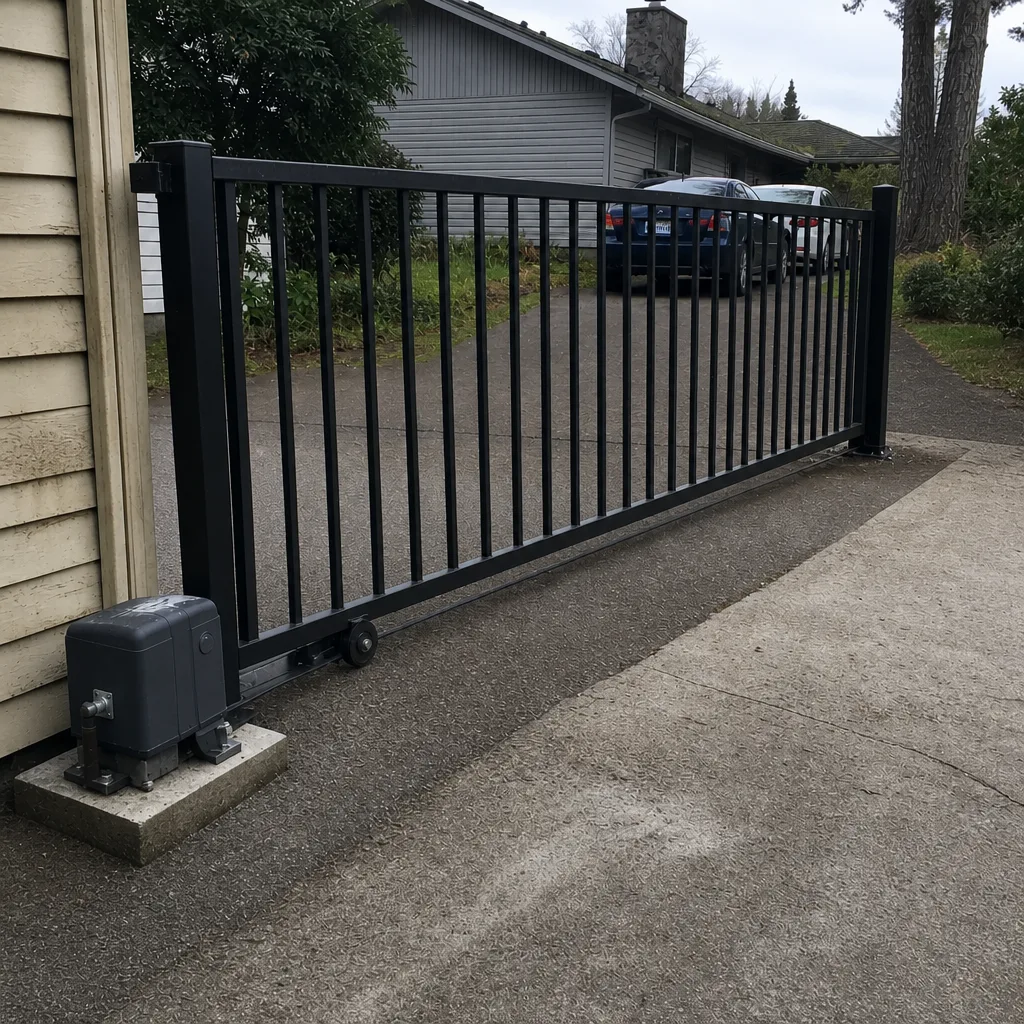 After
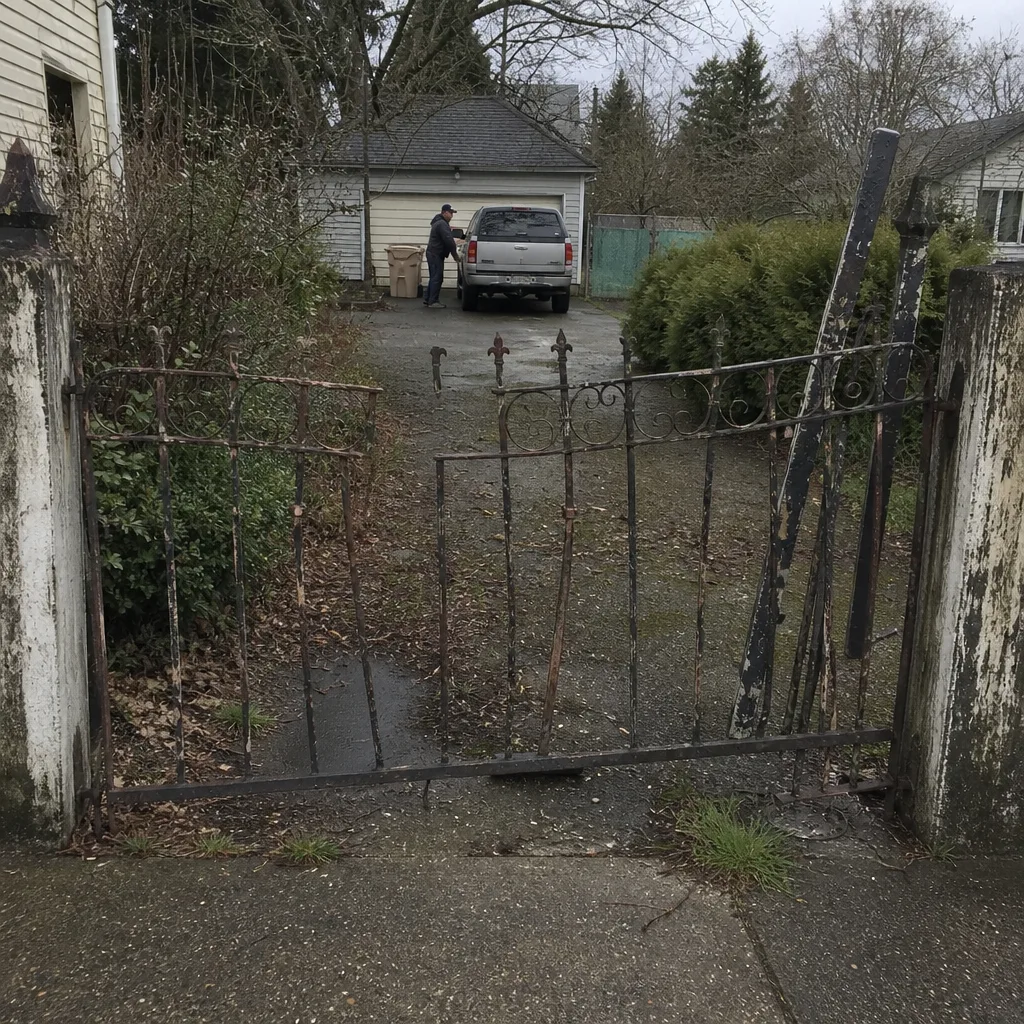 Before
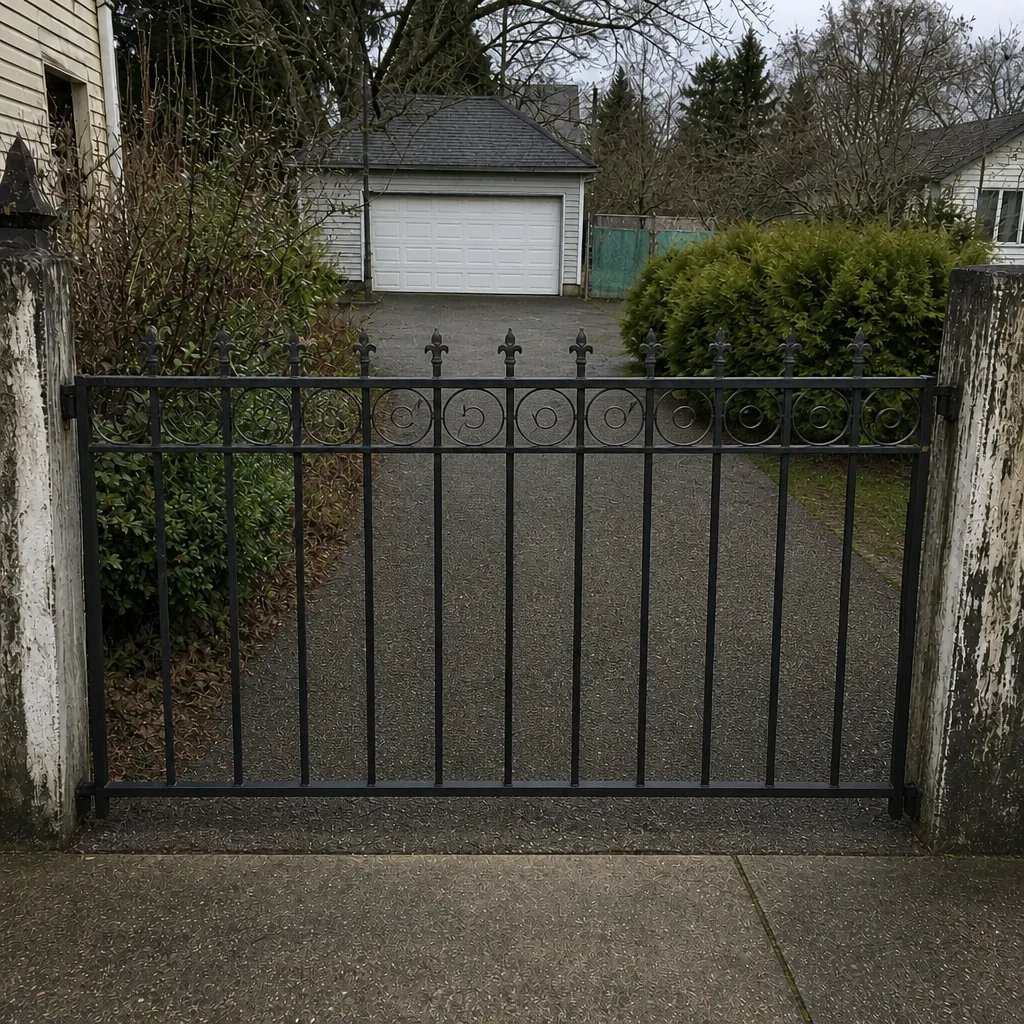 After
When to Call a Professional
Some tasks are safe to handle yourself; others should go to a technician. Call us when the operator’s internals need service, when the power side or wiring needs inspection, when hydraulic fluid looks low or cloudy, when a hinge or bracket needs replacement, or when a gate shows symptoms you can’t pin down. Come to us if a gate reverses unexpectedly, runs with a new noise, or stops partway through travel. On a slide gate that has come off the track or a swing gate whose heavy panel is out of plumb, stop using it and call rather than forcing it. We’re independent and experienced with the brands on your property, from residential units to commercial-grade systems. Gate Repair Kent offers free estimates in Kent. Call (855) 360-7358. We answer 24/7. Fast dispatch from 7am to 7pm, Sunday through Friday.
Frequently Asked Questions
Most residential gates in Kent need a hardware check and lubrication every six months and a full technician service once a year. High-cycle gates on shared or commercial driveways should be checked every 90 days. If your season brings heavy use, move the intervals earlier. Call (855) 360-7358 for an exact quote – estimates are free.
Clean the track first and apply a dry or silicone-based lubricant sparingly to the rollers and bearing surfaces, not the rail. Flooding it with grease traps grit and speeds wear. For sealed rollers, lubrication may not help and the rollers may need replacement.
Yes. A gate that operates without obvious problems can still be wearing internally, especially at the hinge points and in the operator’s gear. Skipped lubrication and missed fluid checks show up as failures later, not immediately. Call (855) 360-7358 to have your system assessed before a failure happens.
Yes. Cold thickens hydraulic fluid and stiffens metal, so a swing gate resists the operator more in winter and hinges take extra load. Freeze-thaw cycles put stress on hinge pins and brackets. Have fluid checked and hinges lubricated before the first hard freeze.
Count how many times your gate opens on a normal day, multiply by the days it operates per week, then by the weeks per year. That gives your annual cycle count. Compare it to your operator’s rated duty cycle to see whether you should tighten your maintenance schedule.
Testing the safety sensors is safe for an owner – place an object in the path and confirm the gate reverses before contact. Adjusting or realigning them, especially after a storm, is best done by a technician because misalignment affects reversal function. Call (855) 360-7358 for help.
The Bottom Line
Your gate’s maintenance schedule should follow its cycle count, its operator type, and Kent’s seasonal weather, not a generic calendar. A gate that opens 40 times a day wears four times as fast as one that opens 10, so start there and set your intervals accordingly. Handle the owner-safe tasks yourself – clearing the track, testing safety sensors, checking for rust – and put the operator internals, fluid checks, wiring, and safety calibration on a technician’s schedule. Clear the correct lubrication points with the right products, prepare before the cold season, and don’t skip the post-storm checks. The result is a gate that stays reliable and a service record that protects your warranty.
Schedule Your Gate Service
If working through this schedule has left you with questions about your own system, or if you’d rather hand the whole thing to a technician, we’re ready to help. Gate Repair Kent works on the brand already on your property, from residential automation to commercial-grade operators, and we can build a maintenance schedule around your gate’s actual cycle count and type. Call (855) 360-7358 for a free estimate. We answer 24/7. Fast dispatch from 7am to 7pm, Sunday through Friday.
Written by the team at Gate Repair Kent.