
Last updated November 15, 2026
 Wrought iron
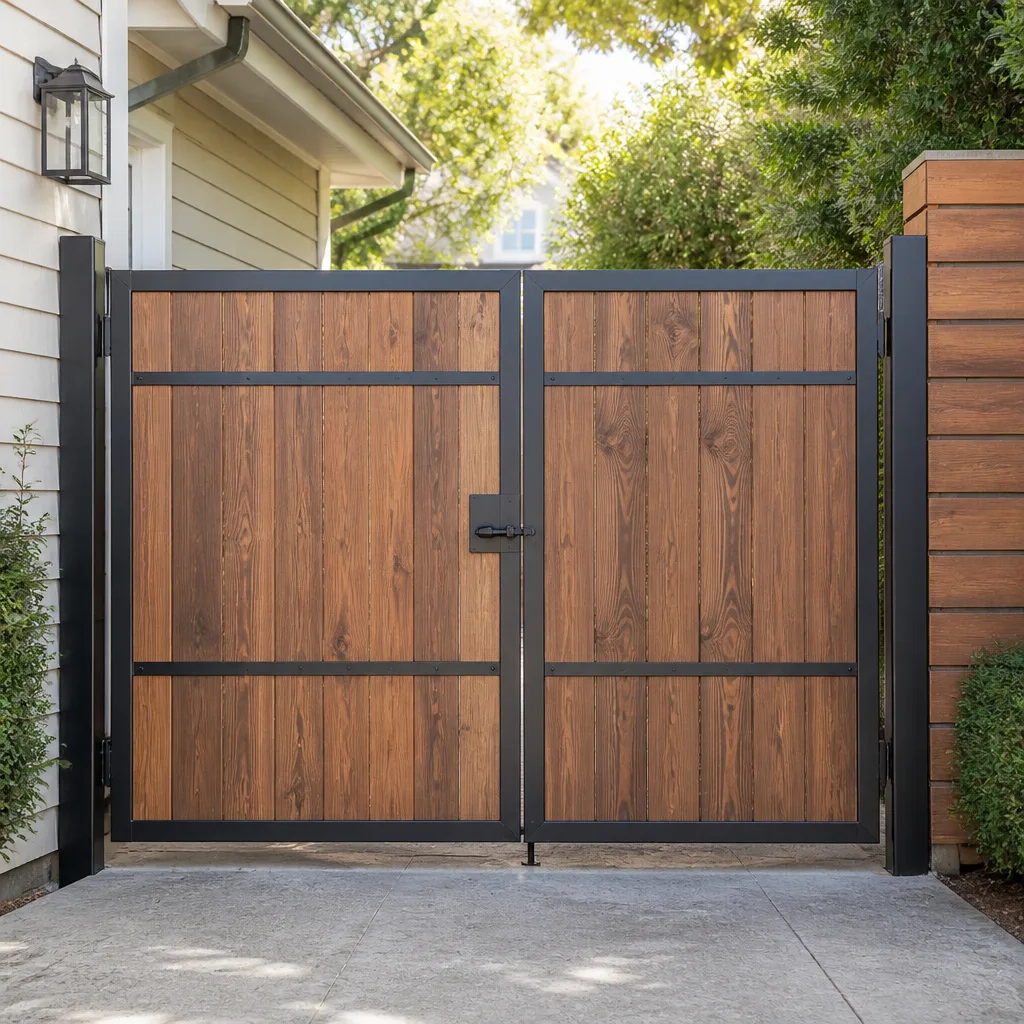 Wood & steel frame
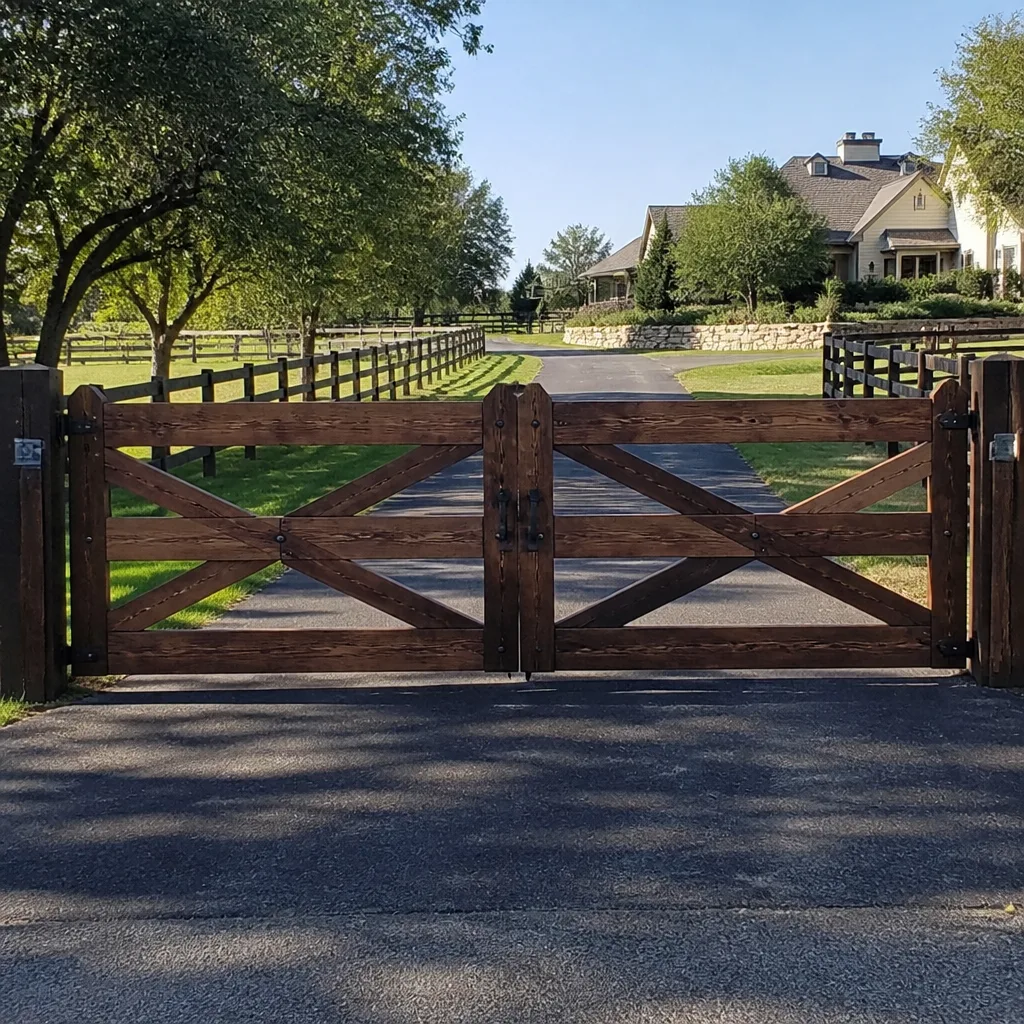 Farm & ranch
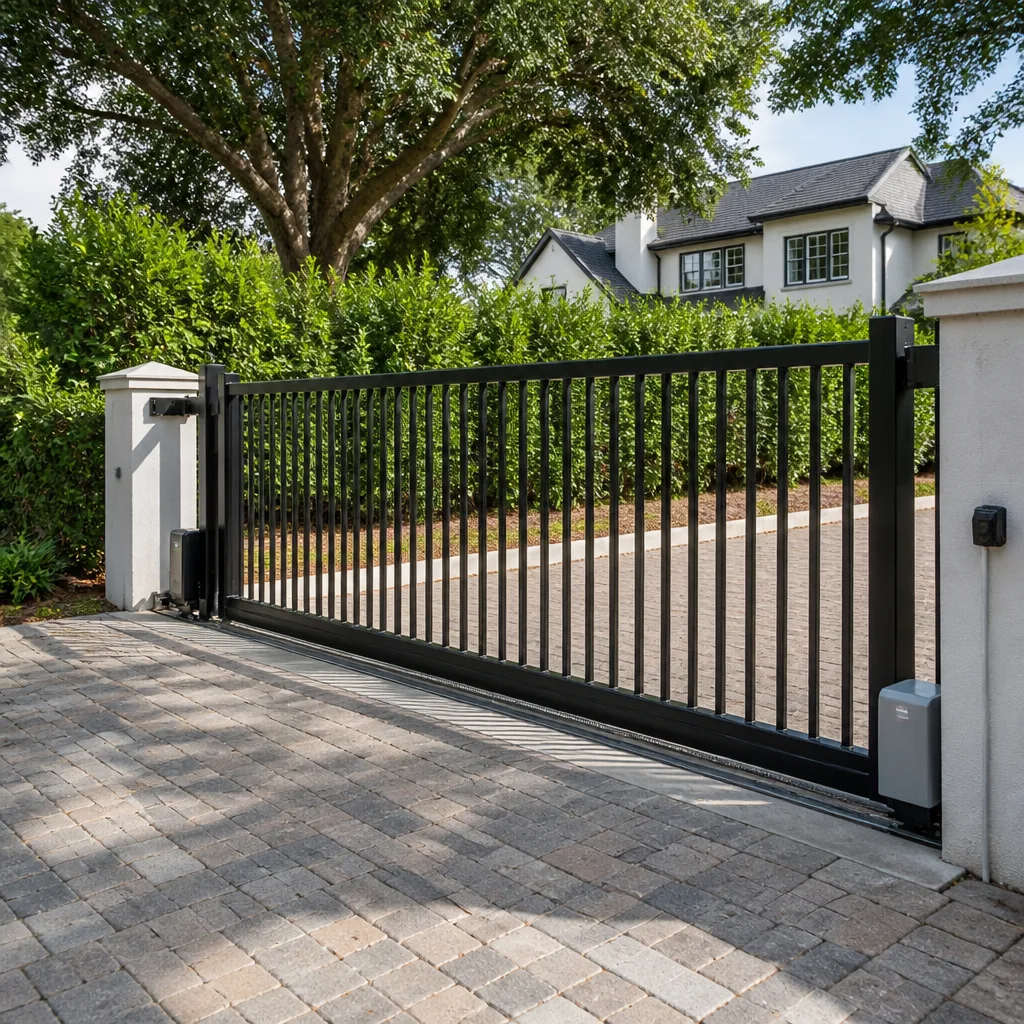 Sliding driveway gates
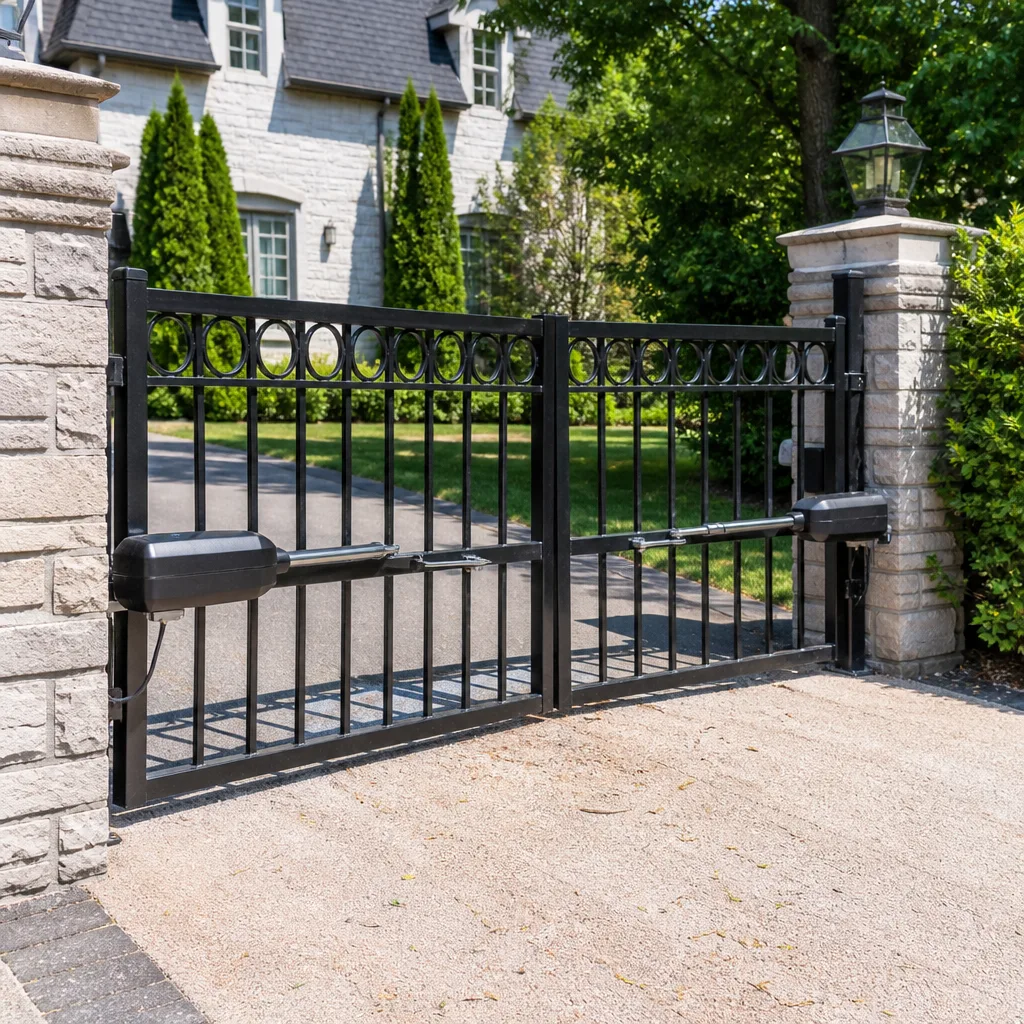 LiftMaster operators
Free on-site gate assessment - hinges, posts, and your LiftMaster or Nice gate operator checked before anything is quoted
The assessment is free and the quote is the invoice.
Get your free estimateGate Repair Emergency Preparedness Guide for Kent Homes
Here’s the uncomfortable truth about automated gates: a dead battery backup almost never announces itself. The control board still lights up, the status LED still shows “connected,” and the gate cycles fine on grid power, so most homeowners assume they’re covered. The failure only surfaces during an outage, in the dark, when the battery can no longer hold charge under load. In Kent, where windstorms take down power lines with some regularity, that’s a scenario worth planning for before it happens. This guide covers how to release the gate manually by operator type, how to respond to a gate stuck open versus stuck closed, how to actually validate your battery, what to keep in an emergency kit, and what to tell a technician to speed up dispatch. Read it, then keep it somewhere you can find it.
Quick Answer
If your automated gate is stuck, the first step is a manual release: locate the bypass lever or key on the operator and disengage the drive according to the manufacturer’s procedure, which differs for swing, slide, and barrier arm models. Then decide whether the gate is stuck open (a security question) or stuck closed (an access question) and follow the matching response. If the gate is damaged, misaligned, or the motor is making grinding or humming noises, stop and call a gate specialist rather than forcing it. Gate Repair Kent handles emergency gate repair for both residential and commercial systems, and estimates are free.
Styles & brands we work with
- Wrought iron
- Wood & steel frame
- Farm & ranch
- Sliding driveway gates
- LiftMaster operators
Table of Contents
- How do you manually release a gate when it’s stuck?
- What’s the difference between a gate stuck open and stuck closed?
- How do you actually test a gate battery backup?
- What should be in a gate emergency kit?
- When should you call, and what should you tell a technician?
- How do Kent wind and rain affect gate reliability?
- How do you build a gate emergency protocol for your household or HOA?
- Common mistakes to avoid
How do you manually release a gate when it’s stuck?
Manual release procedures vary by operator type, and using the wrong one can damage the drive mechanism. The general principle is the same everywhere: the gate motor should disengage the gear train with a mechanical bypass, usually a keyed lever, a release handle, or a pull cord, so that the gate swings or slides freely by hand. When the release won’t budge, the problem is usually jammed hardware, a bound drive, or a lockout mechanism, and forcing it is how gears get stripped. If your gate is stuck and the release won’t engage cleanly, call us for gate repair rather than applying more force.
Swing gate operators
Most swing operators (common with FAAC and Viking systems) use a manual release key inserted into the housing that disengages the linkage. Turn it, listen for the click, and then test the gate by hand. If it moves freely, the drive is released. If it resists, stop.
Slide gate operators
Slide operators, including many BFT and Linear models, typically use a release lever or a pin that lets the motor carriage disconnect from the gate track. The gate should then roll by hand. Check that the track is clear of debris first, because a gate that rolls freely on the track but not after release usually means the drive is still engaged.
Barrier arm gates
Barrier arms usually release via a keyed hub that lets the arm be raised and pinned vertical, clearing the lane. This is important in commercial and HOA settings where a stuck arm blocks vehicular flow entirely.
Safety point
Never put your hands or body between the gate leaf and the post while testing a release. Heavy gate panels can crush. A gate that is released does not necessarily have its safety edges or photo eyes disarmed, so keep clearance and treat a released gate as live hardware.
What’s the difference between a gate stuck open and stuck closed?
A gate stuck open is a security problem; a gate stuck closed is an access problem. The two require completely different responses, which is why we’ve seen homeowners waste their first 20 minutes standing in a driveway trying to figure out which one they’re dealing with. Deciding in advance which response applies is what turns a gate failure from a scramble into a routine event.
Gate stuck open: security response
- Confirm the power state. Is this an outage, a tripped breaker, or an operator fault? A gate stuck open on grid power with a humming motor is usually a control board or limit-switch issue, not a power failure.
- Secure the opening. If the gate won’t close, the immediate fix is a temporary physical measure: a chain with a padlock, a portable barricade, or repositioning a vehicle to block the lane.
- Do not cycle the motor repeatedly. Repeated attempts to close a stuck-open gate can overheat the motor and warp the drive. If the gate hums and doesn’t move, kill power at the operator switch.
- Log the time. If your gate sits open overnight, note it for your insurer or HOA, and call for service the next dispatch window.
Gate stuck closed: access response
- Check whether the remote or keypad has failed, not the gate. A dead remote fob looks identical to a dead gate to the person pressing the button.
- Use the manual release if the lane must open for emergency access, deliveries, or work vehicles.
- Check the photo eyes and safety edges. A blocked or misaligned photo eye will hold a gate open or prevent it from closing, and a broken safety edge can stop the cycle entirely.
- Check the battery and power. If the gate is closed and unresponsive, the issue is often a dead battery or a tripped breaker feeding the operator.
Both scenarios are covered by our electric gate repair service, and the two share a common root: plan the response before you need it.
How do you actually test a gate battery backup?
A load test is the only reliable way to confirm a gate battery backup is functional. Most systems show a status indicator that stays green whenever the charger sees a connection, even when the battery can no longer carry the load. That indicator is not a capacity test. In our experience, the majority of gate failures during outages happen because the battery died quietly months earlier.
The load test procedure
- Find the battery in the operator housing or a separate enclosure. Note its type (generally a sealed lead-acid or gel cell on residential systems) and its age.
- Disconnect grid power at the operator’s breaker or disconnect switch. This is the closest test to the real failure condition.
- Cycle the gate twice. Watch how it moves. A healthy battery carries full cycles at normal speed. A weak one moves slowly, stalls midway, or refuses.
- Restore power and recharge. If the gate hesitated at all on battery, the battery is the problem. Replace it before storm season.
Charge the battery at least twice a year on systems that rarely see outages. A battery that sits connected but untested is the most common cause of gate failure during a Kent windstorm.
What should be in a gate emergency kit?
Four physical items near every automated gate let a homeowner resolve most self-resolvable failures without a phone call. Keep them in a labeled container or a small weatherproof box near the operator, and make sure every adult on the property knows where it is.
- The manual release key or tool for your operator. FAAC, BFT, Linear, Viking, and most other brands each use a specific release design. Know yours.
- A printed release procedure. The operator manual, or a photographed page from it, taped inside the housing or kept with the kit. You won’t want to look it up on a phone in the rain.
- A padlock and chain sized to your gate. If the gate fails open, this is how you secure the lane until service.
- A flashlight with fresh batteries and a small screwdriver or hex key set for opening the housing latch.
Check the kit each spring and fall. Replace the flashlight batteries and confirm the release key still turns. A kit you haven’t opened in a year is a guess, not a plan.
When should you call, and what should you tell a technician?
Two minutes of diagnostic information before you call significantly shortens the service visit and gets your gate back in service faster. When you call (855) 360-7358, have these details ready, and the technician will arrive already knowing whether the fault is mechanical, electrical, or control-related. We answer 24/7. Fast dispatch from 7am to 7pm, Sunday through Friday.
Gather these five facts
- The brand and model on the operator housing. We work on the brand already on your property and are familiar with LiftMaster, FAAC, BFT, Linear, Viking, Ghost Controls, DoorKing, Elite, and Mighty Mule systems.
- The gate type: swing, slide, or barrier arm. This tells the technician which tool kit and likely parts to bring.
- The symptom: does the gate hum without moving, move erratically, cycle only in one direction, or not respond at all? Record any error codes or LED flashes.
- The power state: is grid power on, is the breaker tripped, and did the failure coincide with an outage?
- Your manual release status: did you release it, and does the gate move freely by hand once released?
When to call rather than troubleshoot
- The gate is off its track or hanging.
- The motor hums or grinds and doesn’t move.
- The gate won’t stay closed on its own after release.
- There’s visible damage to wiring, the control box, or the operator housing.
- You have a commercial or HOA gate that blocks emergency vehicle access.
For any of these, call Gate Repair Kent and give us the details above. We’ll dispatch with the right parts and the right experience, and we’ll quote the price before any work starts.
How do Kent wind and rain affect gate reliability?
Kent sits in a region that gets serious wind and rain, both of which stress gate hardware in ways that warm, dry climates don’t. Roughly speaking, late fall and winter storms are when most gate failures happen in Kent. Understanding why makes your preparedness plan more useful.
Wind
Gusts load the hinges and drive train on swing gates, and a gate left unlocked through a storm can swing violently and bend operators. Power outages from downed branches are the most common trigger for stuck gates around Kent, which is why battery testing matters here more than in calmer places.
Rain and standing water
Persistent rain finds its way into operator housings, photo-eye lenses, and low-voltage wiring. Waterlogged control boards, fogged photo eyes, and corroded connectors are all common Kent gate repair cases after a wet stretch. Check that the operator housing and the control box are sealed, and clear any standing water away from the base of a slide gate.
Mild, wet springs
Weed growth and moss around slide tracks are typical Kent problems in spring. Vegetation in the travel path of a slide gate will eventually jam the roller or confuse the safety sensors, so a spring trim against the track is cheap preparedness.
How do you build a gate emergency protocol for your household or HOA?
A written protocol that lives with your gate’s operator manual turns a failure into a checklist. Write it down once and you’ll never be standing at the gate at 11pm trying to remember what to do. For HOAs and commercial properties, the protocol should be a shared document with names and numbers.
For a residence
- Post the manual release procedure inside the control housing or on the inside of the nearest shed door.
- Store the emergency kit near the gate.
- Write down the brand and model of your operator.
- Set a battery test reminder twice a year, spring and fall.
- Keep our number handy: (855) 360-7358.
For an HOA or commercial site
- Name two people responsible for gate response, and post their numbers at the gate.
- Keep the access-lane contingency in building plans: what happens to emergency vehicle access if the gate fails.
- Schedule a pre-season check before storm season, not after.
- Log every failure with date, symptom, and what fixed it. That log shortens future calls.
Whether you’re in a residential neighborhood in Kent or managing a commercial property with a high-traffic slide gate, the protocol is what gets vehicles moving again with the least friction. If you’d rather have a specialist audit the setup once, we can do that. Just call to arrange it.
Common mistakes to avoid
- Trusting the operator’s status light as a battery-health indicator. It shows a connection, not capacity. Only a load test tells you the truth.
- Forcing a manual release that won’t engage. A stuck release usually means jammed hardware, not a stubborn lever. Forcing it strips gears and turns a repair into a replacement.
- Cycling the motor repeatedly to “wake it up.” A humming motor that doesn’t move is a symptom, not a cold start. Repeated attempts overheat it.
- Leaving a security gate stuck open overnight. Secure the lane with a chain or barricade until service. An open gate isn’t a small problem after dark.
- Skipping the pre-winter check because the gate “seems fine.” That’s exactly the state a failing battery hides in.
- Hiring a general handyman for a control-board or operator fault. Gate automation is its own trade. Generalists diagnose by trial and error; specialists diagnose from experience.
- Ignoring a photo eye that’s fogged or slightly misaligned. It’ll work most days, then fail in the rain. Fix it while the weather is dry.
See the difference
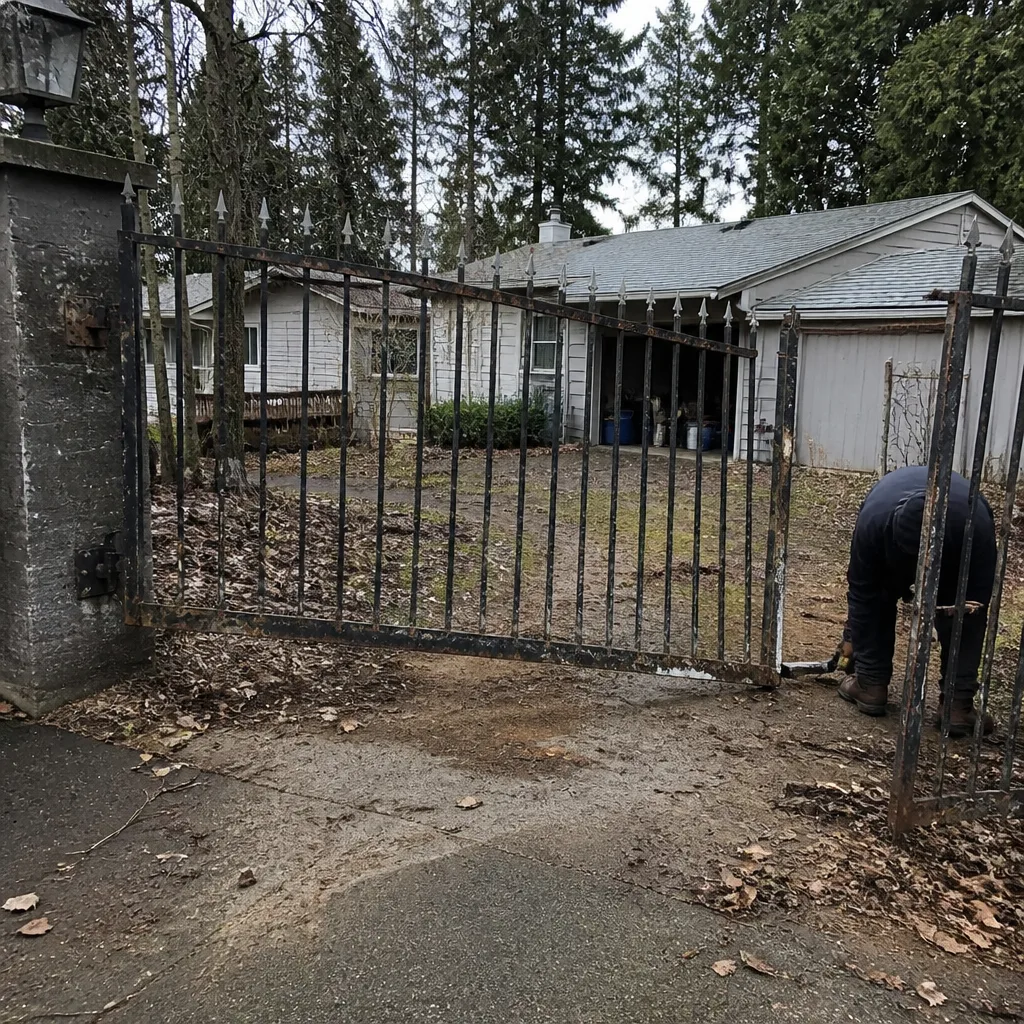 Before
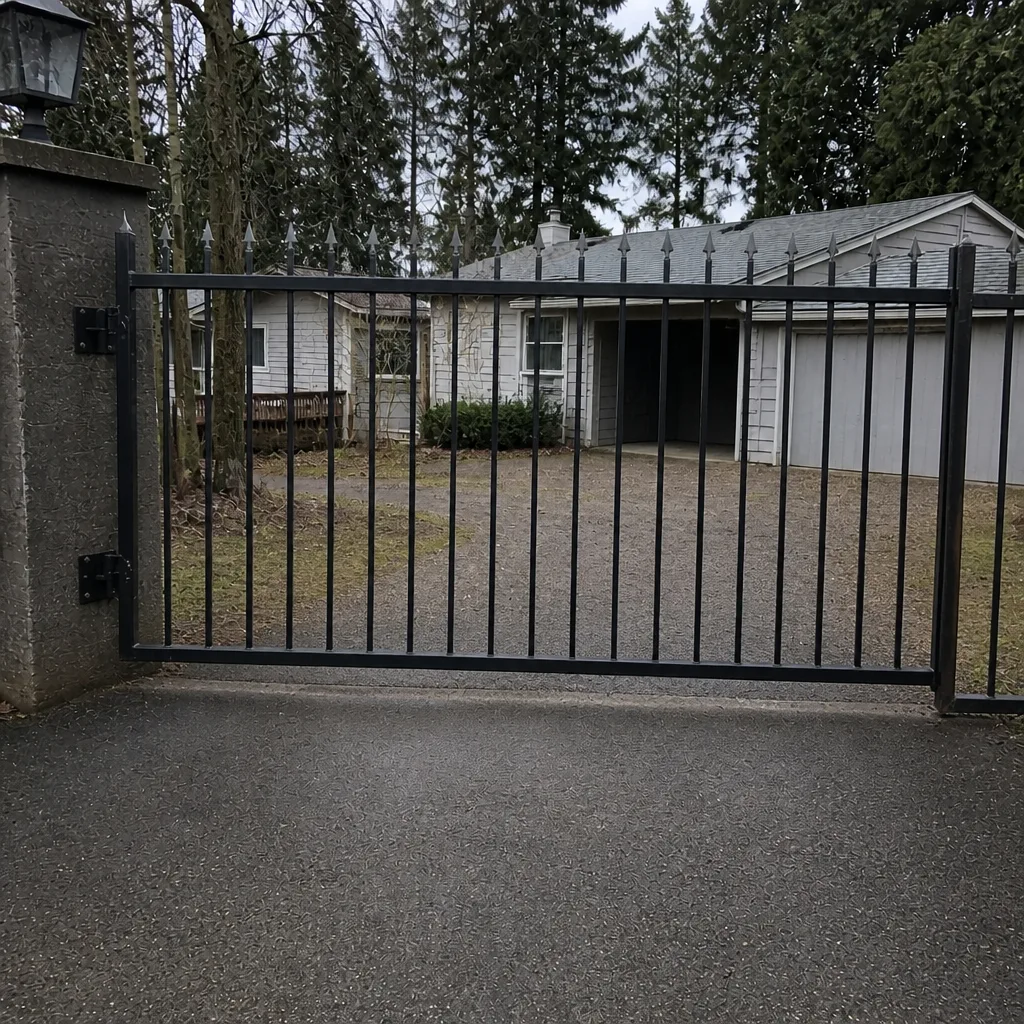 After
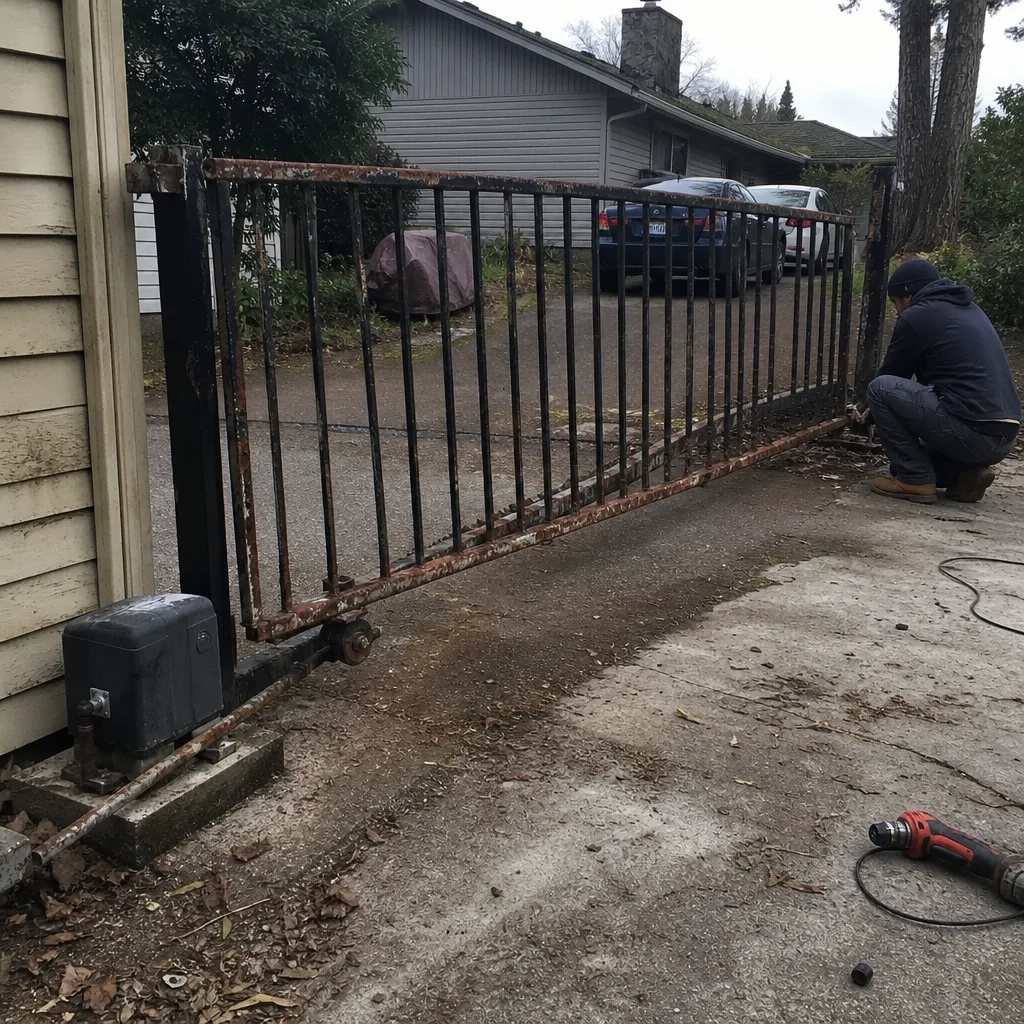 Before
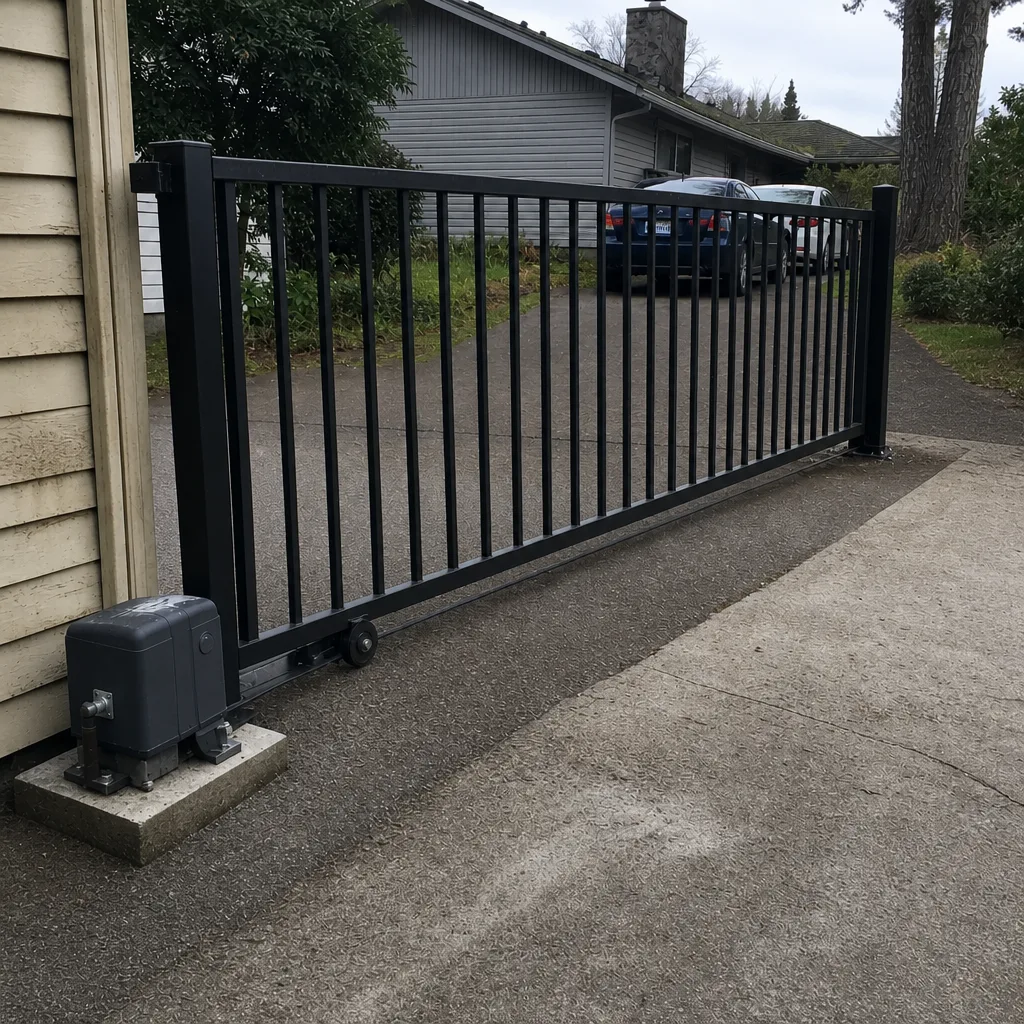 After
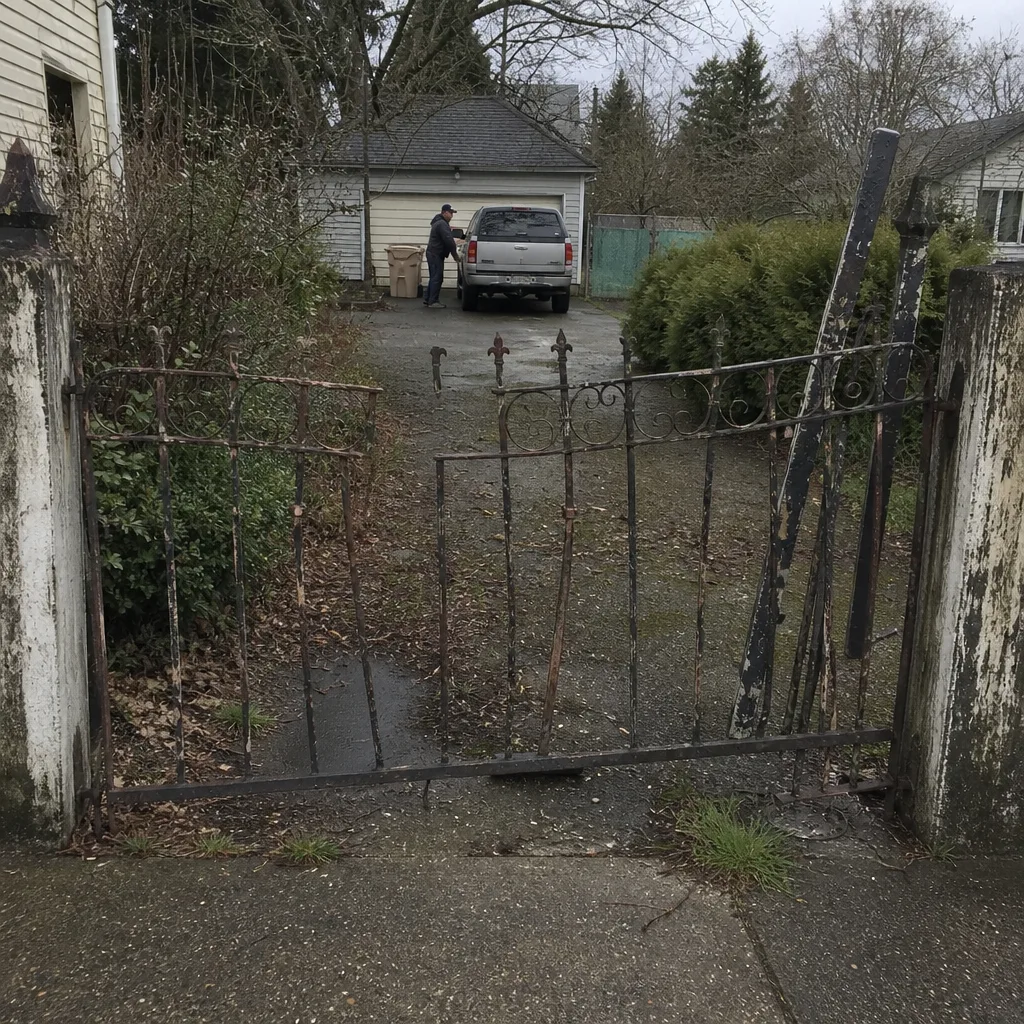 Before
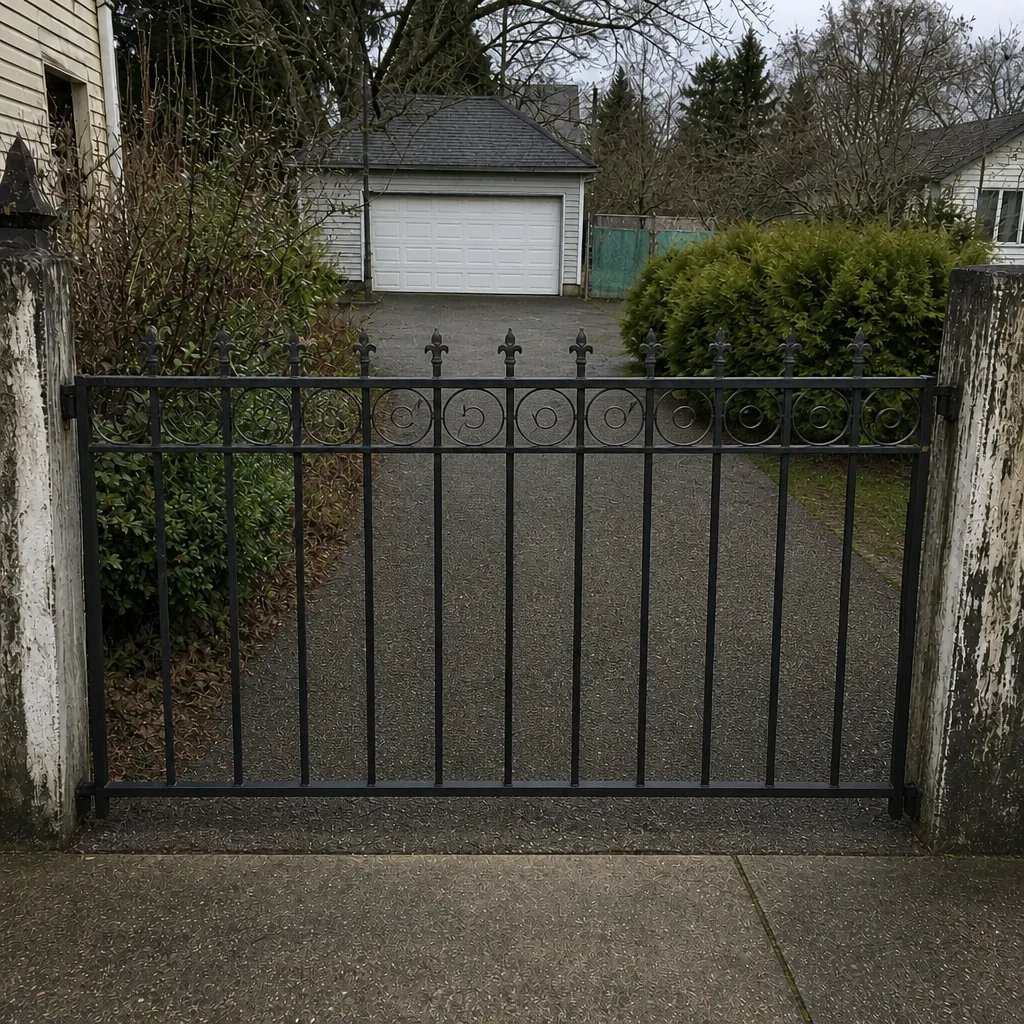 After
When to Call a Professional
Call a specialist when the manual release won’t engage cleanly, when the motor hums or grinds without moving the gate, when the gate is off its track or visibly damaged, when the operator’s control board shows a fault code you can’t clear, or when a commercial or HOA gate blocks emergency vehicle access. Those situations need a trained eye on the drive mechanism, the wiring, and the safety edges. Gate Repair Kent offers free estimates in Kent and can dispatch with the right experience and the right parts for your brand. Call (855) 360-7358. We answer 24/7, and fast dispatch runs from 7am to 7pm. The quote is agreed before any work starts.
Frequently Asked Questions
Yes, in most cases, provided the drive mechanism is intact and the release engages cleanly. Use the manual release key or lever specific to your operator, disengage the drive, and move the gate by hand. If it won’t release, stop and call us rather than forcing it.
Because “connected” only means the charger sees the battery, not that the battery can carry a load. A load test by cutting grid power and cycling the gate twice is the only reliable check. If the gate hesitates on battery, replace it.
Give the brand and model on the operator, the gate type (swing, slide, or barrier), the exact symptom, the power state, and whether you’ve used the manual release. That’s enough for us to dispatch with the right parts.
Secure the lane first with a chain, padlock, barricade, or parked vehicle. Then call us. We answer 24/7, and a call outside dispatch hours is booked into the next opening, Sunday through Friday, 7am to 7pm.
Twice a year at minimum, ideally spring and fall. In Kent, storm season makes a fast dispatch from 7am to 7pm a real advantage, but the best preparedness is a battery that was tested before the storm, not after.
Yes. We handle residential automation brands like Ghost Controls and Mighty Mule alongside commercial systems like FAAC, BFT, and DoorKing. From the motor to the hinge, the gate is the whole job.
The Bottom Line
Gate emergency preparedness comes down to three things you can control before a failure: know your manual release, test your battery under load, and have a written protocol for both stuck-open and stuck-closed states. Add a small kit near the gate and keep our number where you can find it, and a failed gate becomes an inconvenience rather than a security problem. Gate Repair Kent is a dedicated gate specialist, not a generalist, and every job is a gate job. When you’re ready, call (855) 360-7358 for a free estimate, and we’ll get your gate back in service. Visit Gate Repair Kent for more.
Written by the team at Gate Repair Kent.