
Last updated November 15, 2026
 Wrought iron
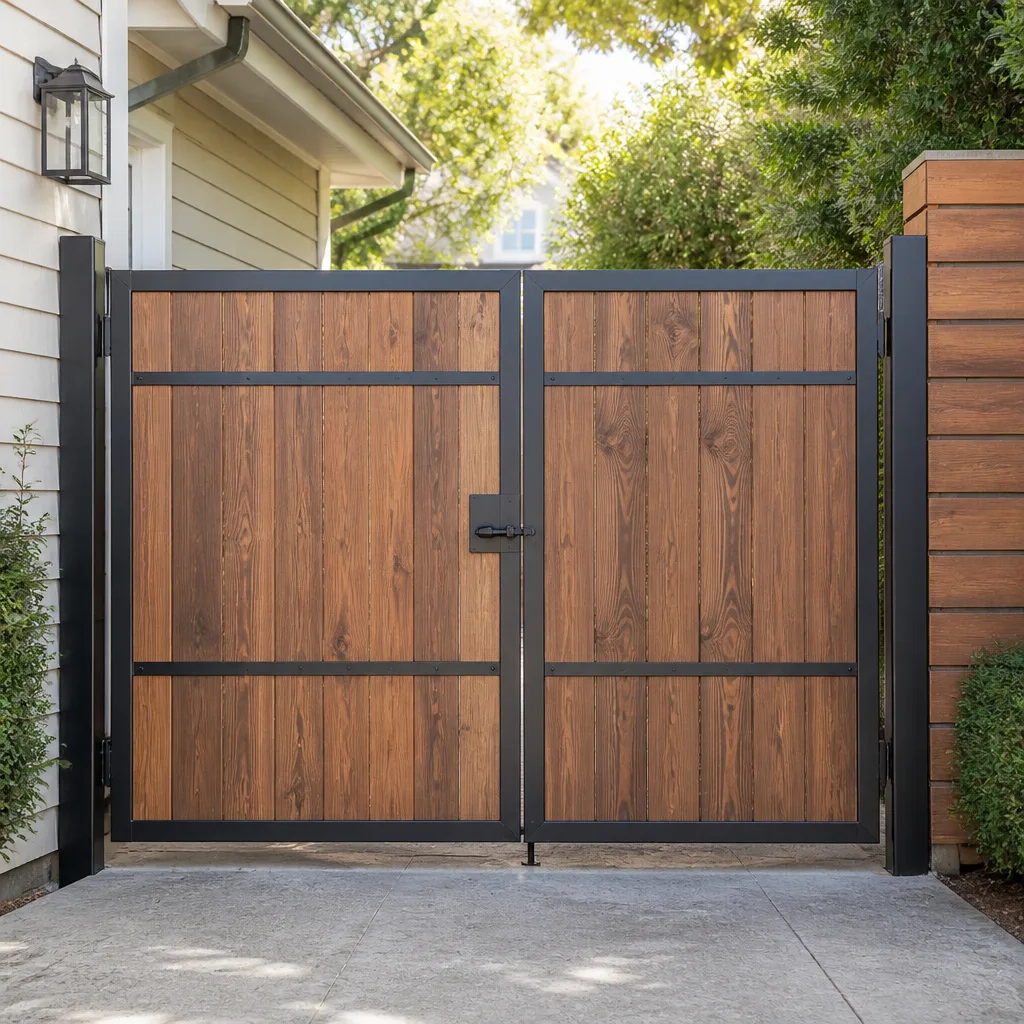 Wood & steel frame
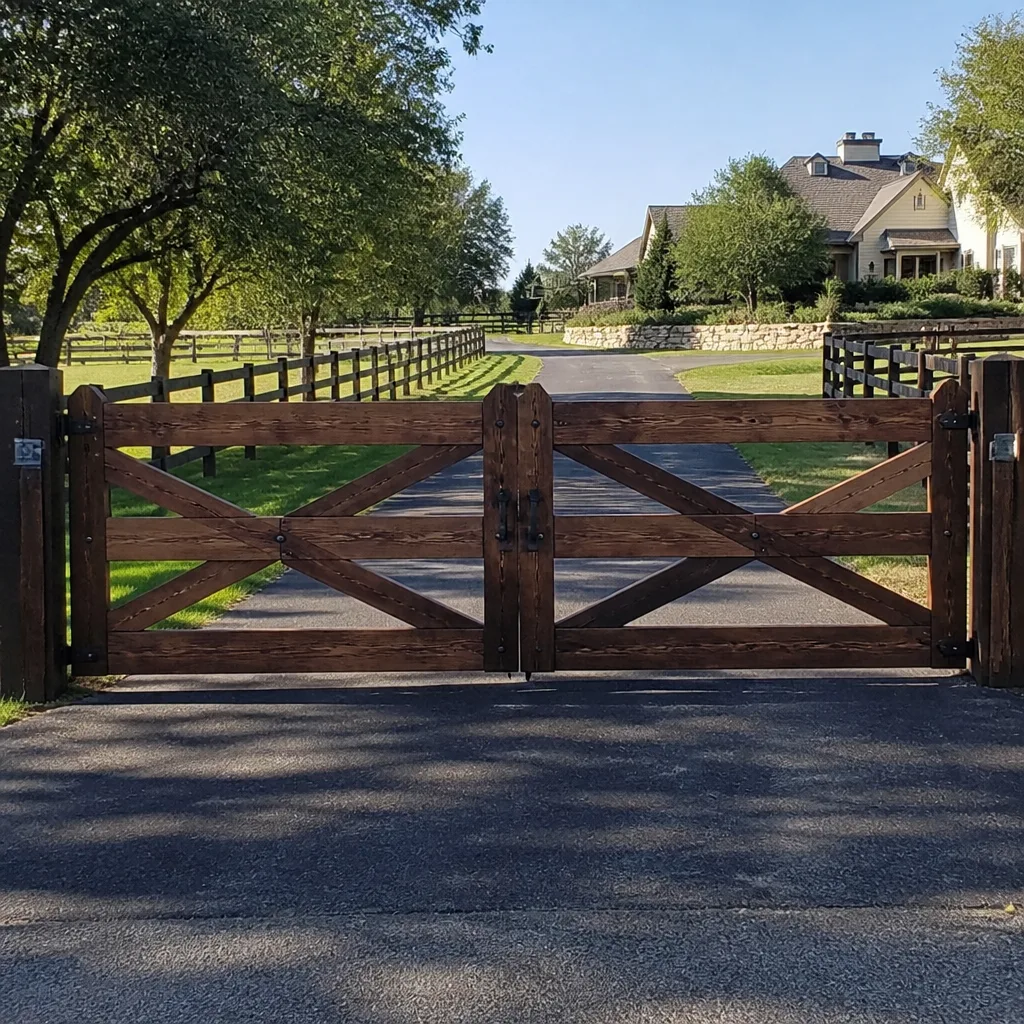 Farm & ranch
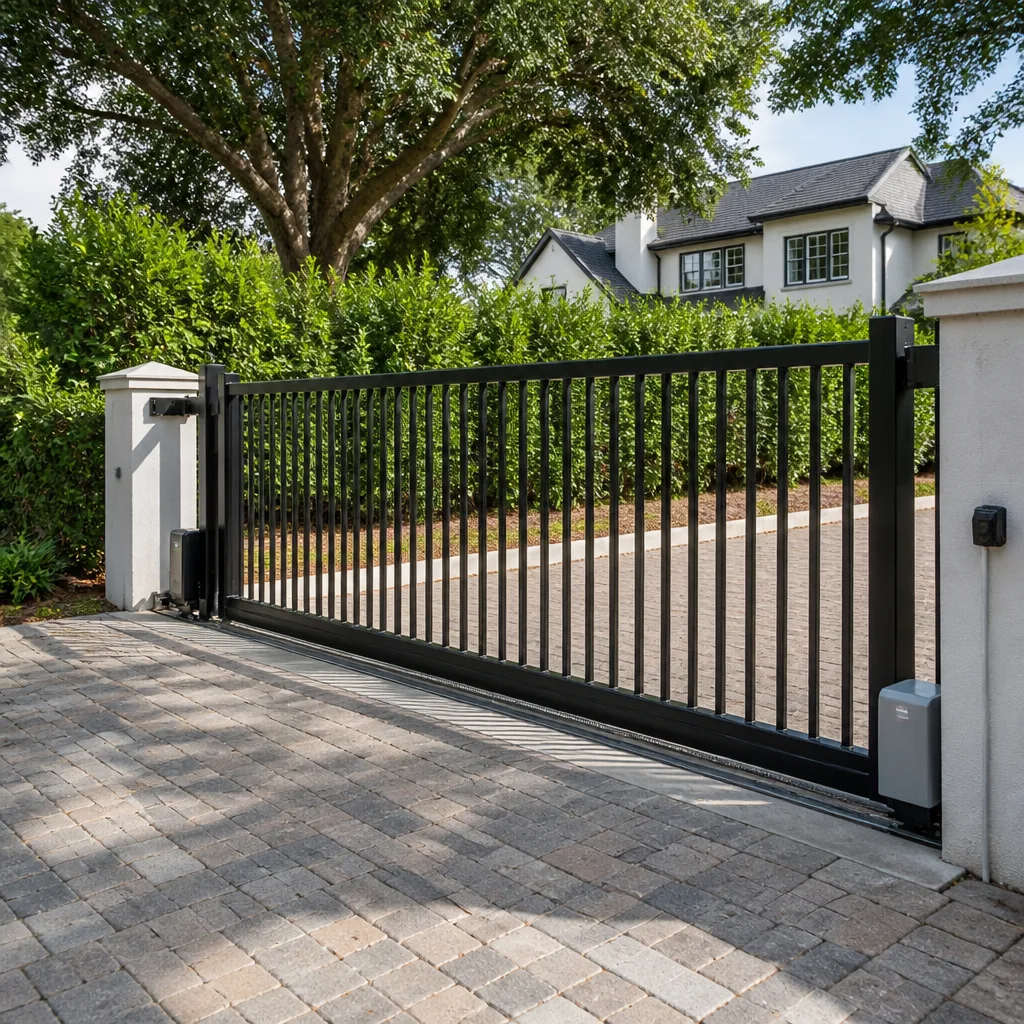 Sliding driveway gates
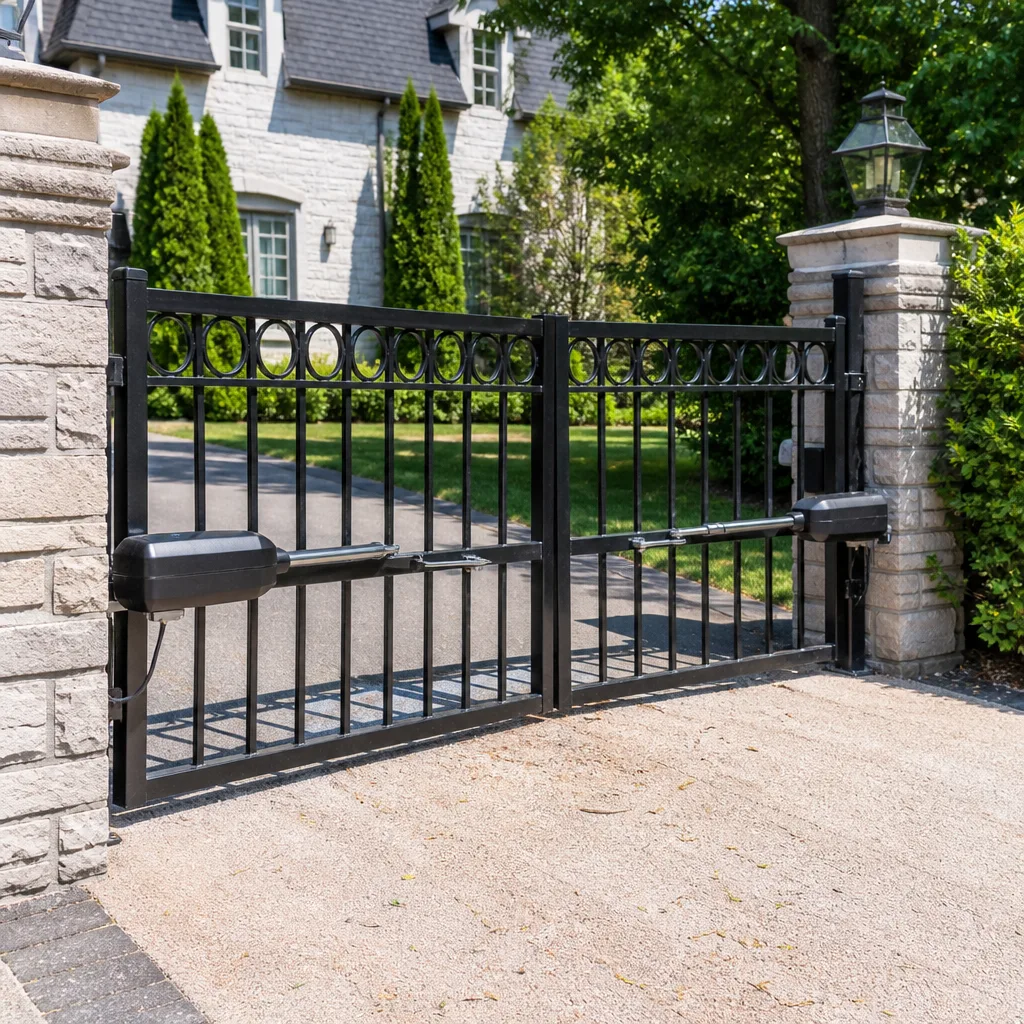 LiftMaster operators
Free on-site gate assessment - hinges, posts, and your LiftMaster or Nice gate operator checked before anything is quoted
The assessment is free and the quote is the invoice.
Get your free estimateGate Repair Maintenance Checklist for Kent Homeowners
Spraying WD-40 on a gate’s drive chain doesn’t lubricate it. It strips the existing grease, and the chain starts wearing against itself on every cycle. It’s one of the most common maintenance mistakes we see, and it usually ends with a stretched chain and a repair bill nobody planned for. The generic advice to “lubricate moving parts” isn’t enough, because a hinge, a roller, a rack-and-pinion track and a screw-drive operator each want a different product at a different interval. This guide gives you the component-by-component version, tuned to what Kent’s wet winters and freeze-thaw swings actually do to gate hardware.
Quick Answer
A gate maintenance checklist for Kent homeowners covers six things: the correct lubricant on each component, torque and post-plumb checks, a battery backup runtime test, photocell alignment checks after freezes, track and roller cleaning, and a seasonally timed schedule built around Kent’s rain and freeze cycles. Done on that schedule, precision maintenance prevents most of the emergency calls we handle – chain wear, post lean, and sensors knocked out of alignment.
Styles & brands we work with
- Wrought iron
- Wood & steel frame
- Farm & ranch
- Sliding driveway gates
- LiftMaster operators
Table of Contents
- Why Kent’s Climate Is Hard on Gate Hardware
- The Component-by-Component Lubrication Spec
- Torque and Post-Plumb Checks That Prevent Post Lean
- Battery Backup Testing That Actually Validates Runtime
- Photocell Alignment Drift and How to Verify Clearance
- The Kent Seasonal Checklist Calendar
- Manual vs. Automated Gates: What Changes
- Common Mistakes to Avoid
- When to Call a Professional
Why Kent’s Climate Is Hard on Gate Hardware
Kent sits in a basin where wet maritime air pushes in against the Cascades, and that combination produces a lot of rain spread across a long cool season. For gate hardware, the practical effect is simple: metal stays damp for months, and anything that holds water against a joint keeps it damp even longer. Lubricant that seemed fine in July has thinned or washed off by December, and bare steel starts to show surface rust at the hinge pins and roller axles.
The other half of the problem is freeze-thaw. Kent gets cold snaps where temperatures drop below freezing overnight and climb back above it the next day. Water that has settled into a track, a photocell housing, or the gap under a slide gate’s guide roller freezes, expands, and shifts things slightly. Repeat that a few dozen times over a winter and a post that was plumb in October is leaning by March. A sensor that lined up perfectly in fall is a quarter inch out of spec.
This is why a generic spring-and-fall checklist doesn’t fit Kent well. The heavy work belongs before the wet season, not after it. The checks that catch freeze-thaw damage belong in late winter, once the ground has stopped heaving. And the lubrication intervals are set by rain, not by the calendar on a national blog post. When you’re looking at an older gate on a property in Kent, understanding this cycle is most of the diagnostic work.
One more local factor: many Kent properties sit on slopes or have gates at the end of a gravel or paver driveway. Runoff from uphill carries grit onto the track and into the operator housing, and grit plus thin lubricant is an abrasive paste. If your driveway drains toward the gate, plan on cleaning the track more often than the general schedule below suggests.
The Component-by-Component Lubrication Spec
This is the section generic checklists skip. “Lubricate moving parts” is not an instruction. Here is what goes where, and what does not belong on a gate at all.
Hinges and hinge pins
Use a lithium grease or a lithium-complex grease applied with a grease gun or a small brush at the pin. Lithium grease stays put in wet weather and doesn’t wash out the way oils do. Wipe the pin clean first, apply, then cycle the gate a few times to spread it. Roughly every three months in the wet season, less often in dry stretches.
Rollers (slide gates and cantilever gates)
Roller axles want a light machine oil or a spray lithium grease, applied sparingly. The roller itself should turn freely with no wobble. Do not pack grease into the roller housing – it traps grit and turns into grinding compound. Clean the track with a stiff brush and wipe the rollers before you apply anything.
Rack-and-pinion slide gate operators
The rack and pinion is the toothed bar along the gate and the gear on the operator. This surface wants a dry-film lubricant or a light coat of grease that won’t collect grit. Too much grease on a rack at ground level is worse than none, because it grabs road dust and driveway grit. Check the rack for wear at the pinion contact point and tighten the pinion spring tension if the gate hesitates.
Screw-drive operators
Screw-drive operators (common on some Viking and Elite residential units) use a threaded rod that wants a purpose-made screw-drive grease, not oil. Oil runs off the thread and the nut wears. Follow the operator maker’s spec; the wrong grease on a screw drive can be almost as bad as none.
Chains
Chains on chain-drive operators want a chain-specific lubricant or a grease, not WD-40. WD-40 is a solvent and light oil that strips the existing factory grease and evaporates. A chain treated that way runs dry and starts wearing at the pins. If you’ve been using it, clean the chain with a proper chain cleaner and re-lubricate with a chain lube designed to stay put.
Manual swing gate hinges
Manual gates on a Kent property also benefit from the same treatment: clean the hinge, apply lithium grease at the pin, cycle the gate. A manual gate that swings by hand should swing with two fingers. If it doesn’t, the hinge pin is dry or the post has moved.
Torque and Post-Plumb Checks That Prevent Post Lean
Post lean is the failure mode nobody catches until the gate won’t close or the operator starts straining against a misaligned gate. The fix is to check plumb before it becomes visible. You don’t need special equipment – a standard 4-foot level and a socket set cover most of it.
- Check the gate post for plumb. Set a 4-foot level against the post face, both directions (front and side). It should read plumb. Anything off by more than a hair means the post is moving.
- Check the operator mounting post. Same check. On automated gates, the operator post and the gate post have to stay in alignment – a degree of lean on either one changes the geometry of the drive.
- Snug the hinge bolts. Check every hinge bolt and lag screw. Loose bolts let the gate sag and put load on the post in the wrong direction, which accelerates lean.
- Check the operator’s mounting bolts. On slide gates, confirm the operator is bolted tight to its pad and the pad hasn’t cracked or lifted.
- Look at the ground line. After a wet Kent winter, soil around a gate post can settle. If there’s a visible gap between the post and the ground, the post is going to move.
- Check the gate’s vertical alignment. A gate that’s leaning forward or back (toward or away from the post) needs the hinges or the post addressed, not just the latch.
On automated gates with a Viking or Ghost Controls operator, also check the limit switch travel. If the gate has drifted, the operator’s limits may be firing early or late. That’s a sign to check post plumb before touching the operator settings.
If you find real lean, stop tightening bolts. A leaning post is a footing problem. The fix is to reset the post properly, not to crank the hinge tighter. That’s a job for a technician.
Battery Backup Testing That Actually Validates Runtime
Battery backup on an automatic gate is the feature nobody thinks about until the power fails and the gate won’t open. The common test – “does the operator beep when I pull the power?” – tells you the battery is connected. It does not tell you the battery can actually run the gate.
A real runtime test
- Confirm the gate path is clear and no one is standing in it.
- Disconnect the operator from AC power at the breaker or the operator switch.
- Cycle the gate open, then closed, using the remote or keypad.
- Watch how the gate behaves. A healthy battery cycles the gate at close to normal speed. A tired battery cycles slowly, hesitates, or struggles at the limit.
- Repeat the cycle two or three times. Most residential operators should handle several cycles on a healthy battery.
- Reconnect power and confirm the operator returns to normal operation and the battery starts charging.
Check the battery terminals for corrosion while you’re at it. Kent humidity and damp air at the operator housing are enough to build a green crust at the terminals over a couple of seasons. Clean them with a terminal brush and a little dielectric grease.
Most residential gate batteries last a few years – the exact interval depends on the operator and how often the gate cycles. If your operator tests weak on the cycle count, replace the battery before it strands you. On commercial operators (DoorKing, FAAC, BFT) the battery pack is often larger and the runtime spec is different – check the operator’s manual for the number.
Photocell Alignment Drift and How to Verify Clearance
The photocell pair is the safety sensor across the gate opening. One unit transmits, the other receives, and if anything breaks the beam the gate stops or reverses. In Kent, freeze-thaw cycles are the main reason photocells drift out of alignment. Water freezes in the housing mount, the bracket shifts a fraction of a degree, and the sensor pair stops seeing each other.
How to verify clearance yourself
- Look at the sensor face. Both units should point straight at each other, with no visible angle difference. If one has drifted, it usually looks slightly off-axis.
- Confirm the sensor LEDs. Most units have an alignment LED that turns steady (not blinking) when the beam is aligned. Check the manual for your model to confirm the pattern.
- Walk the gate opening. Stand between the sensors and confirm the gate reverses. If it doesn’t, stop using the gate until it’s fixed – this is a safety function, not a convenience.
- Check the mount brackets. A photocell on a loose or rusted bracket will drift the moment anything moves. If the bracket is loose, snug it and re-aim the sensor.
- Check for debris or moisture on the lens. A dirty lens causes intermittent faults. Wipe with a dry cloth.
- Check the mount height. The sensors should be set at a height that catches a small child, typically within the lower portion of the gate opening.
If the sensors won’t stay aligned through a Kent winter, the mounts themselves may need to be reset. Repeated drift usually points to a mount that was never anchored properly to begin with.
The Kent Seasonal Checklist Calendar
Forget generic spring-and-fall advice. Kent’s wet season starts earlier and lasts longer than the national average, so the timing matters. Here’s how we’d sequence the year on a typical Kent property.
Early fall (before the rains settle in)
- Full lubrication pass on every component (lithium grease at hinges, light grease at rollers, dry-film on rack and pinion, chain lube on the drive chain).
- Torque check on every hinge bolt, mounting bolt, and post anchor.
- Clear the track.
- Drain or clear any runoff path along the gate line that will send water at the operator.
- Battery backup health check, because you’ll want it during winter outages.
Late fall / early winter
- Photocell alignment and lens cleaning after the first real freezes.
- Look for rust blooming at any pin, axle, or unpainted fastener – deal with it before it spreads.
- Check the gate’s weather seal / bottom edge for rot.
Late winter / early spring (after the ground stabilizes)
- Plumb and torque re-check on posts – this is when lean shows up if it’s going to.
- Track re-clean and roller inspection.
- Re-lubricate after winter washout.
- Photocell alignment recheck – freeze-thaw drift usually shows in late winter, not early winter.
Summer
- Lighter schedule, mostly inspections and lens cleaning.
- Battery terminal cleaning and charge test.
- Best time to plan any retrofit or new installation so the work happens in dry weather.
If your property is on a slope or in a windy spot in Kent, add one extra lubrication and torque pass in mid-winter. Heavy weather loads the moving parts harder than the schedule above assumes.
Manual vs. Automated Gates: What Changes
Every gate needs the same underlying checks – posts, hinges, track, hardware torque – but the checklist diverges once an operator and safety sensors are added.
Manual gates
- Hinges, latches, and post plumb are the whole job.
- Focus most of the attention on weather sealing at the gate leaf and at the post base.
- Lubrication is the same spec but the interval is longer, because there’s no motor cycling the hardware many times a day.
Automated gates
- All the manual checks, plus operator-specific checks (battery, limits, drive components).
- Photocells and safety edges become critical – these aren’t optional.
- The operator’s drive chain, rack, or screw gets its own lubrication interval.
- Manual release function should be tested at least yearly. If the operator fails with a gate closed, you want to know the release works before you need it in a hurry.
Residential units (Ghost Controls, Mighty Mule, some Elite models) are usually simpler and the checklist is shorter. Commercial units (DoorKing, FAAC, BFT) have more safety hardware and more regular inspection intervals, often legally required by the access-control standard for the property type.
Common Mistakes to Avoid
- Using WD-40 on a drive chain or rack. It strips grease and leaves the metal dry. If your chain looks shiny and clean, that’s the opposite of what you want – it means it’s unprotected.
- Cranking down on a leaning post instead of resetting it. Tightening hinge bolts on a post that’s already moving puts more load on the footing and makes it worse. Check plumb first.
- Skipping the photocell test after a freeze. In Kent, freeze-thaw cycles are the most common cause of a sensor pair that fails to catch a person walking through the gate. That’s a safety problem, not a convenience one.
- Assuming a beep means the battery is fine. A beep proves the battery is wired in. It doesn’t prove the battery will run the gate. Actually cycle the gate on battery to know.
- Greasing the track. The track should be dry and clean. Grease on a track collects grit and turns it into an abrasive paste that chews through rollers.
- Ignoring runoff before replacing the operator. If your driveway drains into the gate line, a new operator will fail the way the old one did. Fix the water first.
- Treating the operator like the only thing that matters. Most gate failures we see start at the post, hinge, or sensor – not the motor. Check the mechanical side of the system before assuming the operator needs replacement.
Those seven account for the bulk of the calls we run in Kent. Avoiding them is cheaper than fixing what they cause. If you’re not sure where to start, gate repair is the right call – a technician will diagnose the exact failure and tell you what it needs.
When to Call a Professional
Some of this checklist you can do yourself with a level, a grease gun, and a dry cloth. Some of it you shouldn’t. Call a technician if any of these apply:
- Your gate post is visibly leaning, or plumb reads off after a wet winter.
- Your photocells won’t stay in alignment after two attempts.
- The operator wiring or the safety edge needs work – anything involving mains voltage should be handled by a technician, not a homeowner with a YouTube video.
- The gate drags, hesitates, or reverses without a clear cause.
- The operator is a commercial unit (DoorKing, FAAC, BFT) on a property where access and liability matter.
- The gate has come off its track.
- You’ve got a heavy slide gate that needs its rollers or track reset.
Gate Repair Kent offers free estimates in Kent – call (855) 360-7358. We answer 24/7. Fast dispatch from 7am to 7pm, Sunday through Friday. If you’d rather book a visit around a specific point in the checklist, electric gate repair covers anything automated, and Gate Repair Kent covers the manual side.
See the difference
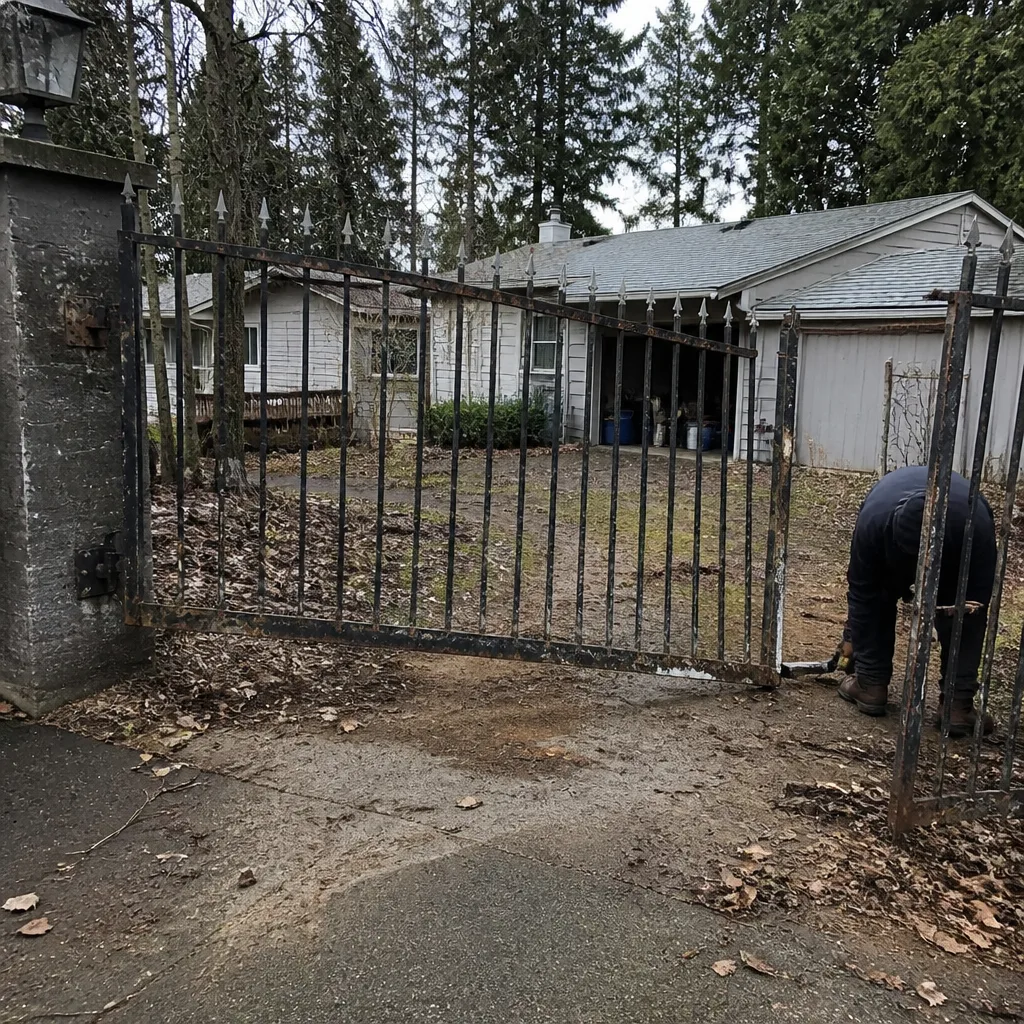 Before
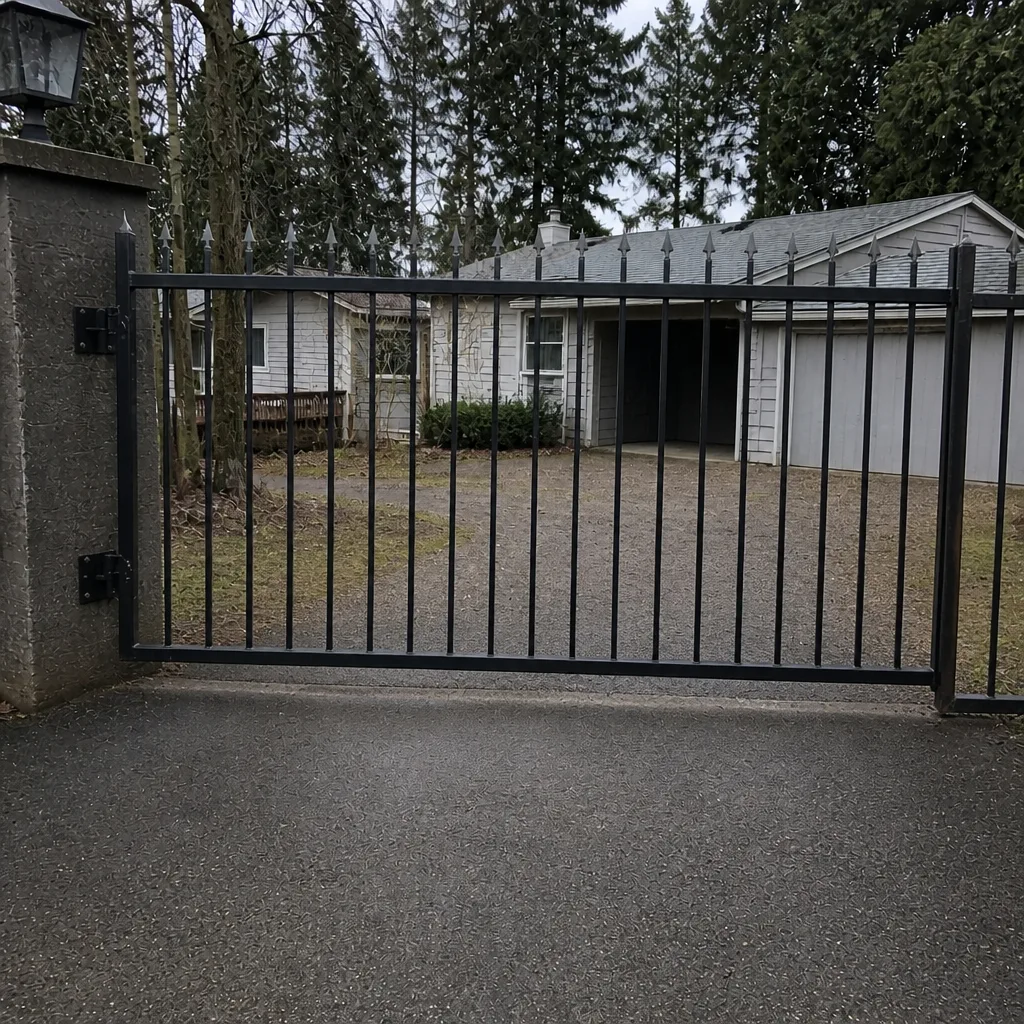 After
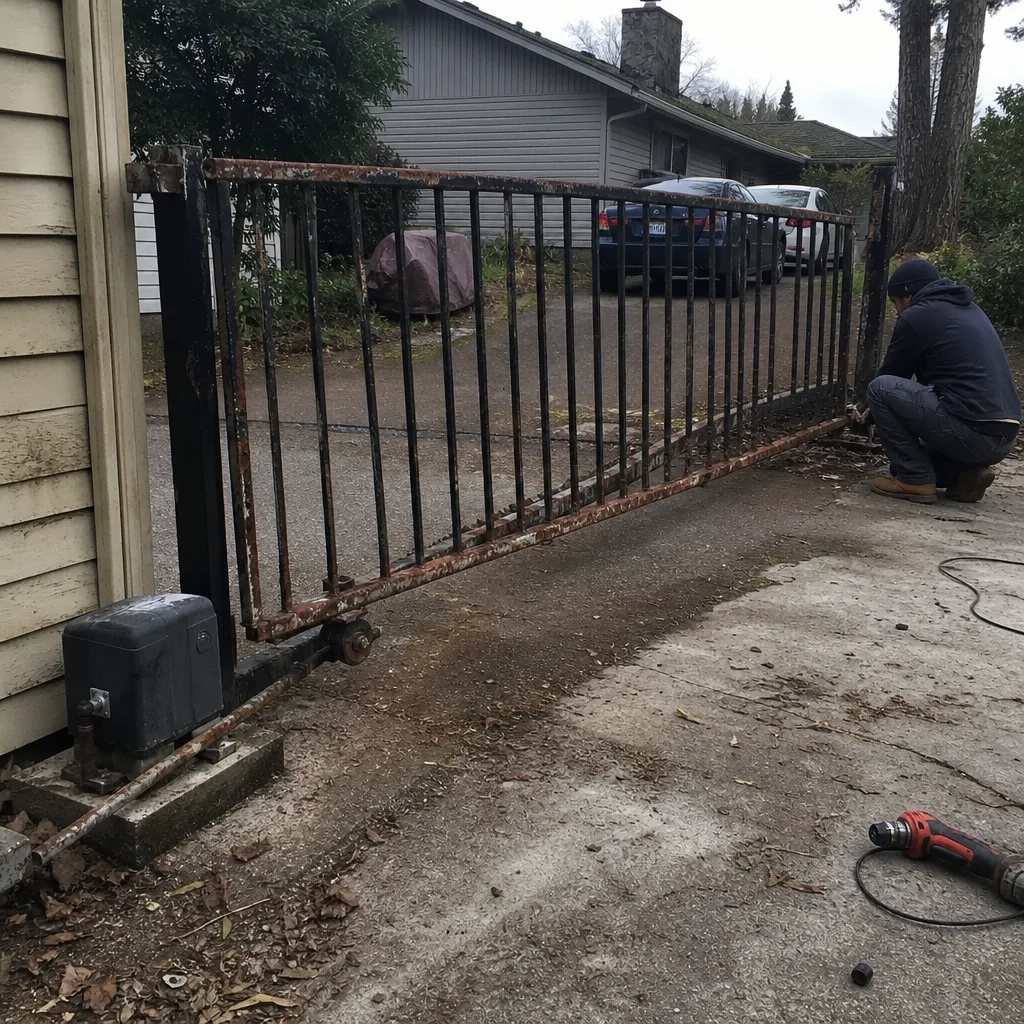 Before
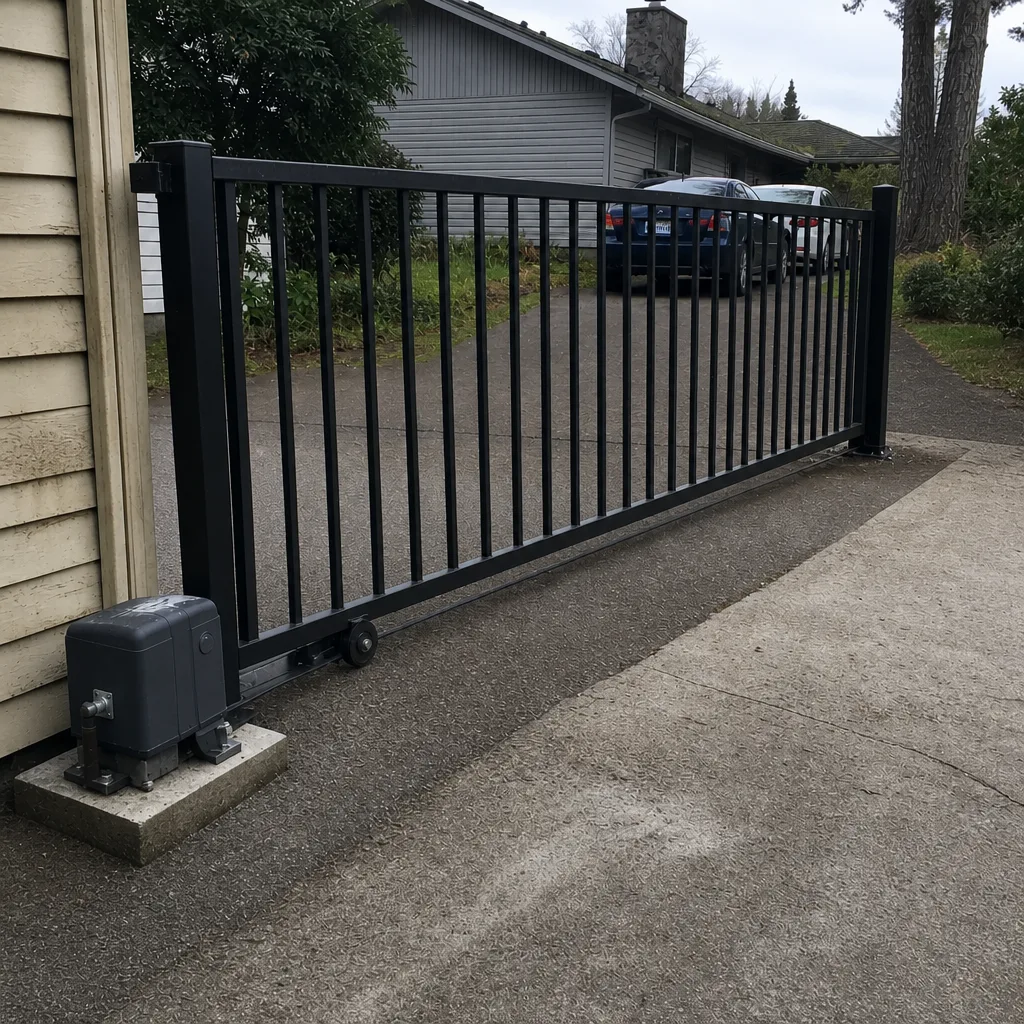 After
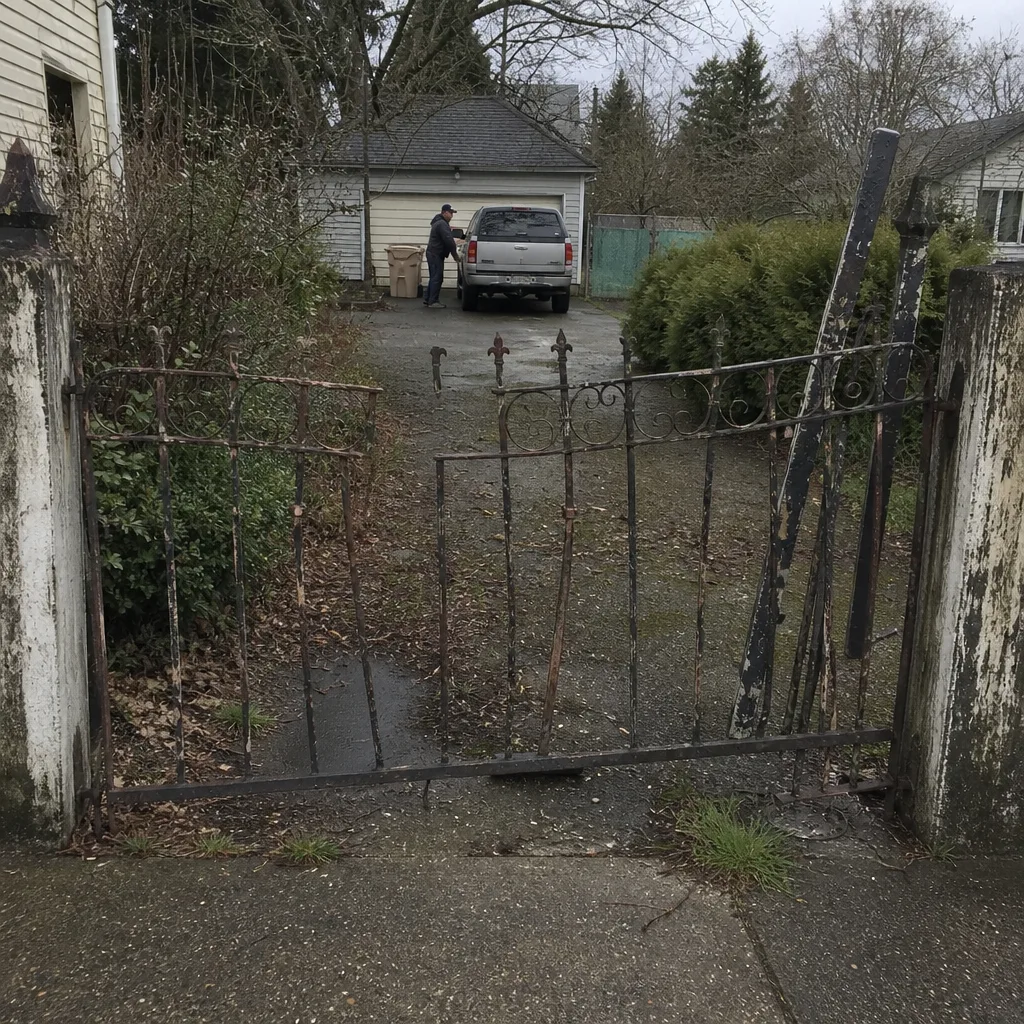 Before
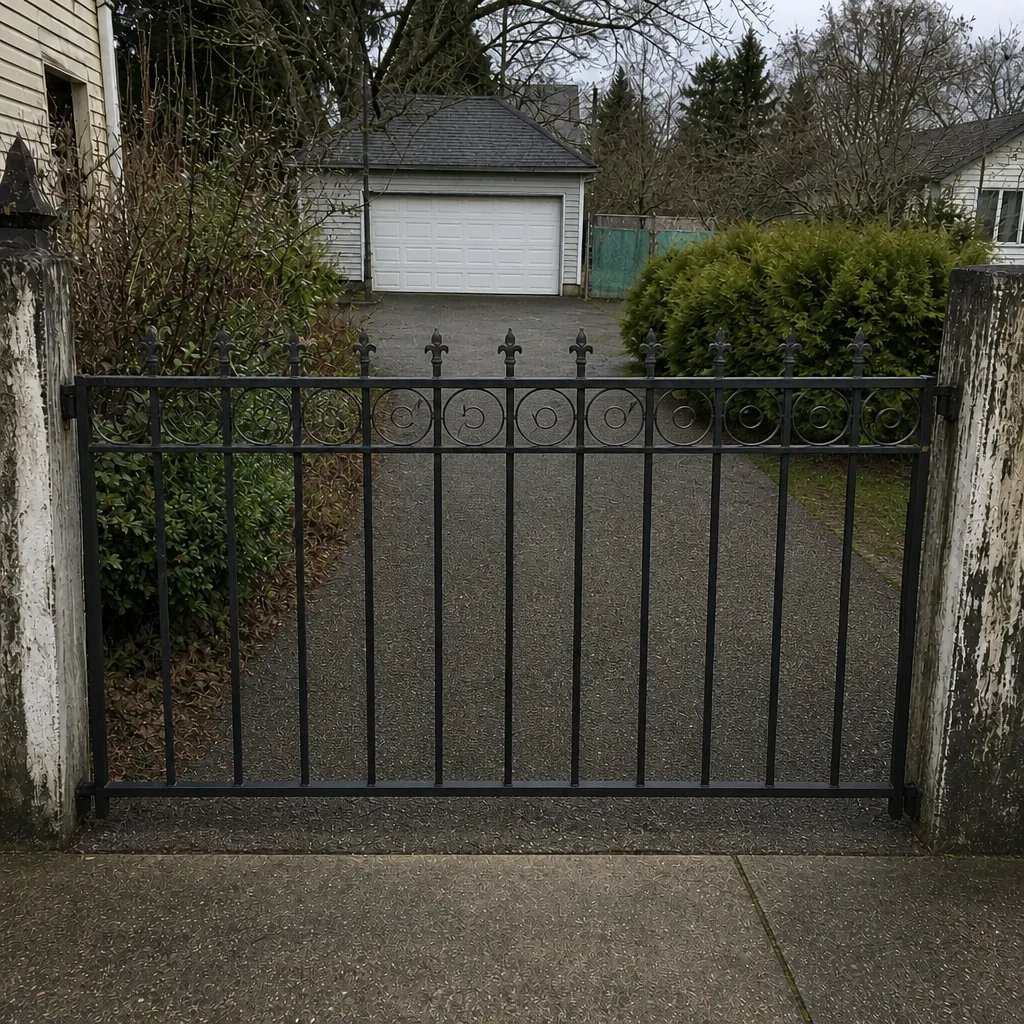 After
Frequently Asked Questions
A chain-specific lubricant or a proper chain grease – never WD-40, which strips the factory grease and leaves the chain running dry. Clean the chain first with a chain cleaner, then apply a lube designed to stay put. If you’re not sure which product your operator’s manual specifies, call (855) 360-7358 and we’ll point you at the right one for your model.
After the first real freezes of the season and again in late winter, when the freeze-thaw cycle does the most damage. If the property is on a slope or in a windy spot, check more often. A quick visual check that both sensors point straight at each other and both LEDs are steady takes under a minute. Call (855) 360-7358 if the sensors won’t stay aligned.
Disconnect the operator from AC power and cycle the gate open and closed two or three times. A healthy battery cycles the gate near normal speed; a weak one hesitates or slows. Reconnect power afterward. If the gate can’t make a couple of cycles, replace the battery before it leaves you stuck. Call (855) 360-7358 for a battery check on any operator.
Usually not. A leaning post is a footing problem, and tightening hinge bolts or wedging the post temporarily makes the lean worse over time. The correct fix resets the post at the footing. Call (855) 360-7358 for a free estimate on getting it set properly.
We’re closed Saturdays. We answer 24/7 and fast dispatch runs 7am to 7pm Sunday through Friday – if a gate fails on a Saturday, call and we’ll book the first opening on Sunday. Call (855) 360-7358.
Most of them do, but commercial operators (DoorKing, FAAC, BFT) usually have more safety hardware and more frequent inspection intervals. The core checks – lubricant spec, post plumb, battery runtime, photocell alignment – still apply. Call (855) 360-7358 for a commercial gate maintenance visit and we’ll build the checklist around your specific system.
The Bottom Line
Precision maintenance on a Kent gate is about doing the right thing at the right time, not the most things. Use a lithium grease at hinges, a light grease at rollers, a dry-film product on rack and pinion, chain lube on chains, and never WD-40. Check plumb with a 4-foot level before post lean becomes visible. Test the battery backup by actually cycling the gate, not just listening for a beep. Verify photocell alignment after every freeze. And time the whole schedule to Kent’s wet-season and freeze-thaw calendar in Kent rather than a national spring-and-fall template. Do that and you’ll avoid most of the emergency calls we handle. Skip it and a chain replacement, a post reset, or a sensor re-aim becomes a scheduled repair you didn’t plan for.
If any part of the checklist is beyond what you want to take on, or you’d rather have a specialist confirm the diagnosis, that’s exactly what we do. Call (855) 360-7358 for a free estimate. Estimates are free, the price is set per job by the written estimate, and it’s agreed before any work starts. We work on the brand already on your property – LiftMaster, FAAC, BFT, Linear, Viking, Ghost Controls, DoorKing, Elite, and Mighty Mule. Our technicians have up to 12 years of experience. Residential or commercial, automated or manual.
Written by the team at Gate Repair Kent.