
Last updated November 15, 2026
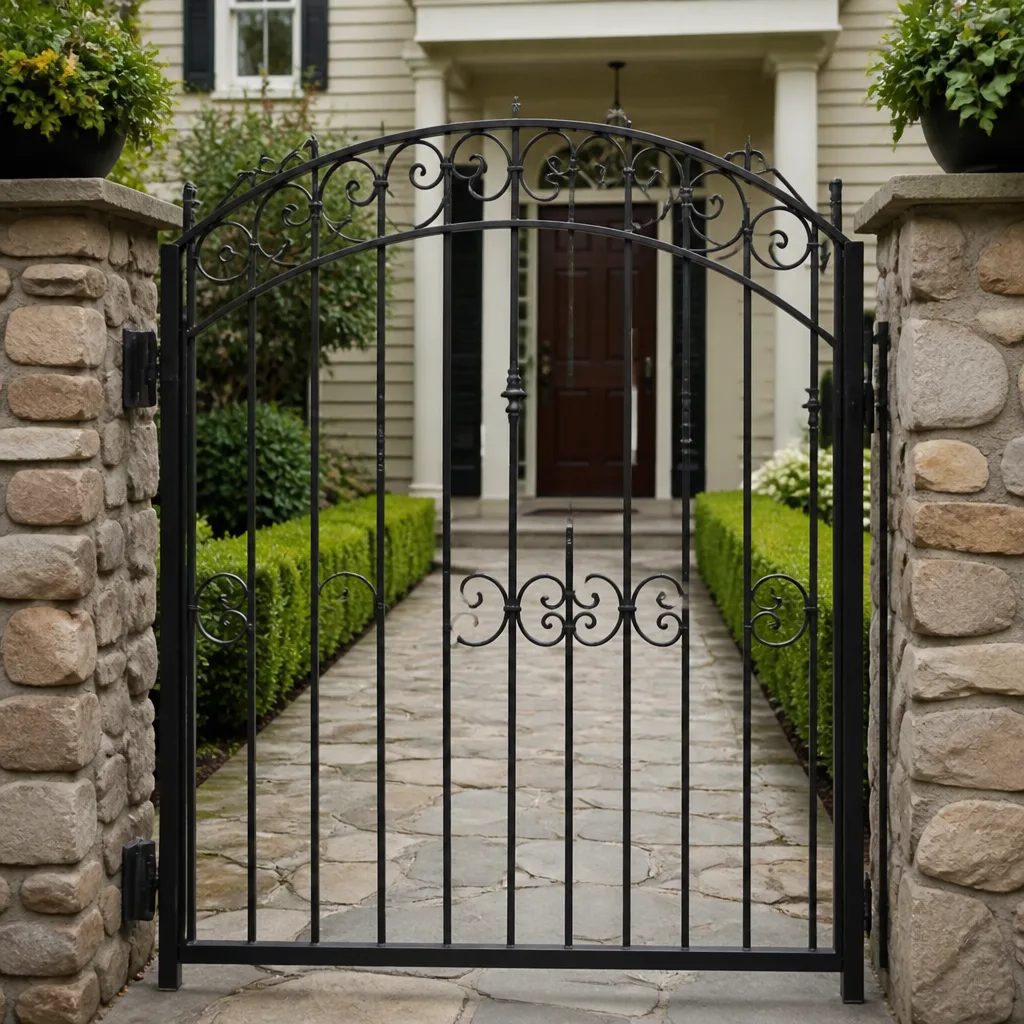 Wrought iron
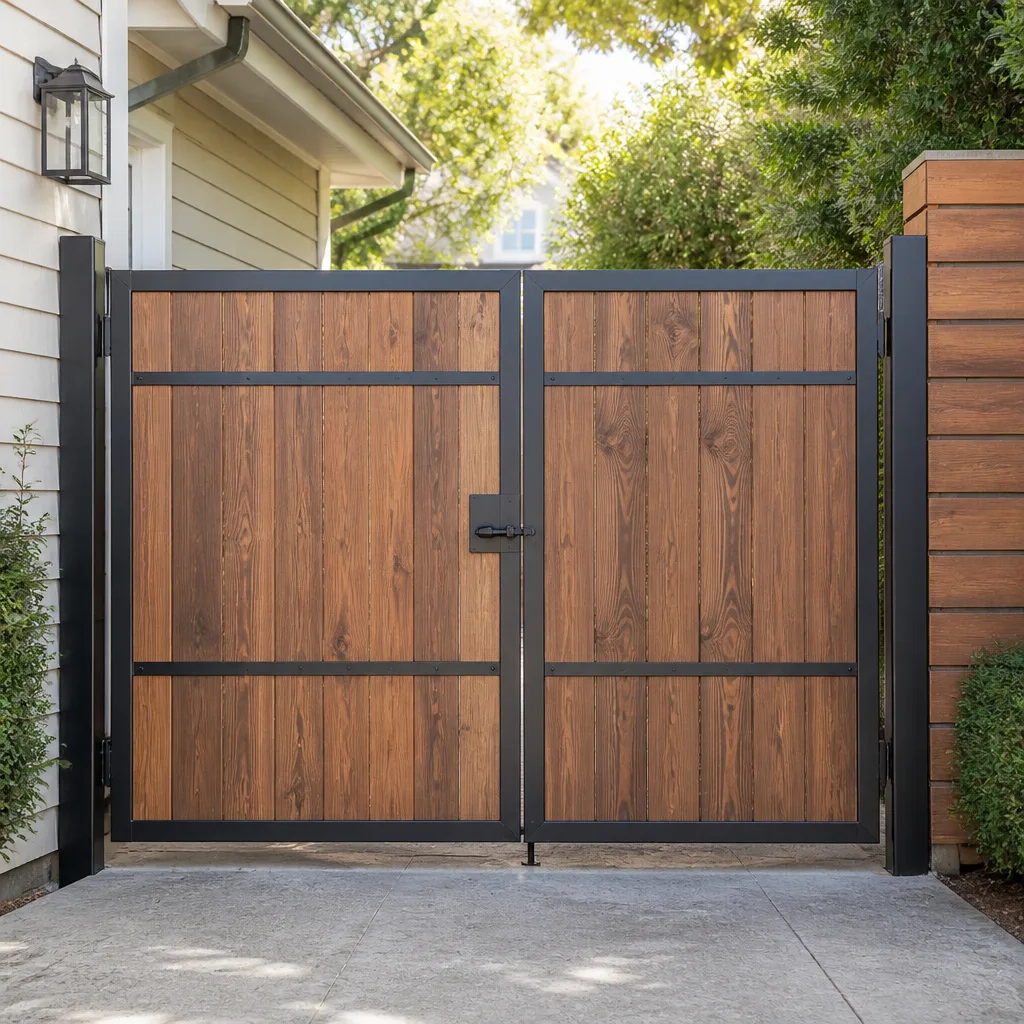 Wood & steel frame
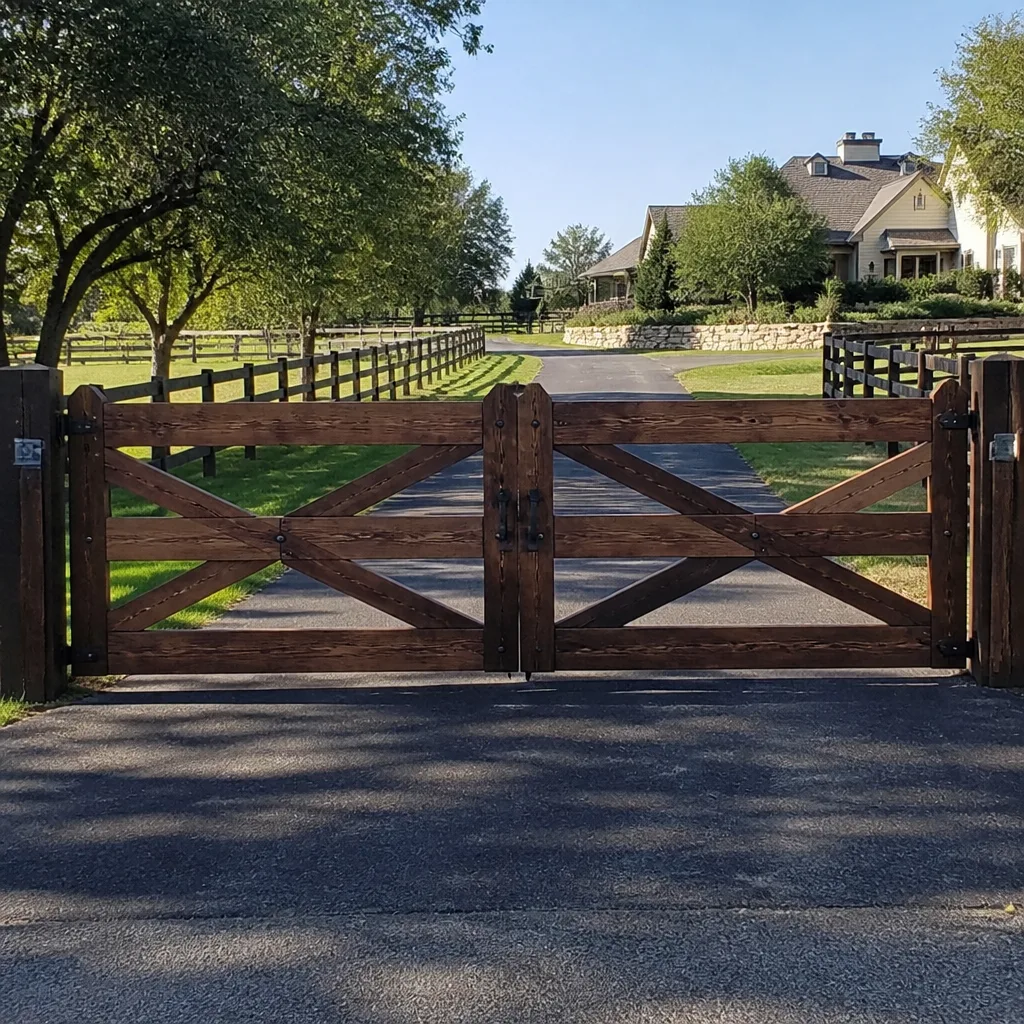 Farm & ranch
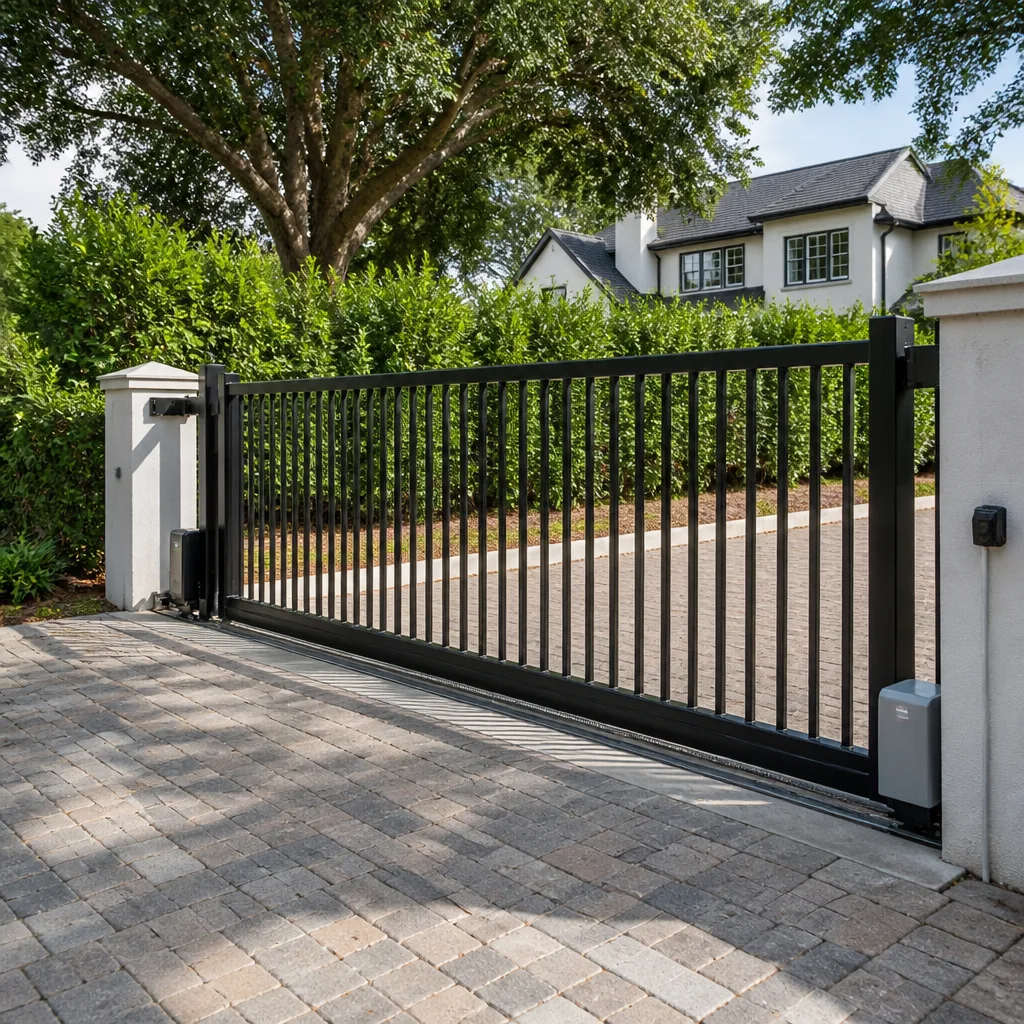 Sliding driveway gates
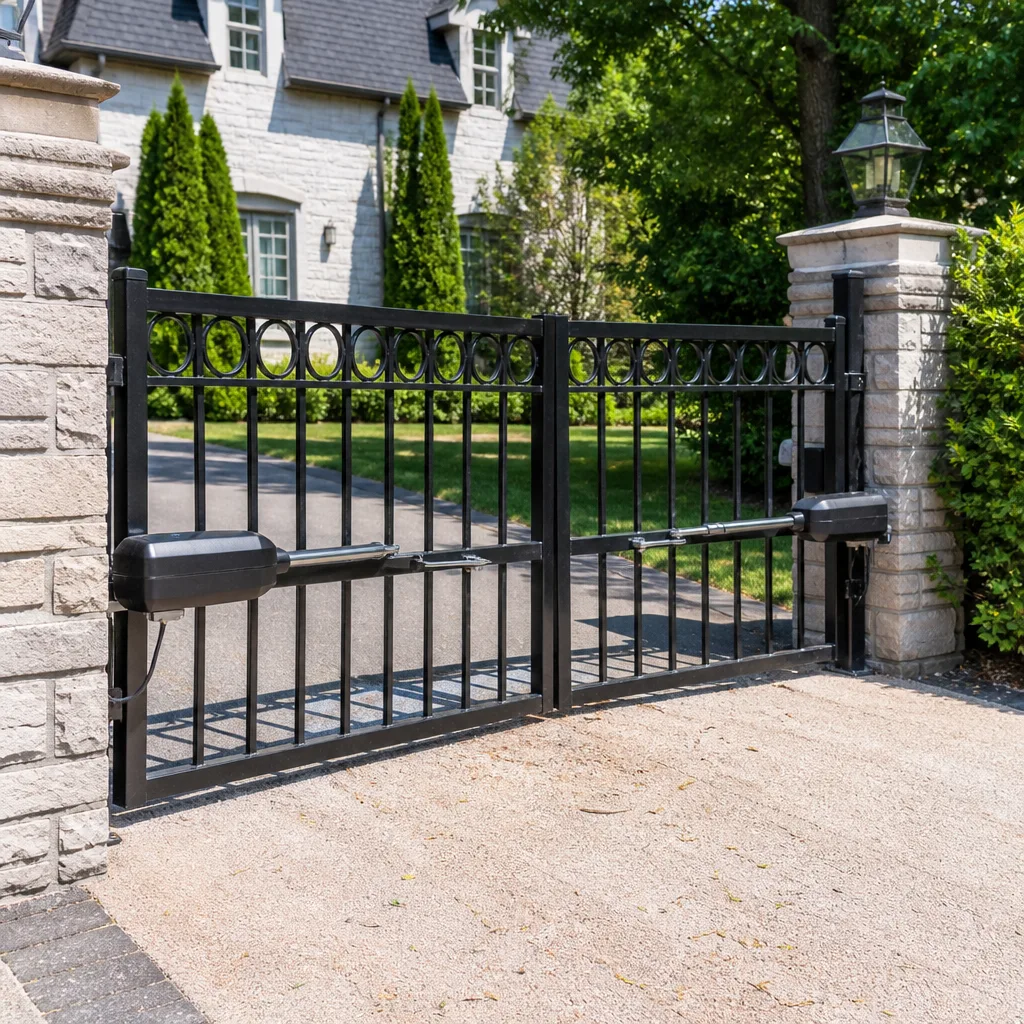 LiftMaster operators
Free on-site gate assessment - hinges, posts, and your LiftMaster or Nice gate operator checked before anything is quoted
The assessment is free and the quote is the invoice.
Get your free estimateThe Complete Guide to Gate Repair in Kent
A gate that opens slowly usually isn’t a motor problem. In our experience, roughly 60% of the time it’s a hinge alignment issue the motor is quietly compensating for, and swapping in a new unit without fixing the alignment burns through that new motor in under a year. That’s the pattern most homeowners miss: gates fail as a system, not as parts. One worn hinge or shifted post puts strain somewhere else, and the strain shows up months later as a dead operator, a stuck limit switch or a gate that reverses halfway. This guide maps the whole chain in Kent, from symptom to root cause, so you fix the problem once instead of chasing symptoms.
Quick Answer
Gate repair in Kent isn’t one job. It’s a diagnosis that starts with your gate’s hardware, foundation and operator together, because a fault in one of those usually causes the failure in another. The most common root causes we see in Kent are post shift from clay-heavy soil, rusted or misaligned hinges on swing gates, and operator fault codes that go unread. Reading the fault code first, then checking the hardware before the motor, saves money and prevents repeat breakdowns.
Styles & brands we work with
- Wrought iron
- Wood & steel frame
- Farm & ranch
- Sliding driveway gates
- LiftMaster operators
Table of Contents
- How gates fail as a system, not as parts
- Why Kent’s clay-heavy soil causes post shift
- Swing, slide and barrier arm: why repair logic differs
- How to read your operator’s fault codes
- Wet winters and fastener corrosion
- Repair versus replace: the decision matrix
- What keeps a gate reliable year to year
- When to call a professional
How Do Gates Fail in Kent?
Gates in Kent fail across the same chain of connected parts, and the failure is nearly always downstream from where it started. We’ve seen plenty of cases where a homeowner calls about a motor that won’t open, and the actual cause is a post that shifted two inches over the winter and pulled the hinges out of alignment. The motor was doing exactly what it was told; it just had no way to keep up with the geometry change.
Think of your gate as one system with four stages:
- Foundation and posts. These set the geometry. Any shift changes every distance and angle downstream.
- Hinges, rollers and tracks. They translate that geometry into how the gate panel moves.
- The operator. The motor pushes or pulls the panel. It compensates for friction until it can’t.
- Limits, sensors and controls. These tell the operator where the gate is and when to stop or reverse.
When any stage drifts, the operator works harder and the next stage in line takes the strain. A stuck swing gate can lock out a Ghost Controls or Mighty Mule operator with a stall code on a cold morning, and the fault shows up in the electronics even though the problem is the hinge. Reading that code and then walking the hardware gives you the real cause before any parts come off.
Why Kent’s Clay-Heavy Soil Causes Post Shift
Kent sits on dense, clay-heavy soil that holds water through the wet season and then swells and shrinks as it dries. That movement is the single biggest hidden driver of gate problems in Kent. A gate post that was set perfectly straight can shift an inch or two over a couple of wet winters, and once the angle changes, the whole system has to absorb it.
What post shift causes, in order of how it usually surfaces:
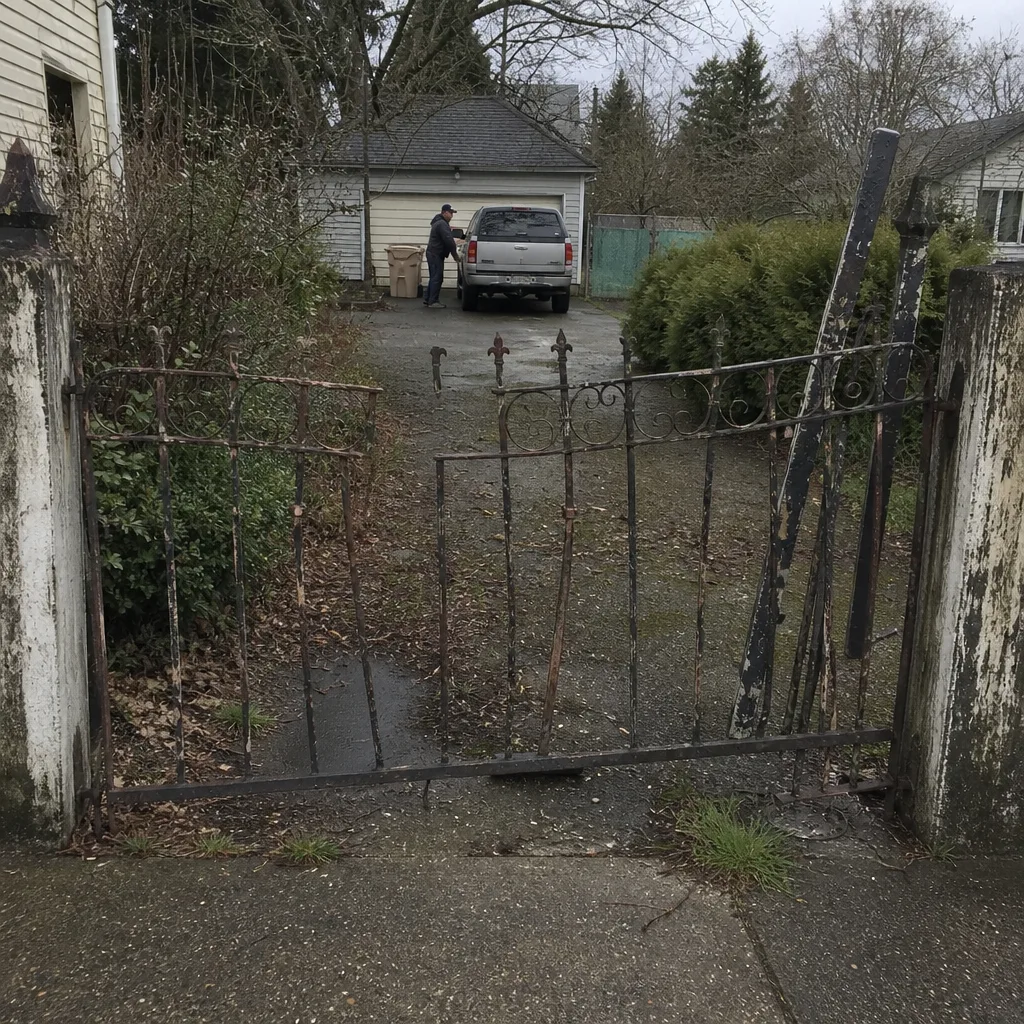
- Hinge misalignment. A post that tilts inward binds the gate on one hinge, so the panel doesn’t close flush.
- Turfing and dragging. A slide gate that shifts sideways drags on its track and trips the operator’s obstruction sensor.
- Limit switch drift. The gate no longer reaches the same open or closed position, so the operator’s limits need adjustment or fail entirely.
- Operator strain. The motor has to push through friction it wasn’t set for, which burns out control boards and gearboxes over time.
Correcting the cause means correcting the footings, not tightening bolts. Proper footing depth matters more in Kent than in many places, because the soil holds water and shifts with the seasons. In our experience, a gate with a post problem must have the post reset before any electrical repair will hold, or the new parts just go into the same bad geometry.
Swing, Slide and Barrier Arm: Why Repair Logic Differs
Swing, slide and barrier arm gates may all be automated access gates, but the way they fail and the way they’re repaired are entirely different. Applying the logic from one to another is a common misdiagnosis, and it’s a habit generalists fall into. Gate specialists work each type according to its own mechanics.
Swing gates
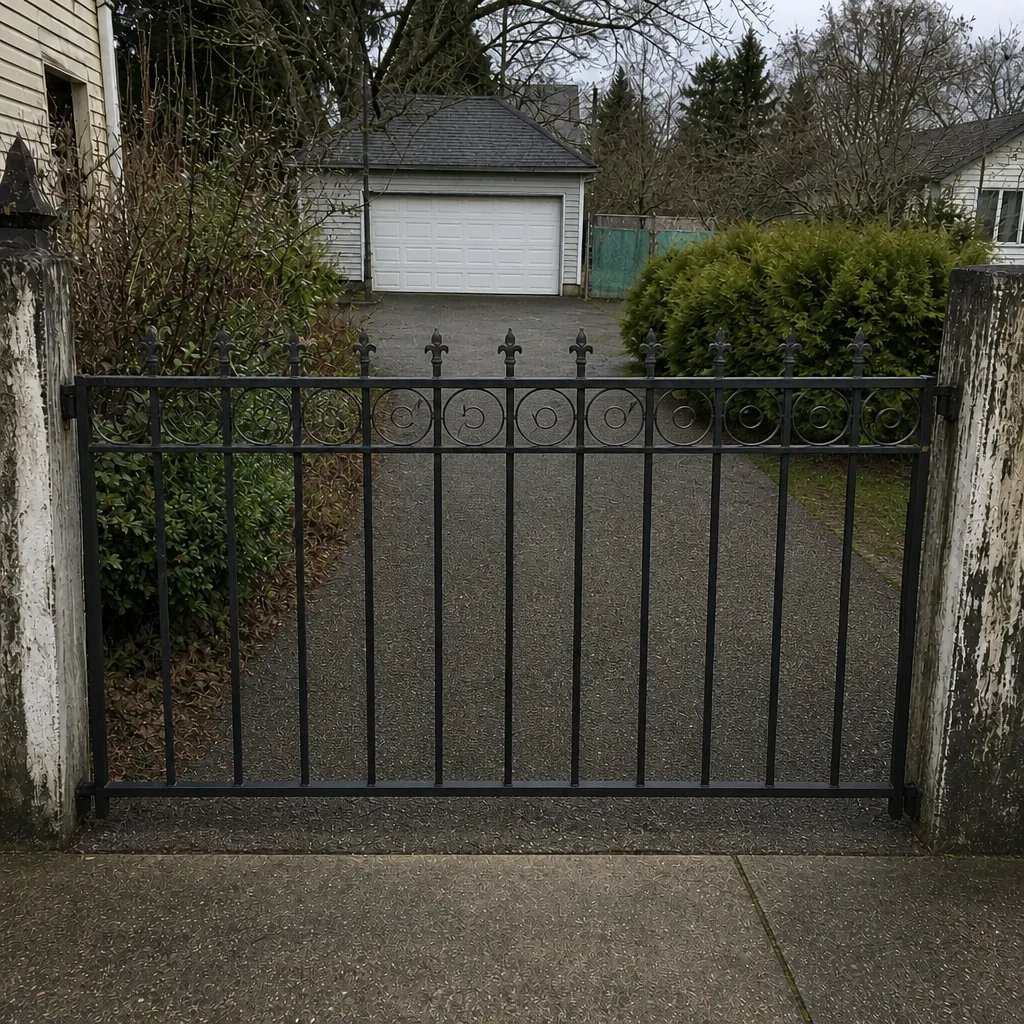
Swing gates pivot on hinges and are driven by an operator arm or underground operator. Repair focuses on hinge alignment, post plumb, operator arm geometry and the travel limits. A swing gate that binds on one hinge is common in Kent after a wet winter, and the operator works against that bind until it stalls out.
Slide gates
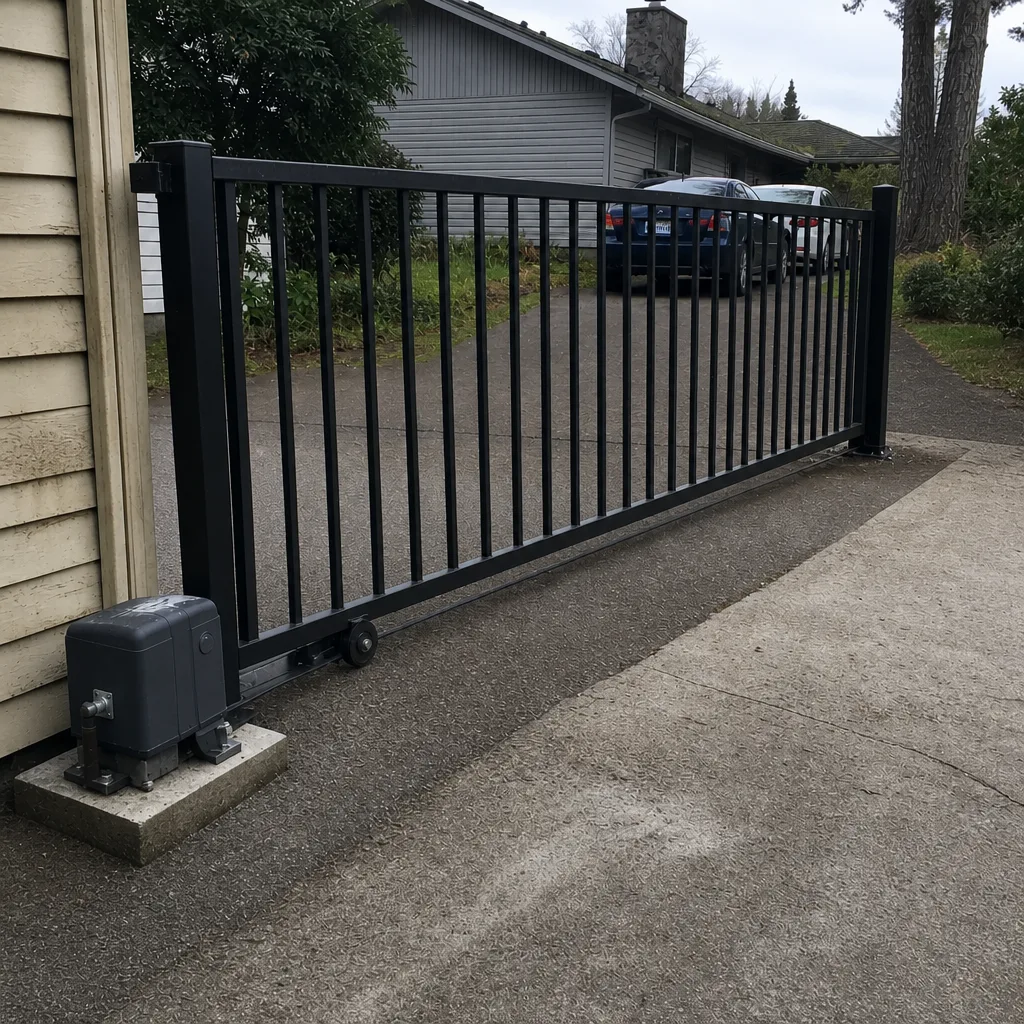
Slide gates ride on a track and rollers, moved by an operator with a rack-and-pinion or chain drive. Repair focuses on the track, the rollers, the guide post and the gate’s physical clearance. A gate that drifts off its track can crush against the operator housing or catch on a damaged roller, so this is where heavy panels and off-track movement need a trained hand, not a guessed adjustment.
Barrier arms
Barrier arms (used on parking lots and commercial entrances) are driven by a dedicated operator and fail most often at the arm, the limit switches, the loop detector and the control board. A barrier arm that stays down or won’t respond to a transmitter is a controls problem, not a mechanical one, and it needs the operator’s diagnostics put on it.
Our electric gate repair work covers all three, because whether the gate is a manual swing gate or a fully automated commercial slide gate, the diagnosis starts the same way: read the operator, then walk the hardware.
How to Read Your Gate Operator’s Fault Codes
Most automatic gate operators store and display fault codes, and most homeowners never look at them. Reading the code before you call anyone is the fastest way to narrow down what’s wrong. It tells you whether the operator is reporting a blocked gate, a bad limit switch, a faulty sensor or a dead control board, and that changes where the diagnosis goes.
A general way to read it:
- Find the operator’s display or indicator. Some units show a two-digit code; others flash a diagnostic LED in a set pattern. Every brand does this differently, which is why brand familiarity matters. A DoorKing control board reads differently from an Elite operator or a Ghost Controls unit.
- Write the code down before you reset anything. A cleared code is a lost clue, and if the operator resets and runs, it may only be hiding the problem.
- Match the code to a fault category. Blocked, limit, sensor, power and board faults are the usual families. The category points you to the right stage of the system.
- Watch what the gate does while the code is active. Does it reverse fast, stall, click and stop, or never light up? That behavior tells a technician more than the code alone.
What we don’t recommend is clearing codes and adjusting the sensitivity on your own to make the gate move. The operator’s safety systems are what keep it from crushing a person or a vehicle, and the wiring and power side of that is a job for a trained professional. An incorrect adjustment can override the very protection meant to stop the gate.
Why Kent’s Wet Winters Accelerate Corrosion
Kent’s wet winters put specific stress on gate hardware, especially the fastener types that hold a gate together. Moisture sits in the small gaps and joints of the panel and the operator arm, and standard zinc-plated bolts will begin to rust where the coating scratches or wears. Corrosion is the quiet failure that turns a routine adjustment into a hinge replacement.
Where corrosion shows up most often in Kent:
- Hinge and pivot bolts. Rusted threads mean the hinge can’t adjust, so it either binds or seizes.
- Fasteners on the operator arm and brackets. Loose or rusted mountings throw the operator out of alignment with the gate.
- Below-grade hardware. Footing plates and anchor bolts see the most moisture and are the hardest to inspect.
When hardware is replaced in Kent, we use fasteners spec’d for the Pacific Northwest climate, meaning stainless or properly coated hardware that stands up to wet winters rather than treating a rusted bolt as a direct swap. Replacing a fastener with the same grade of steel simply repeats the failure. A specialist is looking at the whole gate when a fastener comes out: hinge bolts, operator mounts and footing anchors all get checked for the same wear.
Repair or Replace: The Decision Matrix
Repair or replace is the central question on an aging gate, and the answer is rarely just about the age of the operator. We look at three things: operator age and parts availability, the condition of the mechanical hardware, and whether the operator still integrates with the property’s current access control. A gate can be mechanically sound while its operator is obsolete, and it can have a healthy operator bolted to a failing foundation.
Here’s how we frame the decision:
- Repair makes sense when the hardware is healthy, the operator is current and parts are available, and the fault is a single identifiable issue like a limit switch, a hinge or a sensor.
- Replace makes sense when the operator is well past its service life, its control board is no longer available, or its technology can’t connect to your current access control. An operator that can’t be wired into your entry system becomes a dead end even if it still runs.
- Mechanical first, electrical second. If the post or hinges are the problem, fix that before you decide on the operator. Replacing a working operator on a misaligned gate wastes the new unit.
- Commercial systems carry different rules. On a commercial slide gate or barrier arm, downtime is a daily problem, so parts availability and access control integration matter more than the age of the unit. A newer commercial operator that no longer aligns with the site’s card reader is a replacement candidate even when it’s running.
This is why we cover full gate repair and new gate installation under one roof. When the diagnosis points to replacement, the same specialist works through the install and the access control wiring rather than handing you to a second company that has to start the diagnosis fresh.
What Keeps a Gate Reliable Year to Year
The gates that last in Kent are the ones where the hardware and the operator are checked together, on a schedule, before failures go silent. We’re not talking about a maintenance plan, just a practical routine. The point is to catch the drift while it’s still a cheap adjustment.
A sensible routine for a Kent gate:
- Look at the post plumb. If the gate is leaning, the geometry is changing and every part downstream will pay for it.
- Listen to the gate and watch it move. Slowness, dragging and hesitation on one hinge are early clues, not quirks.
- Read the operator display. Check the fault codes even when the gate is running. Some operators store a history.
- Inspect fasteners for rust before winter. Wet-season corrosion on hinges and mounts is the most common hidden wear in Kent.
- Keep vegetation and debris off the track and panels. A track packed with debris binds a slide gate and puts strain on the operator.
None of that involves overriding safety systems. If the gate won’t move at all, or if the operator throws a fault that won’t clear, that’s the point where you stop looking and call a gate specialist. Gate Repair Kent works on the system in Kent, from the motor to the hinge.
See the difference
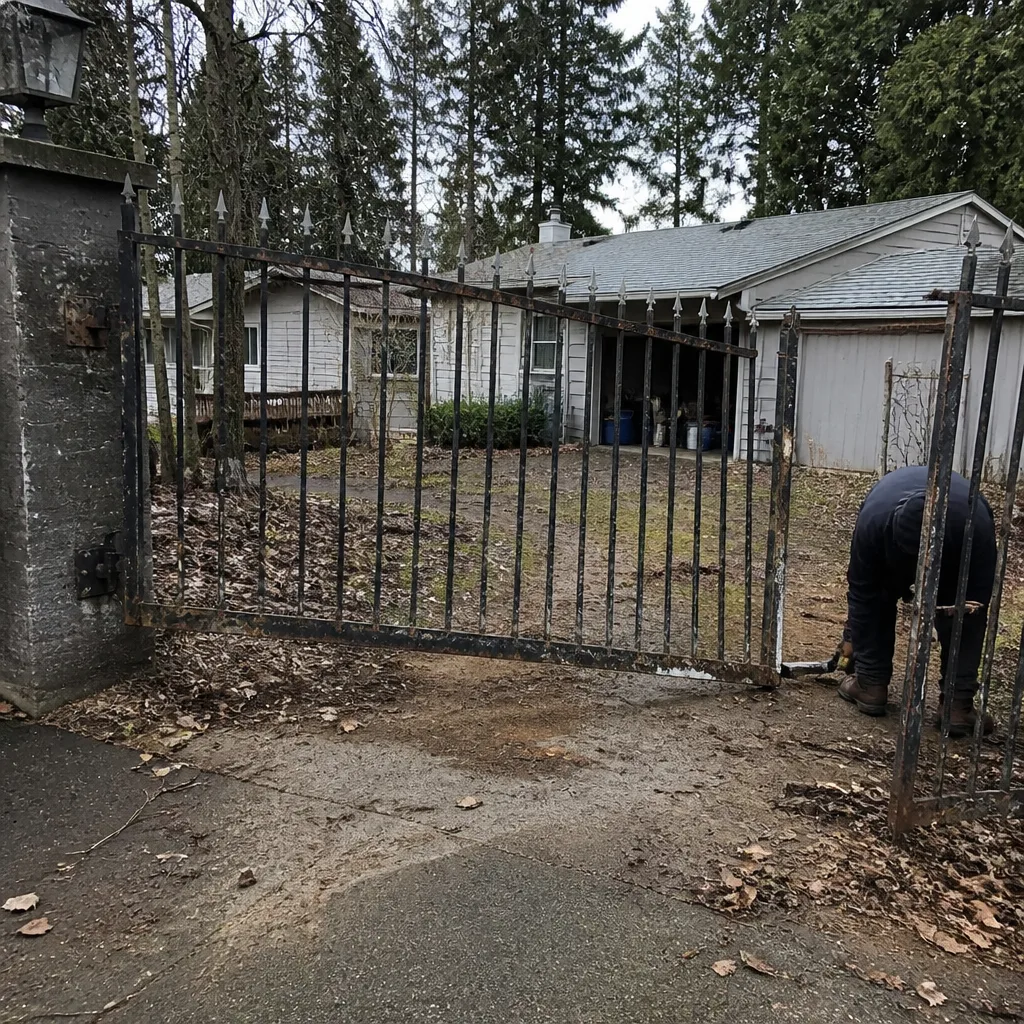 Before
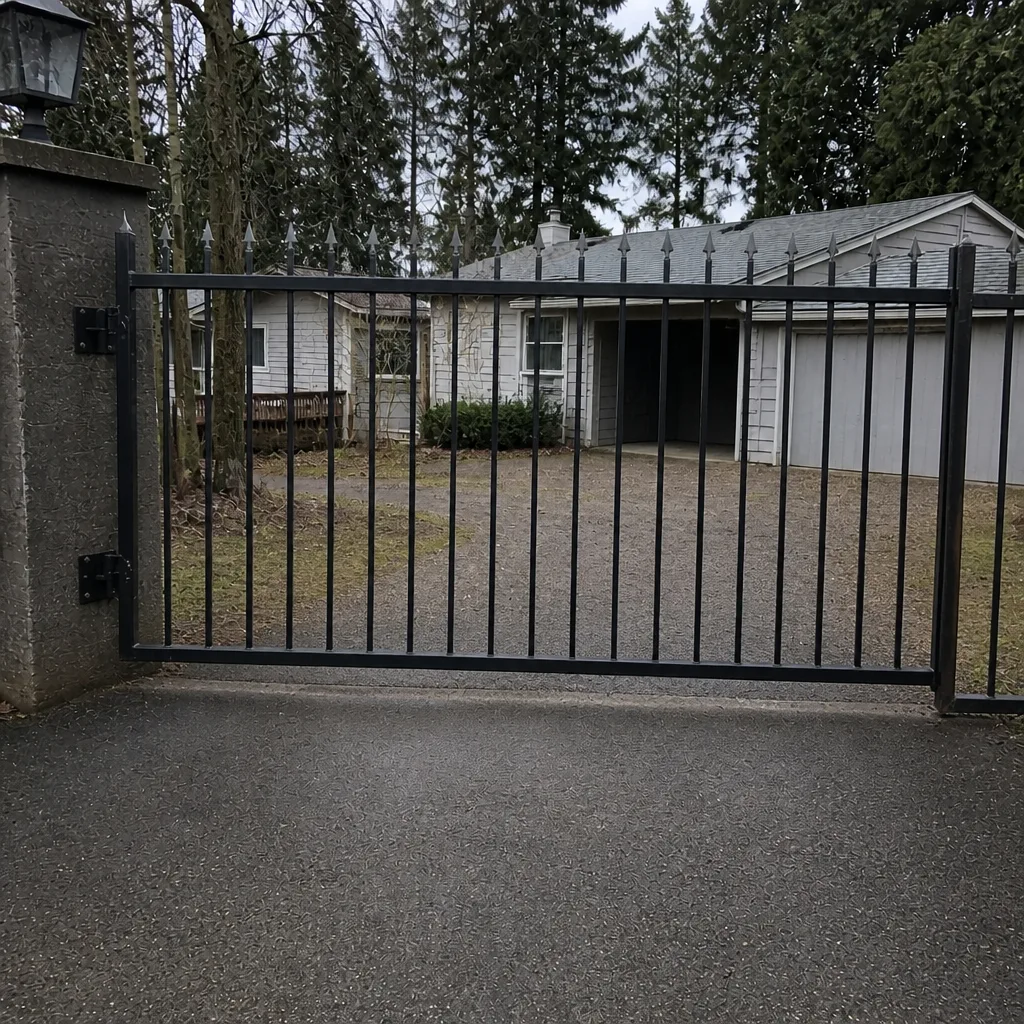 After
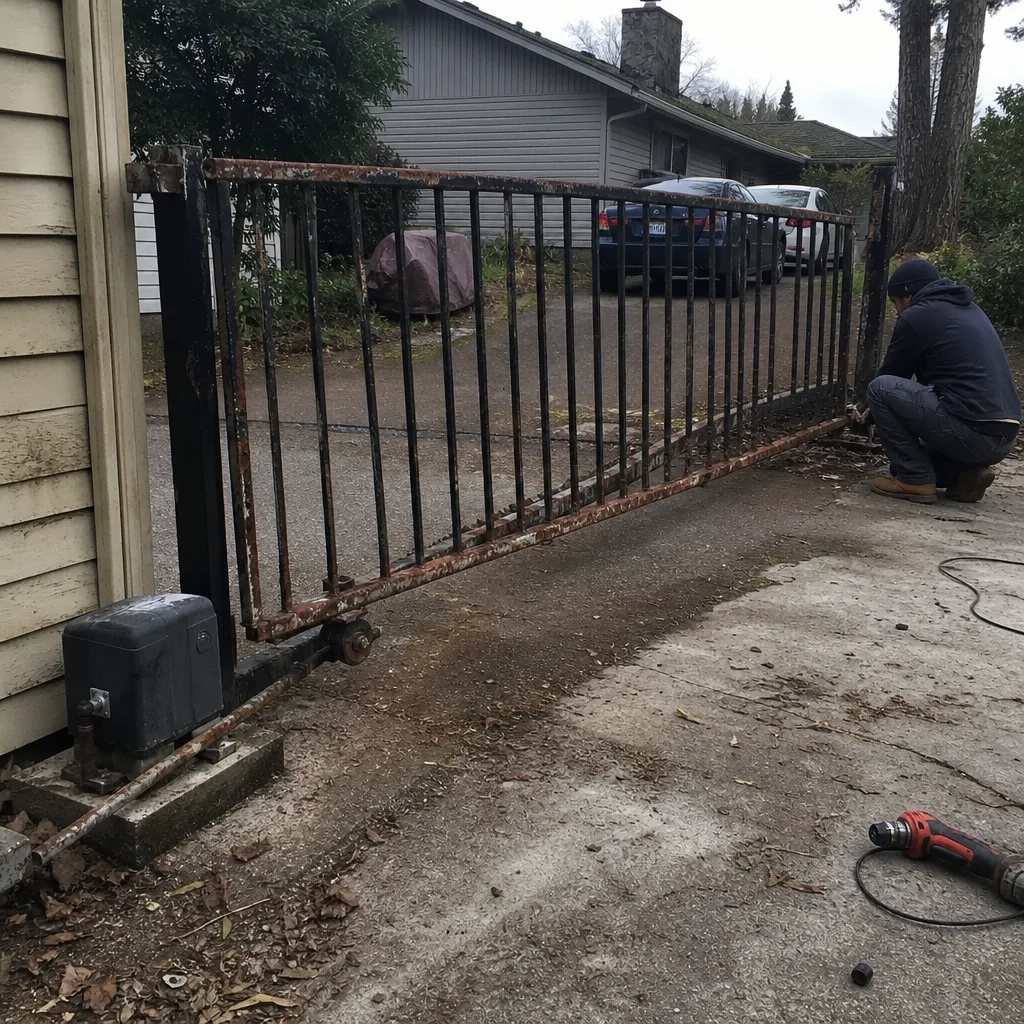 Before
 After
 Before
 After
Common Mistakes to Avoid
- Replacing the motor without checking the hinge alignment. A new operator bolted to a misaligned gate will strain against the same friction and fail early. Diagnose the whole system first.
- Clearing fault codes and calling it fixed. Reset the operator without fixing the cause and the same fault often returns within weeks.
- Ignoring post shift. A tilted post is the most common hidden driver of gate faults in Kent. Bolting on a new hinge or operator won’t fix a gateway that’s out of line.
- Replacing rusted bolts with the same grade of hardware. Ordinary fasteners will rust in the same spots. Pacific Northwest conditions call for corrosion-resistant fasteners.
- Adjusting the operator’s sensitivity to make a stiff gate move. That defeats the safety system. A stiff gate means friction somewhere, and the answer is to find it, not hide it.
- Calling a generalist for an automated gate fault. The repair logic differs by gate type and brand. A specialist reads the code and the hardware in a single visit.
- Repairing a failing commercial operator without checking its access control integration. If it no longer works with the site’s entry system, repair may be money spent on a dead end.
When to Call a Professional
Call a gate specialist when the gate won’t open or close at all, when the operator throws a fault code that won’t clear, or when the gate reverses, stalls or moves on its own. Call when the post is visibly leaning, because that’s a foundation problem that will cascade into every part downstream. Call when a heavy panel comes off its track or hangs on a damaged hinge, since a sliding panel can crush against the operator housing or fall. And call when the problem involves the operator’s wiring, power or safety sensors, which are a trained hand’s job and not a DIY one.
Gate Repair Kent offers free estimates in Kent. Call (855) 360-7358. We answer 24/7. Fast dispatch, 7am-7pm, Sunday through Friday. The written estimate sets the price before any work starts.
Frequently Asked Questions
Gate repair in Kent is priced per job, with a written estimate before any work starts, so the cost depends on whether the fault is a hinge adjustment, a post reset, an operator part or a control board. Estimates are free. Call (855) 360-7358 and we’ll diagnose the gate and quote it in writing.
Yes, same-day service is available, and we dispatch Sunday through Friday, 7am to 7pm. We answer 24/7. If your call comes outside dispatch hours, it’s booked into the next opening, Sunday through Friday, 7am to 7pm. Call (855) 360-7358.
A slow-moving gate is usually a hinge alignment or friction problem the operator is compensating for, not a failing motor. Fixing the motor without correcting the hardware burns through the new unit. An estimate from a (855) 360-7358 diagnosis tells you which is the real cause.
Yes. We work on the brand already on your property, including Ghost Controls, DoorKing, Elite and Mighty Mule systems, plus LiftMaster, FAAC, BFT, Linear and Viking operators. We work on the system installed rather than around it.
That depends on your zoning and the gate’s dimensions, so check with the City of Kent building department before ordering. We don’t issue permits, but we’ll work with whatever the city requires when your gate project is scheduled.
Call (855) 360-7358. We answer 24/7. A commercial barrier arm that won’t lift or a residential slide gate stuck mid-travel is a same-day dispatch priority during our dispatch hours, Sunday through Friday, 7am to 7pm. You’ll get a written estimate before work begins.
The Bottom Line
A gate is one mechanical-electrical system, and the failure almost always starts upstream from where you notice it. In Kent, the upstream cause is usually clay-soil post shift, hinge wear or a fastener that’s corroded through wet winters. Reading the operator’s fault code first, then checking the hardware before the motor, is what turns a repeat problem into a one-time fix. Repair versus replace comes down to operator age, parts availability and access control integration, not just the age of the unit. One specialist for the whole system means the diagnosis leads to the right fix.
Call (855) 360-7358 for a free estimate on gate repair, electric gate repair or a new gate in Kent. We answer 24/7. Fast dispatch, 7am-7pm, Sunday through Friday. The price is quoted and agreed before any work starts.
Written by the team at Gate Repair Kent.