
Last updated November 15, 2026
 Wrought iron
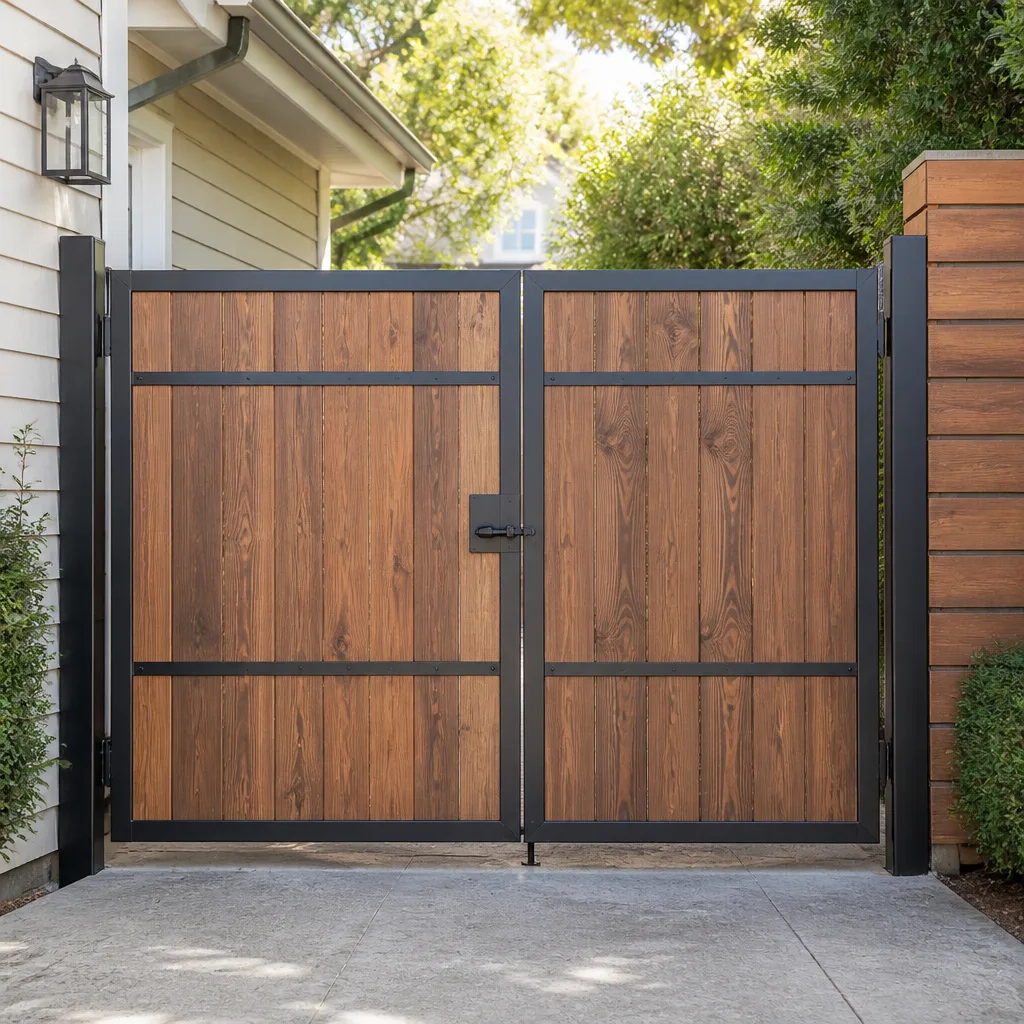 Wood & steel frame
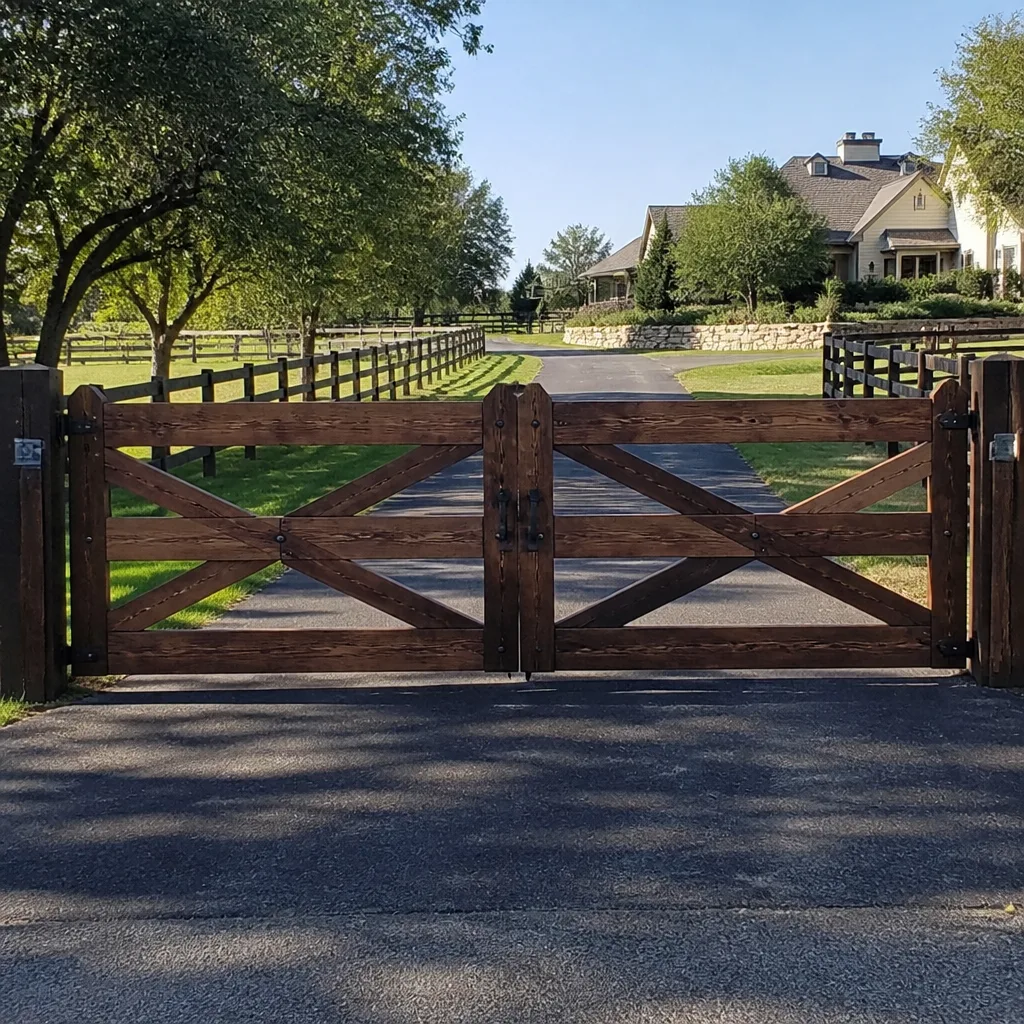 Farm & ranch
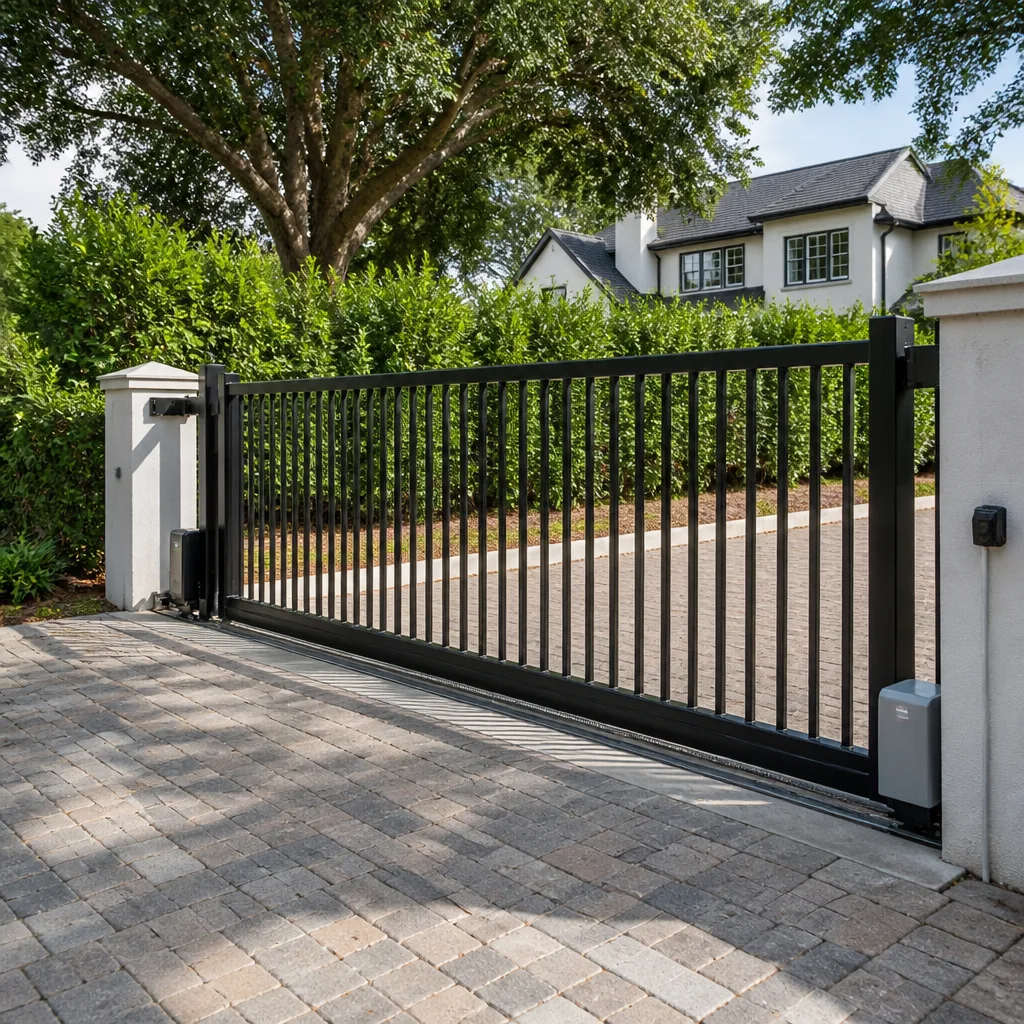 Sliding driveway gates
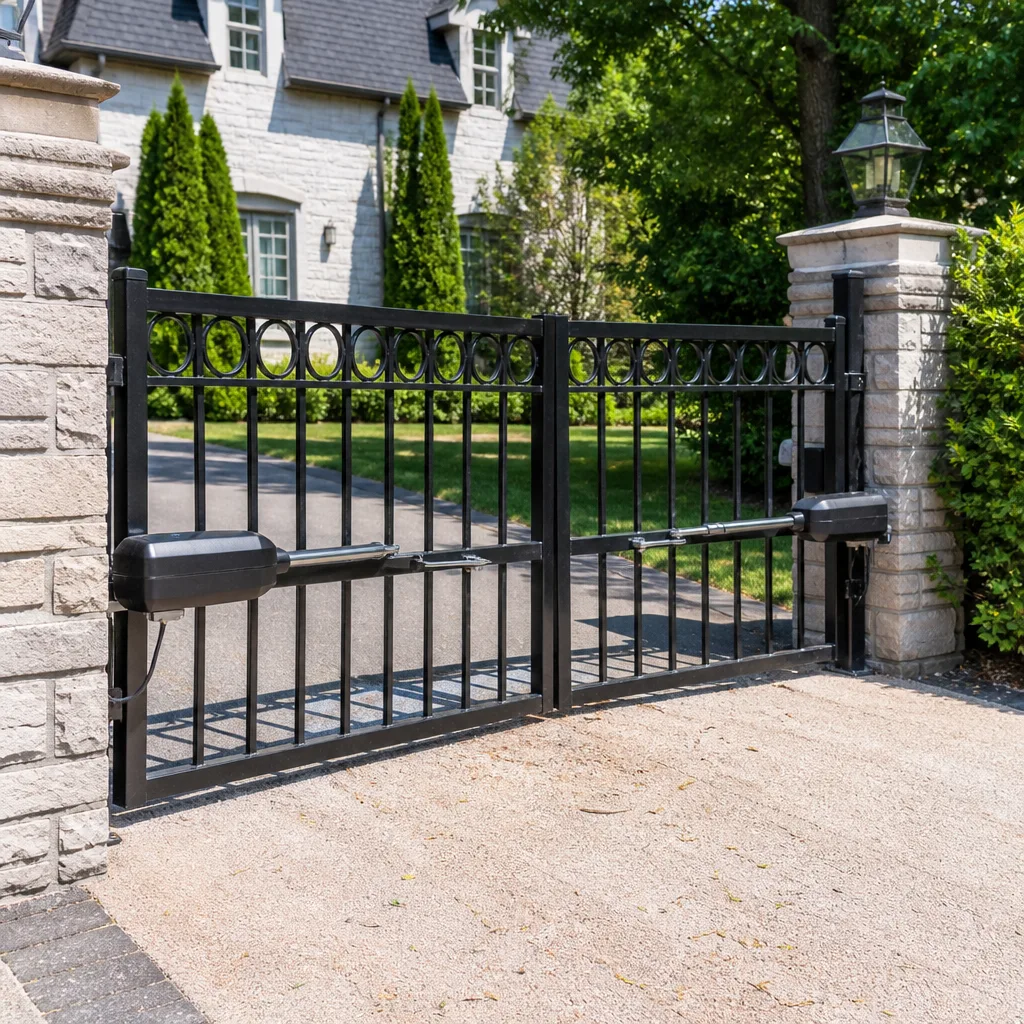 LiftMaster operators
Free on-site gate assessment - hinges, posts, and your LiftMaster or Nice gate operator checked before anything is quoted
The assessment is free and the quote is the invoice.
Get your free estimateDIY vs Professional Gate Repair: The Kent Homeowner’s Decision Guide
Most advice about fixing your own gate starts in the wrong place. It asks whether you’re handy enough. The better question is whether the task in front of you can hurt someone or void a warranty if you get it slightly wrong. An automatic gate operator is industrial machinery, and the force limits and entrapment standards that govern these systems exist because an out-of-adjustment gate can crush. That reframes “can I fix this myself” into something more useful. In this guide we draw a hard line through the repairs Kent homeowners face every week: which jobs a careful homeowner can genuinely handle, which ones cross into electrical and liability territory, and where a small savings turns into a much bigger bill.
Quick Answer
You can safely handle a handful of gate tasks yourself: releasing the manual override, cleaning and realigning photocells, replacing remote batteries, and re-pairing a remote. Anything involving the operator’s wiring, the control board, the motor, the safety reversal adjustment, or heavy gate panels and tracks belongs with a trained technician. In Kent, WA, the electrical side in particular often requires a licensed electrician, and self-repairing a safety system on a shared or HOA gate creates liability that no savings justify.
Styles & brands we work with
- Wrought iron
- Wood & steel frame
- Farm & ranch
- Sliding driveway gates
- LiftMaster operators
Table of Contents
- Where the Hard Line Actually Sits
- The Tasks That Are Genuinely DIY-Appropriate
- The Warranty Language Almost Nobody Reads
- Washington Electrical Code and Gate Operator Wiring
- Liability When Others Use Your Gate
- The Break-Even Math on DIY Gate Repair
- Why Brand Familiarity Changes the Repair
- What to Check Before You Decide
Where the Hard Line Actually Sits
The split between DIY and professional gate work isn’t about confidence. It’s about consequence. A task that fails safely, with the gate simply not moving, is a very different proposition from a task that fails by letting a gate close on a person, a pet, or a vehicle. That distinction is the whole guide in one sentence.
Think about it in three layers. The first layer is the interface: remotes, keypads, batteries, and the manual release. These are designed to be handled by the person who owns the gate. Mistakes here are annoying but not dangerous. The second layer is the safety system: photocells, safety edges, and the force or reversal settings inside the operator. Errors here are invisible until the moment they matter, which is exactly the wrong time to discover them. The third layer is the electrical and mechanical core: the power run, the control board, the motor, the hinges, the track, and the heavy panels themselves. This layer is where training, tools, and insurance all come into play.
Here in Kent, we see this boundary tested constantly because so many properties have automated gates doing real work every day. A gate that guards a driveway off a busy arterial faces more cycles than one tucked at the end of a quiet cul-de-sac. More cycles mean more wear on the parts that matter, and more reason to treat the safety layer seriously. The homeowner who cleans a photocell is doing sensible upkeep. The homeowner who reaches into the control box to bypass a limit switch is taking on a risk that has nothing to do with how handy they are.
If you remember nothing else from this guide, remember this: the gate interface is yours to maintain, the safety system is a technician’s job, and the electrical core is often an electrician’s job by law. Keep those three in order and you’ll make good decisions about your gate for as long as you own it.
The Tasks That Are Genuinely DIY-Appropriate
There are real repairs you can do yourself with no special tools and no meaningful risk. These are the jobs worth learning, because they’ll save you a service visit and they keep your gate working between professional tune-ups. Here’s the rundown.
- Using the manual release. Every automated gate has a manual override, usually a keyed release or a lever, so you can open the gate by hand during a power cut or a fault. Knowing where it is and how it works is basic ownership, not repair. Practice it once while everything is working so you’re not learning it in the rain.
- Cleaning and realigning photocells. Dust, spiderwebs, and leaf litter on the safety sensors are behind a surprising share of “my gate won’t close” complaints. Wipe the lenses with a soft cloth and check that the two sensors face each other squarely. If one has been knocked out of line, nudging it back into alignment is fine.
- Replacing remote and keypad batteries. A dying battery in a remote or wireless keypad causes intermittent behavior that feels like a fault but isn’t. Swap the battery and test before assuming the operator is broken.
- Re-pairing a remote. If a remote stops working after a battery change, re-pairing it to the operator following the manufacturer’s instructions is a legitimate DIY task. It’s a pairing process, not a repair.
- Clearing debris from the track and hinges. On a sliding gate, twigs, gravel, and packed dirt in the track cause drag and stalling. Sweeping it out is safe and helps the operator work less hard.
Notice what’s not on that list: anything that requires opening the operator housing, adjusting a force setting, or touching a wire. Those tasks leave the safe zone fast, and it’s not always obvious where the line is until you’re past it. When a repair needs a professional eye, our gate repair service covers residential and commercial systems alike.
The Warranty Language Almost Nobody Reads
Here’s a detail that catches people out after the fact: many gate operator warranties are written to cover defects in materials and workmanship, not damage from unauthorized repair or modification. In plain terms, if you open the operator and start changing settings or swapping components, you can void coverage on the exact part that later fails. Most homeowners never read that clause until they need it.
The language typically hides in a short section near the back of the manual, past the installation diagrams. It usually distinguishes between normal wear, which is often excluded anyway, and damage caused by tampering, improper adjustment, or work by someone who isn’t qualified on that system. If a control board dies six months after a DIY attempt, the manufacturer can reasonably point to the unauthorized work.
Why does this matter in Kent specifically? Because the Puget Sound region’s wet winters put real stress on outdoor electronics and moving parts. Operators here cycle through damp months where condensation and moisture intrusion are part of normal life. When a component fails in that environment, you want the warranty conversation to be simple. Keeping hands out of the operator housing keeps that conversation simple. It also means that when a technician does open the unit, the repair history is clean and the diagnosis is straightforward.
Before you start any repair you’re unsure about, find the warranty section in your operator manual. If it names the task you’re about to attempt, that’s your answer. On the systems we work with most, from Linear to Viking to the commercial-grade units, the warranty terms are clear about what stays covered and what doesn’t. Reading them first is the cheapest insurance you’ll ever buy.
Washington Electrical Code and Gate Operator Wiring
This is the section most DIY guides skip entirely, and it’s the one that matters most in Washington. Gate operator wiring is electrical work, and electrical work falls under state rules that apply regardless of how skilled a homeowner is. Not every gate task touches wiring, but the ones that do sit firmly on the professional side of the line.
What does that mean in practice?
- A new power run to an operator is electrician territory. Running a dedicated circuit out to a gate, whether it’s a new installation or replacing a failed feed, generally requires a licensed electrician and often a permit. This isn’t a judgment call; it’s how electrical work is regulated in the state.
- Repairs inside the control box aren’t a homeowner job. Even if the wiring already exists, diagnosing and repairing a fault inside the operator housing is electrical troubleshooting. It mixes line voltage with low-voltage control signals, and the two don’t forgive mistakes.
- Low-voltage accessories still need correct wiring. Photocells, keypads, safety edges, and loop detectors run on low voltage, which makes them feel harmless. But they connect back into the operator, and a crossed wire there can damage the board or disable a safety function. Cleaning a photocell is DIY; rewiring one into the operator usually isn’t.
- Battery backup and solar setups are electrical systems too. If your operator uses a battery or solar-charged setup, treat the charging circuit the same way you’d treat any other electrical component.
When a job does cross into wiring, our electric gate repair team is set up for exactly that intersection of mechanical and electrical work, which is where gate specialists earn their keep. If a task requires a licensed electrician and a permit, we’ll tell you plainly rather than improvising around it. For any question about whether a specific job needs a permit, your city’s building department is the authority, and it’s worth a phone call before the work starts.
Liability When Others Use Your Gate
This is the part of the DIY decision that homeowners rarely weigh until it’s too late, and it’s the most important one. A gate on a shared driveway, an HOA entrance, a rental property, or a commercial lot isn’t just yours. Once other people rely on it, a botched safety repair becomes a liability question, not a maintenance question.
The safety reversal system exists to stop a gate that’s closing when something gets in the way. Photocells, safety edges, and the force settings inside the operator all work together so a child, a pet, a delivery driver, or a guest is protected. If you adjust or bypass any of that and someone is injured, the fact that you meant well doesn’t help. The exposure falls on the person who altered the system.
Consider the scenarios that play out on Kent properties:
- HOA entrances. A community gate serves hundreds of residents and their visitors. If a resident or board member tweaks the force setting to stop nuisance reversals and a gate later closes on a vehicle or a person, the HOA’s exposure is significant, and so is the individual’s.
- Rental properties and multi-unit buildings. A landlord who adjusts a safety function without a qualified technician creates a question about duty of care to tenants. That’s a bad position to be in after an incident.
- Shared driveways. Two or three households sharing an automated gate each have an interest in it working safely. One neighbor’s DIY fix affects everyone’s safety.
- Commercial and industrial sites. On a commercial property, an improperly adjusted gate can injure an employee or a contractor, and that carries workplace safety implications well beyond a repair bill.
None of this is meant to scare you off routine upkeep. Cleaning a sensor or changing a remote battery carries none of this risk. But the safety reversal system, the force settings, and anything that changes how the gate behaves around people are exactly the tasks to leave alone. When others use your gate, the standard for that work is “done by someone accountable,” not “done cheaply.”
The Break-Even Math on DIY Gate Repair
Here’s where the cost question gets real. DIY looks like a simple sum: the part plus your time versus the cost of a professional. It isn’t, because the repair you attempt has two possible outcomes, and only one of them saves you money. When the DIY attempt works, you might save a service visit. When it fails, you can turn a modest repair into a much larger one by damaging the part or the board behind it.
Run through the logic honestly:
- Start with the part cost. A replacement component is a real number you can look up. That’s the only part of the math that’s certain going in.
- Add your time. A part that takes a trained technician half an hour may take a first-timer several hours, plus a second trip to get the right tool or the correct variant of the part.
- Weigh the failure risk. If the task can damage an adjacent component, or if a mistake could disable a safety function, the downside is much larger than the part. That’s how a straightforward repair becomes a much bigger one.
- Value the warranty and the liability. A successful DIY repair that voids coverage on a part that fails later wasn’t a saving. Neither was a fix that leaves you exposed if someone is hurt.
There’s a clean test: if the part is cheap, the task is low-risk, and a mistake only means it doesn’t work, go ahead. That’s the photocell and battery category, and you’ll come out ahead. If the task involves the operator housing, the control board, the motor, the force settings, or the heavy hardware on a sliding gate, the downside outweighs the saving almost every time. The math on a botched repair isn’t about the part you bought; it’s about everything downstream of it.
We’d rather tell you honestly which is which than sell you a visit you don’t need. If a job is a quick part swap you can do, we’ll say so. If it isn’t, we’ll explain why before anyone is dispatched so you can make an informed call.
Why Brand Familiarity Changes the Repair
Gate operators aren’t interchangeable, and the repair that works on one often doesn’t apply to another. A technician who works across the major systems recognizes the difference immediately. A generalist with a toolkit tends to guess, and guessing on gate electronics is expensive.
In our experience, this shows up most on the systems that sit on residential driveways and small commercial lots. Linear operators have their own control logic and accessory wiring. Viking units handle force and limits in a way that’s specific to the brand. Ghost Controls systems are built for the residential market with their own pairing and battery approach. DoorKing equipment, which shows up on multi-family and commercial entrances, is a different class of system entirely, designed for regular high-traffic cycles. Knowing which brand is on the post tells us what to test first, which tools to bring, and which part is the likely culprit.
That brand familiarity matters for the homeowner deciding whether to attempt a repair. If you can’t tell a linear actuator fault from a control board failure from a power problem, the DIY attempt is a guessing game with real stakes. On the systems we know well, we can usually move straight to the cause instead of working through it by elimination. Our team works on the brand already on your property, which cuts the trial-and-error that turns a simple repair into a return visit.
What to Check Before You Decide
Before you decide who fixes your gate, a short walk-around tells you a lot. This check is safe for any homeowner and it often narrows the problem to something obvious, or confirms it’s a job for a technician. Here’s how to work through it.
- Watch and listen to the gate cycle. Run it open and closed by hand on the manual release, then on power. Does it move smoothly, or does it drag or stall? A smooth cycle with a control problem points one way, a rough cycle with a healthy controller points another.
- Inspect the safety sensors. Look for dirt, cobwebs, or a knocked-out-of-line photocell. This is the single most common cause of a gate that won’t close.
- Check the remotes and keypad. Try a fresh battery in one remote. If it works, the operator is probably fine and you’re looking at an accessory issue.
- Look at the hardware. On a sliding gate, check the track for debris and the rollers for wear. On a swing gate, check the hinges and the posts for looseness or movement.
- Note any warning signs near the operator. A tripped breaker, a burnt smell, a buzzing sound, or visible damage to the housing means stop and call. Those are the signposts for an electrical fault.
A quick check like this takes a few minutes and helps you describe the problem accurately when you call. It also keeps you out of the operator housing, which is where the real risk lives. If the check turns up a track or hinge problem you can handle, that’s a win. If it points at the operator, that’s the moment to bring in someone who knows the system.
Common Mistakes to Avoid
- Adjusting the force or reversal setting to stop nuisance reversals. These settings are a safety limit, not a preference. If your gate keeps reversing, the fix is to find out why, not to weaken the protection.
- Opening the operator housing “just to look.” Even a quick look can mean unplugging and resetting a system that later needs reconfiguration. Once it’s open, you’re past the safe zone.
- Ignoring the manual release until an emergency. The worst time to learn how your gate releases by hand is during a power cut in a Kent downpour. Practice it once while everything works.
- Skipping the warranty section. The warranty tells you plainly which tasks keep your coverage and which don’t. Read it before you spend money on a part.
- Assuming a new part will fix it. Control board, motor, sensor, or power problem: they all look similar from the outside. Replacing the wrong part is the most common DIY expense.
- Touching wiring without confirming the rules. In Washington, electrical work may require a licensed electrician and a permit. Check with your city’s building department before the work starts.
- Attempting to fix a heavy sliding panel alone. Gate panels are heavy, and a panel that comes off the track or swings out of control can crush or pin you. That’s a two-person, professional job.
See the difference
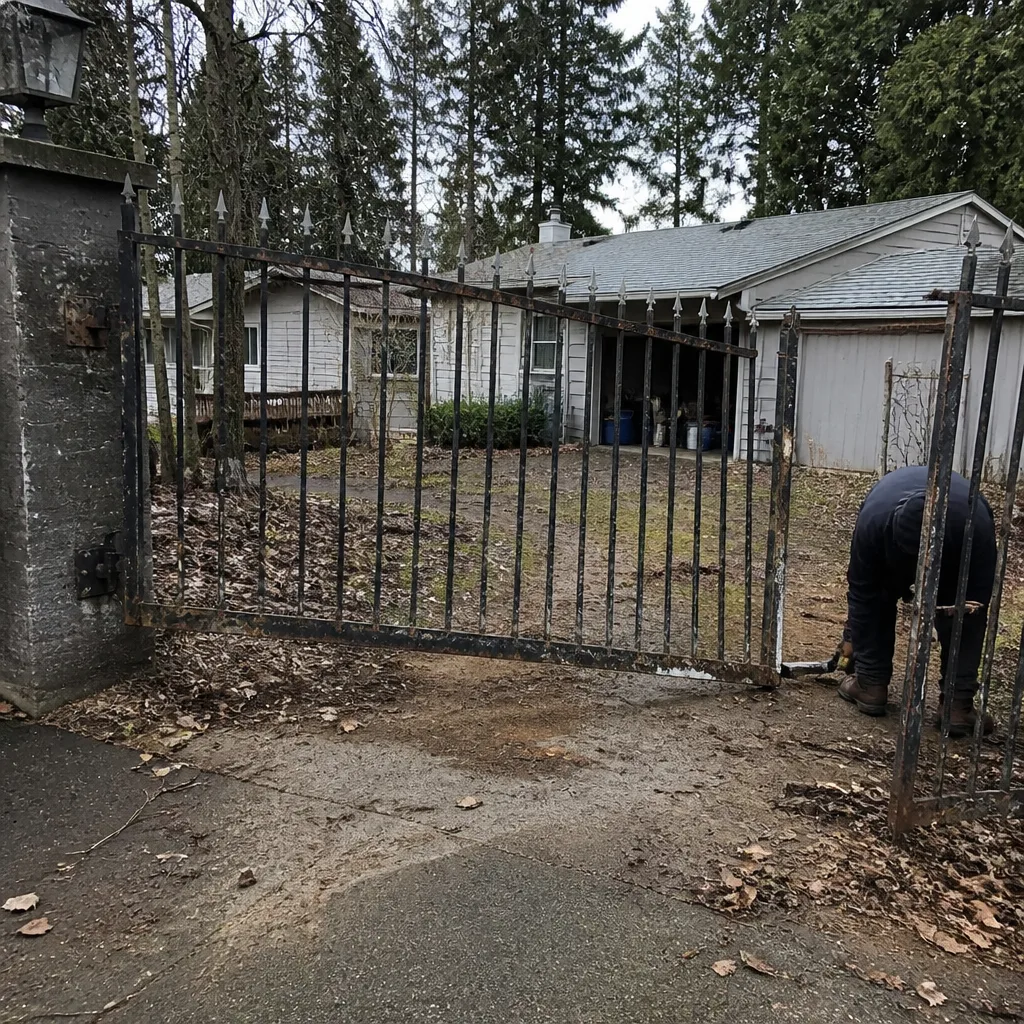 Before
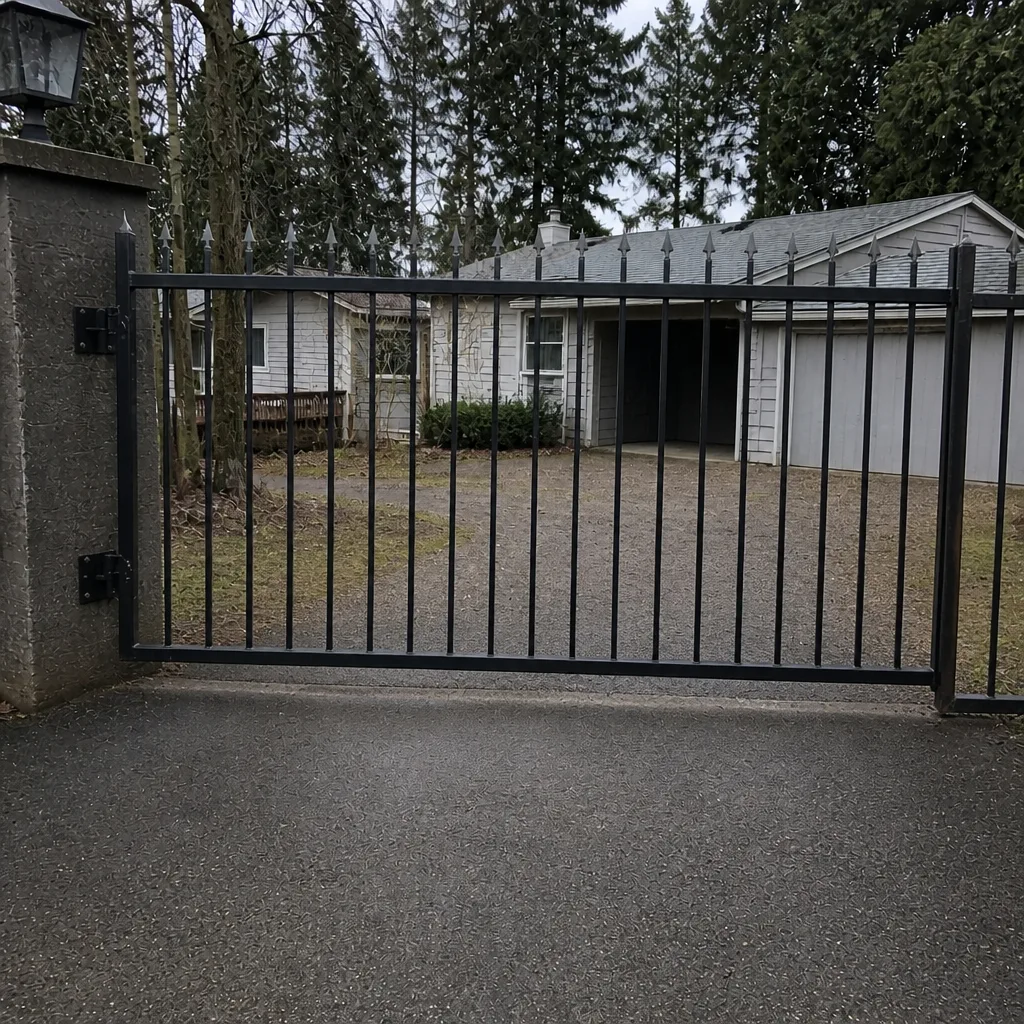 After
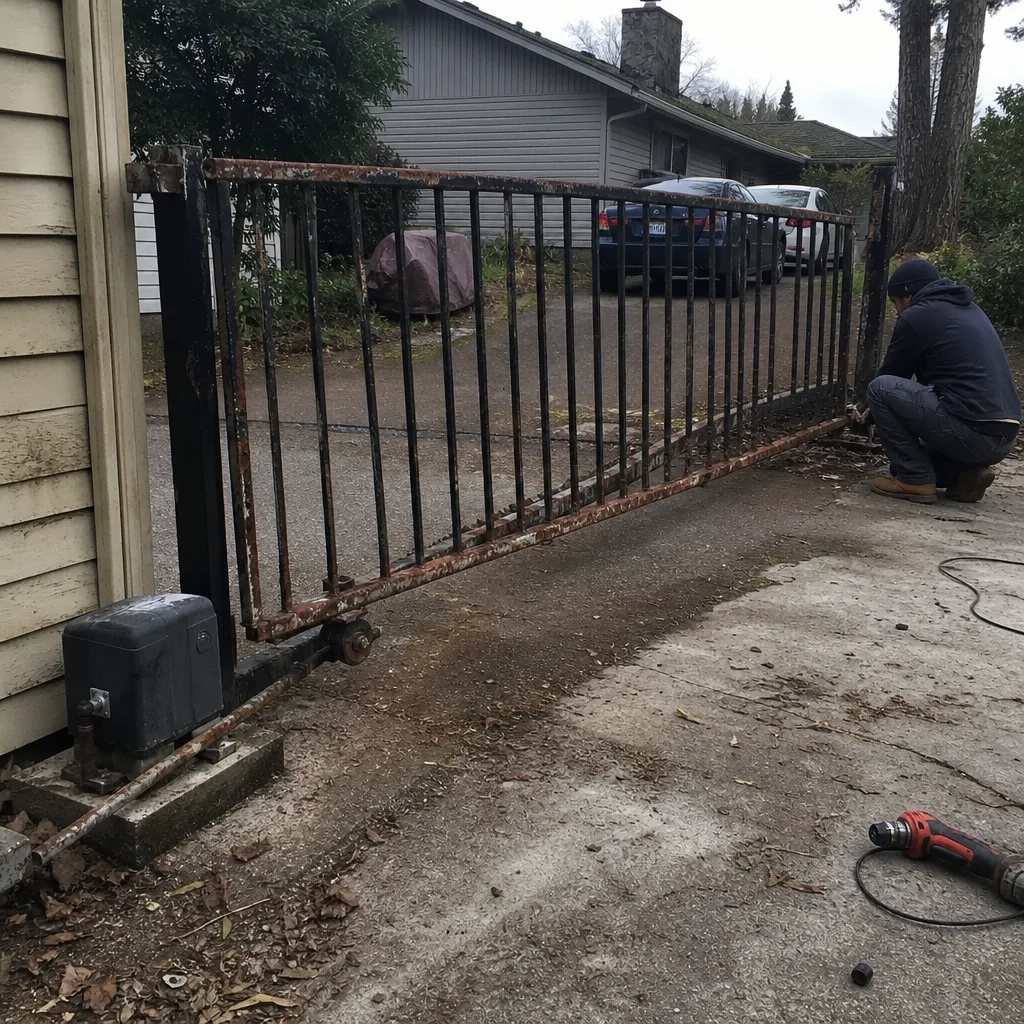 Before
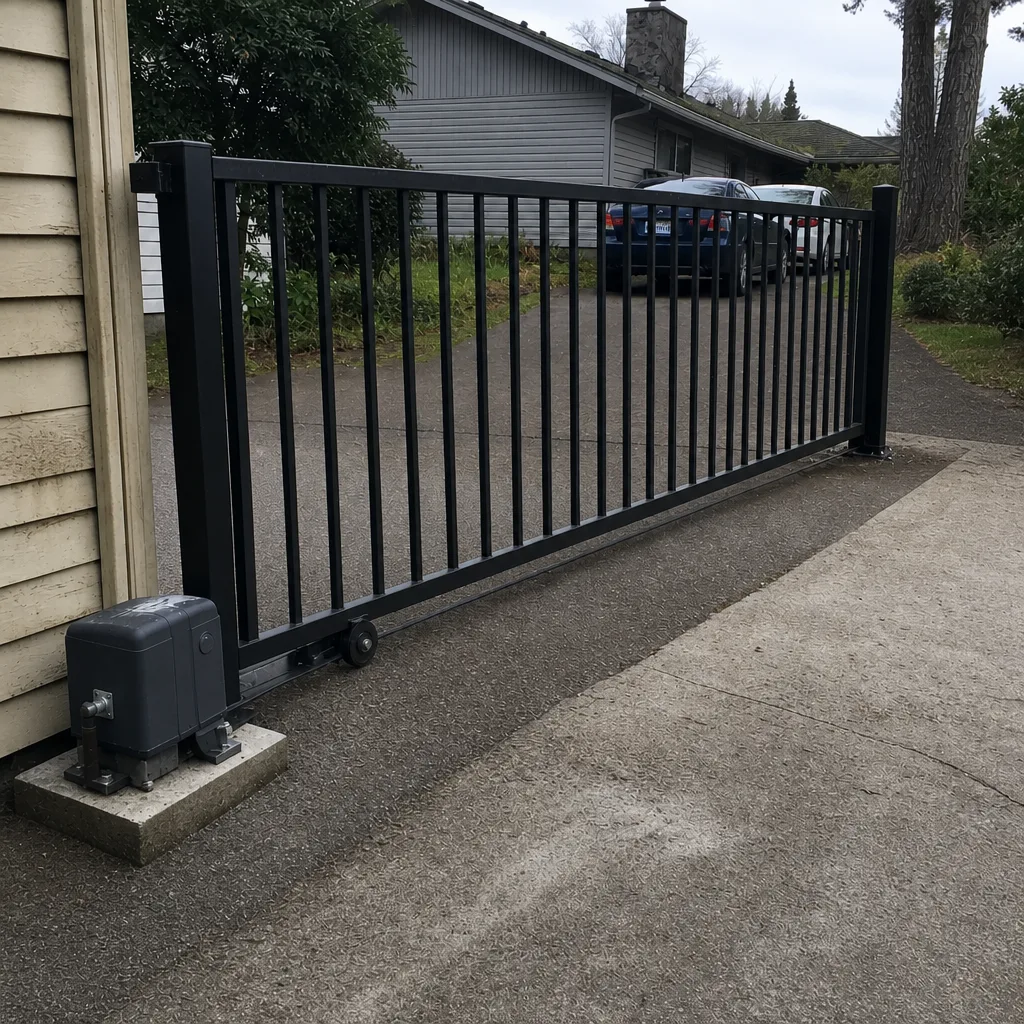 After
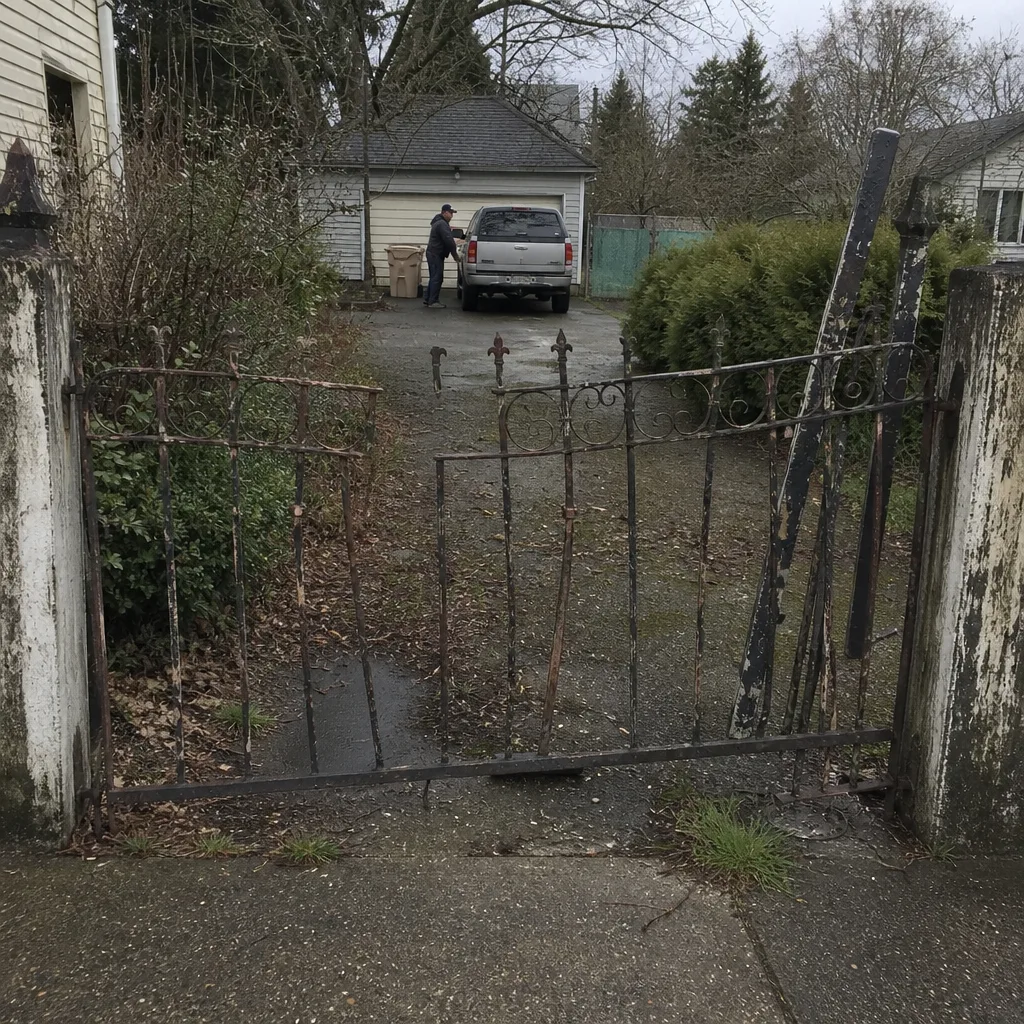 Before
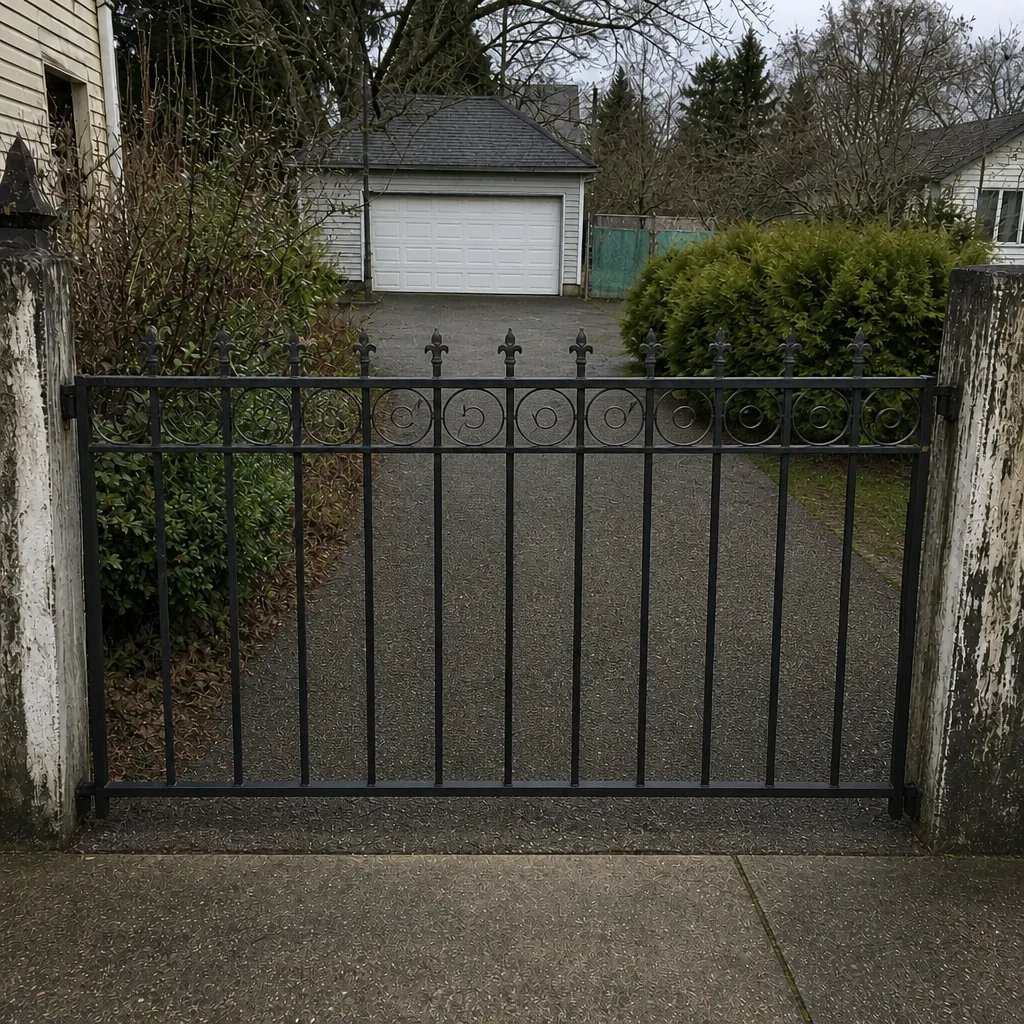 After
When to Call a Professional
Call a professional whenever the problem touches the operator’s electrical side, the safety reversal system, a heavy gate panel, or anything you can’t diagnose from outside the housing. Call when a gate is stuck open on a shared driveway or an HOA entrance and downtime isn’t an option. Call when a warning sign appears: a burnt smell, a tripped breaker, a buzzing operator, or a panel that’s come off its track. And call when a DIY attempt on a cheap part didn’t fix it, because that’s the point where continued guessing gets expensive. We answer 24/7, so the phone is there whenever the gate fails, with fast dispatch from 7am to 7pm. Gate Repair Kent offers free estimates in Kent, with the price quoted and agreed before any work starts. Call (855) 360-7358.
Frequently Asked Questions
You can safely handle a few tasks: the manual release, photocell cleaning and realignment, battery replacement, and remote re-pairing. Anything involving the operator’s wiring, the control board, the motor, the force settings, or heavy gate panels should go to a trained technician. If the task could disable a safety function or requires opening the housing, it’s professional work.
It can. Most operator warranties cover defects in materials and workmanship but exclude damage from unauthorized repair or modification. If you open the housing and alter settings or components, coverage on that part may be void. Read the warranty section of your manual before you start, and if the task is named there, leave it alone.
Often yes. Running a new power circuit to a gate, or repairing the electrical feed, generally requires a licensed electrician and may need a permit. Low-voltage accessories are still connected back into the operator, so rewiring them isn’t a casual job either. Ask your city’s building department about specific requirements before the work begins.
A gate that reverses is usually reacting to a safety sensor, a misaligned photocell, or a genuine obstruction in its path. Dirty or knocked-out-of-line sensors are the most common cause. Don’t adjust the force setting to stop the reversal; find out what the gate is detecting, and call a technician if the cause isn’t obvious from a sensor check.
We work on the brand already on your property. Our technicians have up to 12 years of experience and are familiar with systems from Linear, Viking, Ghost Controls, and DoorKing, along with other major brands. That brand familiarity means we test the right component first instead of guessing. For anything outside our scope, we’ll tell you plainly.
We answer 24/7 and dispatch fast from 7am to 7pm, Sunday through Friday. A call outside dispatch hours is booked into the next opening. For a gate stuck open on a shared entrance, call and describe the problem so we can bring the right parts.
The Bottom Line
The DIY-versus-professional question comes down to risk, not skill. A careful homeowner can handle the interface layer all day: releasing the gate by hand, cleaning sensors, swapping batteries, re-pairing remotes. The safety system and the electrical core are different. Get those wrong and the cost isn’t the part; it’s a warranty, a bigger repair, or someone’s safety on a gate they rely on. In Kent, with wet winters and plenty of automated gates doing daily work, that line is worth respecting. Know which tasks are yours, which belong to a technician, and which by law belong to an electrician. If you’re on the fence about a repair, the call is free.
Need a hand deciding, or ready to book a repair? Call (855) 360-7358. We answer 24/7, with fast dispatch from 7am to 7pm, Sunday through Friday. Estimates are free, and the price is quoted and agreed before any work starts. Our technicians have up to 12 years of experience across residential and commercial gate systems, and we’re glad to help homeowners and property managers throughout Kent get their gates working again.
Written by the team at Gate Repair Kent.